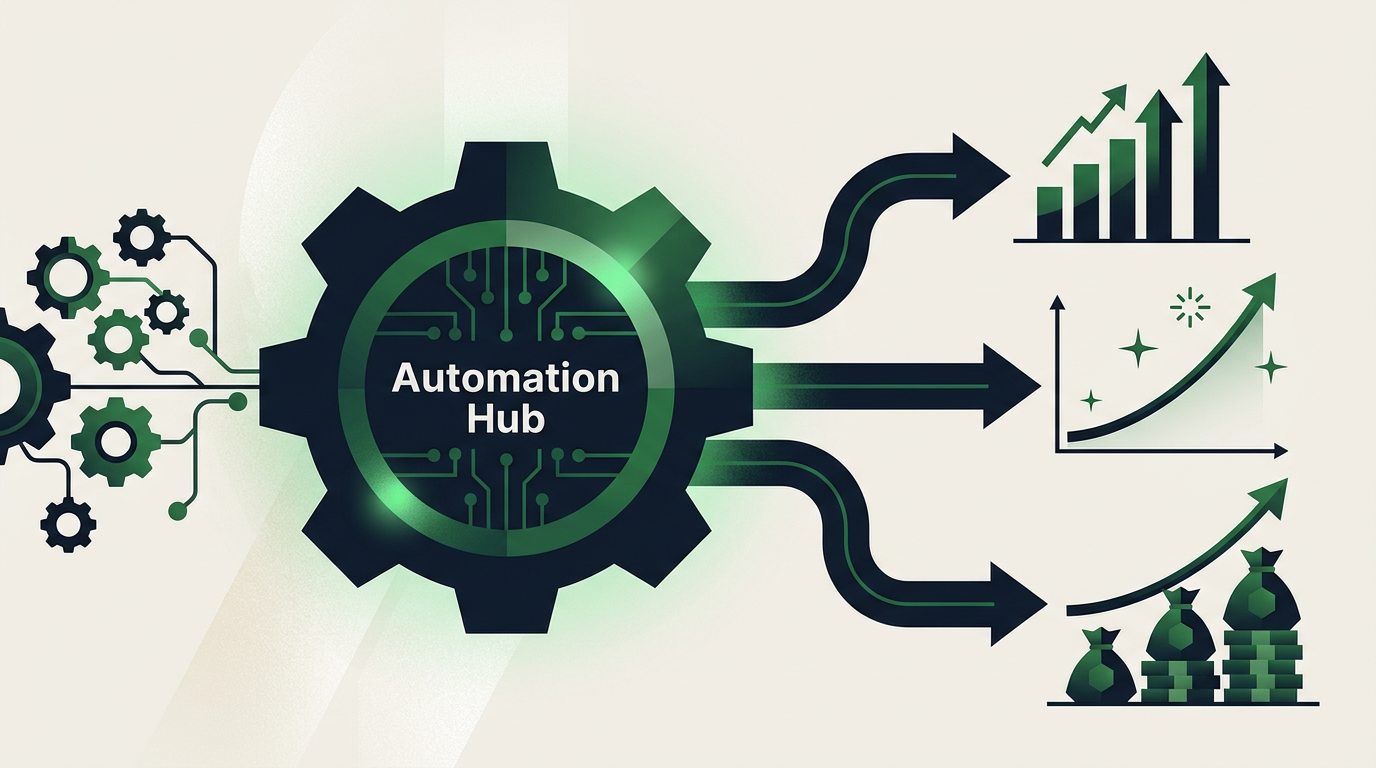

Measuring ROI of Business Automation for Coaches & Consultants
For coaches and consultants aiming to scale, accurately measuring the ROI of business automation is crucial for optimizing operations and maximizing the effectiveness of paid acquisition efforts. Understanding how automation impacts lead generation, client onboarding, and retention allows firms to strategically invest in technologies that directly drive growth and profitability.
Business Automation ROI“>Business Automation ROI“>Business Automation ROI“>Business Automation ROI“>Business Automation ROI“>Business Automation ROI“>Business Automation ROI“>Business Automation ROI“>Business Automation ROI“>Business Automation ROI“>Business Automation ROI“>Business Automation ROI“>Business Automation ROI“>Business Automation ROI“>Business Automation ROI“>Business Automation ROI“>Business automation ROI measurement transforms how service-based firms allocate resources and grow their practices. By quantifying the impact of automated processes on revenue generation, operational efficiency, and client satisfaction, coaches and consultants gain the clarity needed to make strategic technology investments that compound over time.
Why Automation ROI Matters for Service Firms

Be Known, LLC, headquartered in Knoxville, TN, serves coaches and consultants across the United States with a specialized focus on paid acquisition for coaches and consultants. Understanding automation ROI has become essential for these service firms because it directly influences how effectively they can scale their client acquisition efforts while maintaining service quality.
The traditional model of one-to-one service delivery creates natural growth ceilings. When every client interaction requires manual effort, from initial outreach through onboarding and ongoing communication, coaches and consultants face strict limits on how many clients they can serve. Automation breaks through these barriers by handling repetitive tasks systematically, freeing practitioners to focus on high-value activities that truly require human expertise.
Beyond simple cost savings, automation ROI encompasses strategic advantages that extend throughout the entire client lifecycle. When implemented thoughtfully, automated systems improve consistency, reduce errors, and create better client experiences while simultaneously lowering operational overhead.
Quantifying Time Savings
Time represents the most precious resource for coaches and consultants. Unlike product-based businesses that can scale through inventory and distribution, service firms scale primarily through more efficient use of practitioner time.
Automated scheduling tools eliminate the back-and-forth emails that typically consume 15-20 minutes per appointment. Email sequences nurture leads without manual intervention, allowing a single consultant to maintain relationships with hundreds of prospects simultaneously. Client intake forms populate CRM systems automatically, eliminating duplicate data entry and the errors that come with manual transcription.
The cumulative effect of these time savings compounds rapidly. A coach spending two hours daily on administrative tasks recovers 500 hours annually through automation—the equivalent of adding three months of productive capacity. This recovered time can be redirected toward revenue-generating activities like client delivery, content creation, or business development.
Client Satisfaction Metrics
Automation paradoxically enhances the human element of coaching and consulting services. When administrative burdens decrease, practitioners have more mental bandwidth for the empathetic, insightful work that clients truly value.
Automated systems also improve client experience through consistency and responsiveness. Welcome sequences ensure every new client receives the same thorough onboarding, regardless of when they enroll or how busy the practitioner’s calendar might be. Automatic reminders reduce no-shows and keep clients engaged between sessions.
Response times improve dramatically when inquiry forms trigger instant confirmations and route questions to the appropriate team member or knowledge base. Clients feel valued when they receive immediate acknowledgment, even if the full response requires human attention later.
Key Metrics to Track for Automation ROI
Measuring automation ROI requires identifying specific metrics that reflect both financial performance and operational efficiency. Without clear baseline measurements, it becomes impossible to attribute improvements accurately or justify continued investment in automation technologies.
The most valuable metrics directly connect automated processes to business outcomes. Rather than tracking vanity metrics like number of emails sent or tasks completed, effective ROI measurement focuses on conversion rates, client value, and profitability indicators that impact the bottom line.
Lead conversion rates reveal how effectively automated nurture sequences move prospects through the sales funnel. A well-designed automation workflow might increase conversion from initial inquiry to consultation booking by 40-60%, dramatically improving the efficiency of paid acquisition for coaches and consultants. When ad spend remains constant but conversion rates double, the effective cost per acquisition drops by half.
Cost per acquisition (CPA) represents the total investment required to convert a prospect into a paying client. Automation reduces CPA both by improving conversion rates and by lowering the labor costs associated with lead nurturing. According to research by Nucleus Research, marketing automation drives a 14.5% increase in sales productivity while simultaneously reducing marketing overhead by 12.2%.
Client onboarding time measures the duration from initial sale to full client engagement. Automated onboarding sequences, including contract signing, payment processing, welcome materials, and scheduling, can reduce this timeline from weeks to days. Faster onboarding improves cash flow and accelerates the time to value for both the firm and the client.
Calculating Net Present Value (NPV) of Automation
Net Present Value calculations account for the time value of money when evaluating automation investments. Because automation systems typically require upfront costs but deliver benefits over extended periods, NPV provides a more accurate picture than simple payback period calculations.
To calculate NPV for an automation initiative, identify all implementation costs including software subscriptions, integration work, and training time. Project the expected annual benefits in terms of time savings, increased conversions, and reduced errors. Discount future benefits using your firm’s cost of capital to determine the present value of those future returns.
A positive NPV indicates that the automation investment will create more value than it consumes, even after accounting for the opportunity cost of capital. Most successful automation projects for coaching and consulting firms achieve NPV breakeven within 6-12 months and continue generating positive returns for years.
Customer Lifetime Value (CLTV)
Customer Lifetime Value measures the total revenue a client generates throughout their entire relationship with your firm. Automation positively impacts CLTV through multiple mechanisms that extend beyond initial acquisition.
Automated engagement sequences keep clients connected between sessions, reducing churn and extending average client tenure. Personalized upsell triggers identify opportunities to introduce additional services at optimal moments. Post-delivery follow-up systems maintain relationships that lead to renewals, referrals, and repeat engagements.
When automation increases average client tenure from 8 months to 12 months while simultaneously improving upsell conversion by 20%, the compounding effect on CLTV can exceed 50%. This multiplier effect makes the ROI of automation far more substantial than initial efficiency gains might suggest.
Automation Tools & Technologies for Coaches & Consultants
The automation technology landscape offers hundreds of tools designed for different aspects of service delivery. Selecting the right combination requires understanding both your specific workflow pain points and how various platforms integrate to create seamless systems.
Customer Relationship Management (CRM) systems form the foundation of most automation strategies. Platforms like HubSpot, Salesforce, and Pipedrive centralize client data, track interactions, and trigger automated workflows based on client behavior. For coaches and consultants, a well-configured CRM eliminates the mental overhead of remembering client details and ensures consistent follow-up.
Modern CRMs go far beyond simple contact databases. They segment audiences based on engagement patterns, automatically assign leads to appropriate team members, and provide pipeline visibility that informs strategic decisions. Integration with email, calendaring, and payment systems creates a unified client experience.
Integrating Your Tech Stack
Technology integration determines whether automation creates efficiency or complexity. Disconnected tools require manual data transfer between platforms, undermining the time savings that automation promises. A properly integrated tech stack shares data seamlessly, triggering actions across multiple systems from a single client interaction.
Email marketing platforms like ActiveCampaign, ConvertKit, and Mailchimp excel at nurturing leads through sequenced content delivery. These tools integrate with CRMs to segment audiences based on behavior, engagement level, and position in the buyer’s journey. Automated email sequences can nurture cold leads over months, providing value and building trust until prospects are ready to engage.
Scheduling tools such as Calendly, Acuity, and SavvyCal eliminate the coordination friction that previously required multiple emails. These platforms sync with calendars, enforce availability rules, send automatic reminders, and collect pre-session information—all without manual intervention. The time savings for consultants who book dozens of calls monthly easily justifies the modest subscription costs.
AI-Powered Automation
Artificial intelligence has expanded automation possibilities beyond rule-based workflows. AI tools can now analyze client communications to detect sentiment, prioritize urgent inquiries, and suggest personalized responses. Chatbots handle common questions 24/7, qualifying leads and scheduling consultations even when the practice owner sleeps.
AI-driven analytics identify patterns in client behavior that humans might miss. These insights inform more effective segmentation, personalized outreach timing, and content recommendations. Machine learning algorithms continuously optimize email send times, subject lines, and calls-to-action based on individual recipient engagement patterns.
However, AI automation works best as a complement to human expertise rather than a replacement. Coaches and consultants succeed because of personal connection and nuanced understanding—qualities that remain distinctly human. The most effective automation strategies use AI to handle routine tasks while preserving human attention for high-value interactions.
Boosting Paid Acquisition with Automation Insights
Automation and paid advertising create powerful synergies when integrated strategically. The data captured through automated systems directly improves ad targeting, messaging, and budget allocation, while automation ensures that every lead from paid campaigns receives immediate, consistent follow-up.
Ad platforms like Facebook, Google, and LinkedIn require rapid response to maximize conversion rates. According to a study by Harvard Business Review, firms that contact leads within an hour are nearly seven times more likely to qualify the lead than those who wait even 60 minutes longer. Automation makes this responsiveness achievable at scale.
When someone clicks an ad and submits a contact form, automated workflows can instantly deliver a confirmation email, add the prospect to a nurture sequence, send lead details to the CRM, and notify the appropriate team member—all within seconds. This immediate engagement capitalizes on the prospect’s peak interest while your brand remains top-of-mind.
A/B Testing Automated Workflows
Systematic testing transforms automation from a set-it-and-forget-it tool into a continuously improving system. A/B testing different email sequences, follow-up timing, and content formats reveals which approaches convert prospects most effectively.
Split testing might compare a three-email nurture sequence against a five-email version, or test value-focused messaging against urgency-driven copy. Automated systems make this testing practical by consistently delivering each variant to a predetermined segment and tracking the resulting conversion rates.
Small improvements compound dramatically over time. Increasing email open rates from 22% to 28% and click-through rates from 3.5% to 4.2% might seem modest, but when applied to thousands of prospects annually, these incremental gains translate to dozens of additional clients without increasing ad spend.
Optimizing Ad Spend
Automation provides the conversion tracking and attribution data needed to optimize paid acquisition investments. By connecting ad platforms to CRM systems, coaches and consultants can track not just clicks and form submissions, but actual client acquisition and revenue generation.
This closed-loop reporting reveals which ad campaigns, audiences, and creative variations produce the highest-value clients. Rather than optimizing solely for cost per click or cost per lead, firms can optimize for cost per acquired client or even return on ad spend (ROAS). Research from Salesforce indicates that marketing automation can improve conversion rates by up to 30% while reducing customer acquisition costs by 12-15%.
Automated reporting dashboards eliminate the manual work of compiling performance data from multiple sources. Real-time visibility into campaign performance enables faster optimization decisions and clearer understanding of which marketing investments drive profitable growth.
Common Challenges in Measuring Automation ROI
Despite its clear benefits, accurately measuring automation ROI presents several methodological challenges. The most common obstacle involves attribution. It’s hard to determine which specific improvements resulted from automation versus other simultaneous initiatives or market conditions.
When a coaching firm implements automation while also launching a new service offering or benefiting from seasonal demand increases, isolating the automation’s specific contribution becomes complex. Multiple variables change simultaneously, making it difficult to establish clear cause-and-effect relationships.
Intangible benefits compound this attribution challenge. How do you quantify the value of improved team morale when administrative burdens decrease? What dollar amount represents the brand perception boost from more consistent communication? These soft benefits contribute real value but resist precise measurement.
Establishing Baseline Metrics
Effective ROI measurement requires comprehensive baseline data before implementing automation. Without knowing your starting point for conversion rates, response times, onboarding duration, and other key metrics, you cannot accurately attribute post-implementation improvements.
Many firms skip this crucial step, eager to begin seeing automation benefits immediately. The result is anecdotal evidence of improvement without quantified magnitude. “We think response times improved” doesn’t justify continued investment or inform optimization decisions the way “average response time decreased from 4.2 hours to 47 minutes” does.
Establishing baselines requires tracking metrics manually for several weeks or months before automation deployment. While this delay can feel frustrating, the investment pays dividends through clearer ROI visibility and more confident optimization decisions later.
Long-Term vs. Short-Term ROI
Automation investments typically show different return profiles over various timeframes. Short-term ROI often appears modest or even negative during the implementation and learning curve period. Setup costs, integration work, and team training consume resources before benefits materialize.
The true ROI emerges over longer horizons as automated systems handle increasing volume without proportional cost increases. A nurture sequence requires the same effort to create whether it touches 100 prospects or 10,000, creating economies of scale that compound over time.
Patient firms that measure ROI over 12-24 month periods rather than quarterly intervals capture these compounding benefits and make more accurate investment decisions. The most successful automation strategies prioritize sustainable long-term returns over quick wins.
Strategic Implementation for Maximum ROI
Maximizing automation ROI requires strategic implementation that aligns technology choices with genuine business needs. The most common mistake involves adopting automation tools without first clarifying the specific problems they should solve.
Start by mapping your current client journey from initial awareness through ongoing engagement. Identify friction points where prospects drop off, manual tasks that consume disproportionate time, or inconsistencies that damage client experience. These pain points indicate where automation will deliver the highest return.
Prioritize automation opportunities based on both impact potential and implementation difficulty. Quick wins (high-impact, low-complexity automations) build momentum and demonstrate value while your team develops proficiency. Complex integrations can follow once foundational systems prove their worth.
Training Your Team
Technology capabilities mean nothing without team members who understand how to leverage them effectively. Comprehensive training transforms automation tools from expensive shelf-ware into daily productivity multipliers.
Training should address not just the mechanics of using automation platforms, but the strategic thinking behind workflow design. Team members need to understand why certain sequences exist, how to interpret performance data, and when to intervene manually in automated processes.
Ongoing education matters as much as initial training. Automation platforms continuously add features and capabilities. Regular lunch-and-learn sessions keep the team current on new possibilities and create space for sharing optimization ideas discovered through daily use.
Creating an Automation Roadmap
A phased automation roadmap prevents overwhelming complexity while ensuring steady progress toward comprehensive systems. Rather than attempting to automate everything simultaneously, successful firms implement automation in strategic waves.
Phase one might focus exclusively on lead capture and initial follow-up—ensuring that paid acquisition investments receive immediate, consistent response. Phase two could address client onboarding and welcome sequences. Subsequent phases tackle client retention, upsells, and referral generation.
This staged approach allows each automation layer to stabilize and optimize before adding complexity. It also distributes learning curve impacts over time, preventing the productivity dips that occur when too much changes at once. Teams can absorb new workflows, identify optimization opportunities, and build confidence before tackling the next automation challenge.
Long-Term Benefits for Sustainable Growth
Beyond immediate efficiency gains, automation creates structural advantages that position coaching and consulting firms for sustainable long-term growth. These strategic benefits often exceed the direct ROI from time savings and conversion improvements.
Scalability represents perhaps the most valuable long-term benefit. Manual service delivery models scale linearly—doubling revenue requires doubling practitioner hours or team size. Automation enables exponential scaling by handling increased volume without proportional resource increases.
A consultant leveraging automation can nurture 500 leads as easily as 50, onboard 30 clients as smoothly as three, and maintain engagement with hundreds of past clients without additional effort. This scalability unlocks growth trajectories impossible in purely manual operations.
Future-Proofing Your Business
Automation infrastructure insulates firms from capability gaps when key team members leave or business volumes surge unexpectedly. Documented, automated workflows capture institutional knowledge that might otherwise exist only in individuals’ heads.
When a veteran team member departs, well-automated processes ensure continuity. New hires can follow automated workflows while developing expertise, reducing ramp-up time and maintaining service quality during transitions. This resilience becomes increasingly valuable as firms grow and personnel changes become inevitable.
Market disruptions and opportunity spikes reveal another dimension of future-proofing. Firms with strong automation can capitalize on sudden demand increases, from viral content, media appearances, or market shifts, without quality degradation. Manual processes buckle under unexpected volume. Automated systems scale effortlessly.
Attracting Top Talent
High-performing professionals increasingly prioritize working for organizations with modern, efficient operations. Talented coaches and consultants want to focus their expertise on client impact rather than administrative drudgery.
Firms that invest in automation signal that they value team members’ time and expertise. This reputation advantage helps attract and retain top talent in competitive markets. The best practitioners choose employers who provide the systems and support that amplify their impact rather than bureaucratic obstacles that impede it.
Automation also enables more flexible work arrangements. Location-independent operations become practical when automated systems handle coordination and communication. This flexibility expands the talent pool beyond local markets and appeals to professionals seeking work-life integration.
The compounding effect of these long-term benefits often dwarfs initial efficiency improvements. Firms that implement automation strategically don’t just work faster—they build fundamentally more capable, resilient, and valuable organizations. When considering automation ROI, these structural advantages deserve equal weight alongside immediate cost savings and conversion improvements.
For coaches and consultants ready to transform their growth trajectory, partner with experts in paid acquisition for coaches and consultants who understand how automation and advertising strategies work together. Be Known combines technical automation expertise with proven paid acquisition frameworks to help service-based firms maximize both client acquisition efficiency and overall business performance.
Keep reading: see all of our business automation & systems guides, or talk with us about your own setup.
FAQs
What is business automation ROI for service firms?
It’s the financial return on investment from implementing automated processes in a service-based business. For coaches and consultants, this means quantifying how automation improves efficiency, reduces costs, and boosts revenue, directly impacting the profitability of their paid acquisition strategies.
How does automation impact paid acquisition for coaches?
Automation streamlines lead capture, nurturing, and follow-up, significantly improving conversion rates from paid ads. It allows coaches to scale their outreach without increasing manual effort, ensuring every ad dollar works harder to attract and onboard new clients efficiently.
What are key metrics to track for automation ROI in consulting?
Consultants should track metrics like lead-to-client conversion rates, cost per acquisition (CPA), client onboarding time, employee productivity, and client retention. These indicators reveal how automation directly impacts operational efficiency and the effectiveness of client acquisition funnels.
Can small coaching firms benefit from automation ROI measurement?
Absolutely. Even small coaching firms, like those Be Known serves nationwide, benefit immensely. Measuring ROI helps them prioritize automation investments, ensuring they allocate resources wisely to tools that provide the greatest return, especially in optimizing their paid acquisition efforts.
How can Be Known help with automation and ROI for my firm?
Be Known, headquartered in Knoxville, TN but serving clients remotely across the U.S., specializes in paid acquisition for coaches and consultants. We help integrate automation strategies that enhance ad performance, streamline client journeys, and provide clear ROI metrics to scale your business effectively.
What’s the first step to measuring automation ROI?
Start by defining clear objectives for your automation. Identify specific pain points or processes you want to improve, such as lead follow-up or client onboarding. Establish baseline metrics before implementation to accurately track and attribute the financial gains from your automation efforts.
Ready to transform your coaching or consulting practice with strategic automation that amplifies your paid acquisition results? Discover how targeted advertising can transform your practice when combined with the right automation systems. Be Known specializes in helping coaches and consultants across the United States build integrated growth systems that convert more leads, onboard clients faster, and scale profitably. Let’s create a customized strategy that delivers measurable ROI for your unique business.
Further reading: NIST AI Risk Management Framework