

Aligned coaching ad offers convert 2–3× better when they pair niche-specific promises with clear call outcomes. They turn expensive clicks into qualified discovery sessions by matching who you serve, what you deliver, and how you speak to clients.
Crafting Aligned Coaching Ad Offers That Book Calls: A Paid Acquisition Guide for Coaches & Consultants
Why Aligned Ad Offers Matter in a $6.25B Coaching Market

Aligned coaching ad offers pair niche promises with clear call outcomes. They turn clicks into bookings by matching who you serve, what you deliver, and how you speak to clients.
The coaching market has reached a critical point. With 145,500 active coaches worldwide in 2024 (projected 167,300 by 2025), generic ads drown in platform noise. Niche-specific promises stand out and drive higher click-to-call rates. Be Known serves coaches and consultants across the United States by designing ad offers that speak directly to a prospect’s urgent outcome.
The average North American coach earns about $67,800 per year serving 12–13 clients. Adding 3–5 qualified calls per month through paid acquisition for coaches and consultants can shift annual revenue without raising hourly rates. For most solo practitioners, five extra clients at $5,000 each equals $25,000 in new revenue.
How Market Saturation Drives the Need for Ultra-Specific Offers
Platform saturation means broad targeting triggers auction wars. Ultra-specific hooks narrow the pool, lower CPM by 20–40%, and attract ready buyers. Specificity isn’t a liability. It’s a filter that repels mismatches early and saves budget for high-intent prospects.
Seventy-five percent of coaching clients expect certification proof before booking. Ads that highlight credentials or case studies build trust faster and lower cost-per-booked-call. When certification, niche, and call promise align, conversion rates climb.
Revenue Impact: What 3–5 Extra Qualified Calls Per Month Really Means
A consultant who closes 30% of booked calls at $4,500 per package earns one extra client per month from three qualified calls. That’s $4,500 monthly or $54,000 annually. Five calls yield two clients and $108,000 in new revenue. These aren’t hypothetical gains. They’re the compounding effect of optimized funnels that book calls instead of tire-kickers.
The online coaching market is projected to reach $4.5 billion by 2028 (13.9% CAGR). Paid acquisition isn’t optional for growth-focused practitioners. Coaches who align ad promise, landing page, and call agenda see conversion rates 2–3× higher than misaligned funnels. Be Known’s approach ensures every funnel element reinforces the same micro-outcome, reducing friction and increasing show-up rates.
Three Core Elements of a High-Converting Coaching Ad Offer
Every high-converting coaching ad offer rests on three pillars: niche clarity, a specific outcome promise, and values alignment. Miss any one, and your cost-per-booked-call balloons while qualified prospects scroll past.
Niche clarity replaces “life coaching for anyone” with “executive presence coaching for women in tech sales.” Narrow targeting lowers CPM, reduces auction competition, and attracts ready buyers. Specificity concentrates spend on prospects most likely to convert.
A specific outcome promise makes the call itself feel valuable. “Leave with a 90-day client roadmap” positions the session as a real win, not a sales pitch. This shift can double booking rates.
Niche vs. Broad: When to Go Ultra-Specific
Values alignment uses language and imagery that reflect client identity. Seventy-five percent of U.S. coaches are women, yet many ads targeting female founders feature stock photos of men in suits. Mismatched messaging drives clicks but no bookings. Demographic and psychographic alignment is audited in every Be Known creative brief.
Proof elements reduce skepticism in the first three seconds. Ads featuring a client quote or credential badge increase calendar-booking rates by 20–40% compared to text-only creative. A single sentence like “Helped 47 sales reps hit quota in 90 days” shifts perception from “Who is this?” to “This might work for me.”
Start with one ultra-specific niche. If ad volume is too low after 10–14 days, expand to adjacent segments rather than reverting to generic language. Monitor cost-per-booked-call, not just clicks. A narrow audience that books at $80 per call beats a broad audience that clicks at $3 but never schedules.
Micro-Promise vs. Macro-Promise
Your macro-promise is the ultimate transformation: “Land your dream job.” Your micro-promise is what the call delivers: “Identify the #1 résumé gap blocking interviews.” The micro-promise must ladder up to the macro-promise but feel achievable in 20–45 minutes. If your call promises “clarity” but your ad promises “a new job in 90 days,” prospects feel bait-and-switched.
Test both in ad copy. A/B split one variant emphasizing macro-transformation against one emphasizing micro-outcome. Track which drives higher booking rates and lower cost-per-call. In most verticals, micro-promises outperform because they reduce perceived risk.
Four Proven Call-Offer Models for Coaches & Consultants
The structure you choose should match your pricing model, CRM workflow, and ideal client’s buying behavior. Below are four frameworks Be Known uses for coaches nationwide.
Free discovery/strategy session: High volume, mixed quality. Best for new coaches building pipeline or testing messaging. Free sessions lower the barrier to entry and generate 2–3× more bookings than paid offers. Expect 20–40% to be tire-kickers. Pair with a qualifying question in the booking form to filter low-intent prospects.
Paid audit or assessment (e.g., $97 pipeline review): Fewer calls, higher intent. Self-liquidates ad spend and attracts serious buyers. Ideal for consultants with hourly rates above $250. A $97 fee may cover your cost-per-booking, turning the funnel into a break-even or profit center. Show-up rates typically exceed 85%.
Free vs. Paid: Which Call Offer Matches Your Model?
Low-ticket workshop or 5-day challenge → call: Builds know/like/trust before the ask. Participants who complete the challenge book at 30–50% higher rates than cold-ad clicks. This model works well for group coaching or cohort-based programs. Run the challenge on email + Facebook Group or Zoom, then invite completers to a “private coaching consultation.” Budget 7–10 days lead time and $500–$1,000 in ads to fill the challenge.
Application funnel (form → approval → call): Positions coaching as exclusive. Filters for budget and commitment upfront. Common in high-ticket ($5k+) executive or business coaching. Prospects fill a 5–10 question form. You approve or decline within 24 hours. Approved applicants book a call. Expect 40–60% fewer applications than a free-session offer, but closing rates on approved calls often exceed 50%.
Choose based on calendar capacity and revenue model. If you need 20+ calls per month to hit revenue goals and can handle qualification on live calls, use free discovery sessions. If your calendar is limited or your close rate suffers from unqualified leads, shift to paid audits or application gates. Track cost-per-booked-call and show-up rate for two full weeks before changing models.
Challenge-to-Call Funnels: A Step-by-Step Blueprint
Challenge funnels deliver compound value: participants receive immediate wins, you show expertise without a hard pitch, and the call offer feels like a natural next step. Here’s a simplified blueprint for coaches with budgets under $1,500/month:
- Day 1: Run Facebook/Instagram ads targeting your niche. Link to a landing page with email opt-in. Budget $300–$500 for 100–200 registrants.
- Days 2–6: Deliver daily lessons via email + private Facebook Group or Zoom. Each lesson includes one micro-win. Engagement rates of 30–50% are normal.
- Day 7: Invite active participants to book a “Private Implementation Call.” Offer expires in 48 hours. Expect 10–20% of engaged participants to book.
- Days 8–30: Retarget non-bookers with testimonial ads. Budget $200–$300 for retargeting. This often yields another 3–5 bookings at lower cost-per-call.
Track cost-per-registrant, engagement rate (% who complete 3+ days), and cost-per-booked-call. If you’re spending $80–$120 per booked call and closing 25–40% of those calls, the funnel is profitable.
How to Match Your Ad Offer to Your CRM and Billing Model
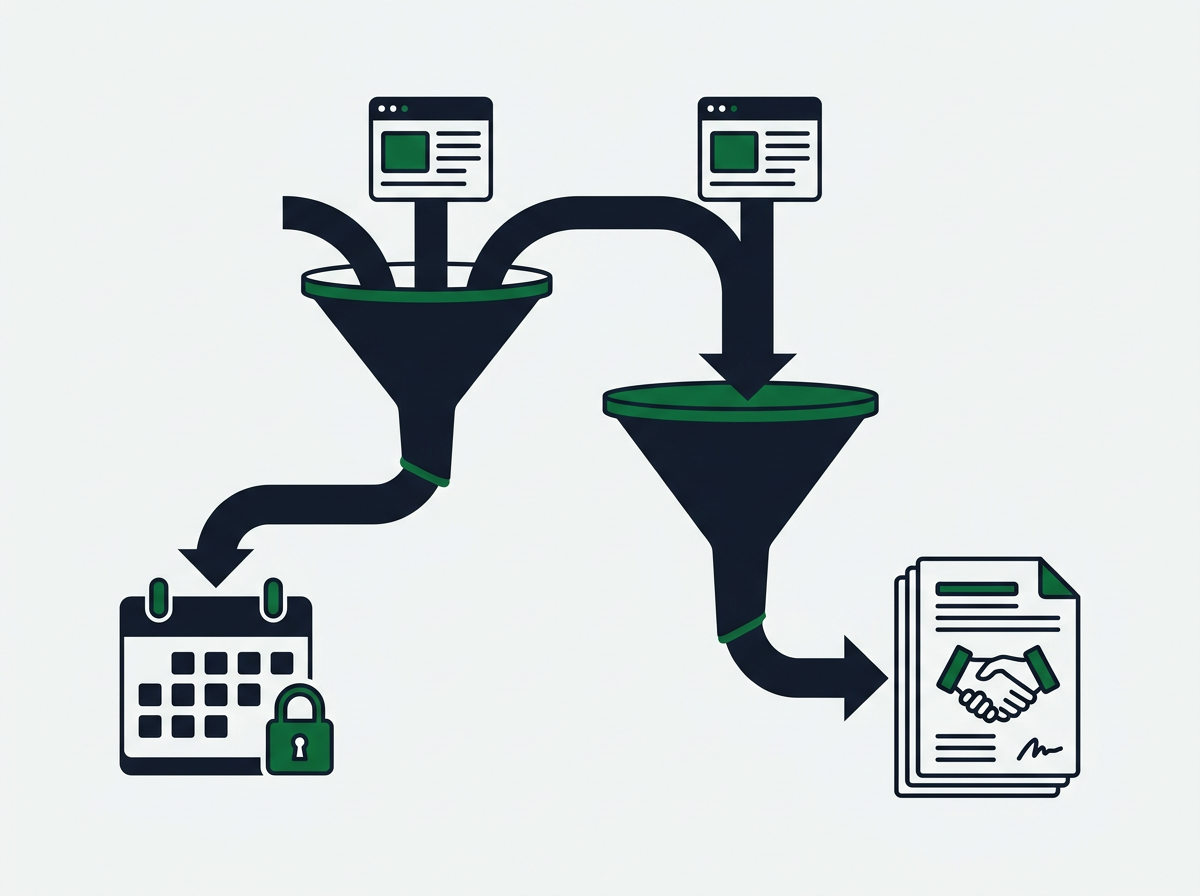
Your ad offer must integrate cleanly with your CRM, billing platform, and follow-up workflows. Misalignment causes 40–60% drop-off between “booked” and “attended.”
Coaching-lifecycle CRMs (Paperbell, Fluid CRM) suit packaged sessions and upfront payment. If your offer is “Buy your first 3-pack for $997,” design ad funnels that push straight to a “Book your free intro session” or “Buy now” landing page. These platforms automate session scheduling, invoicing, and reminder sequences.
Sales-pipeline CRMs (Pipedrive, HubSpot, HoneyBook) suit custom proposals and B2B consulting. If your engagements require scoping calls and tailored quotes, run ads for “diagnostic calls” or “strategy sessions” that lead to follow-up proposals. Longer sales cycles (14–45 days) are normal, but average contract values often exceed $8,000.
Lifecycle vs. Pipeline: Which CRM Philosophy Fits Your Model?
Funnel alignment prevents drop-off: If your ad promises “instant booking” but your CRM requires manual approval or a multi-step form, expect 40–60% abandonment. Audit every step from click to confirmed calendar event. Use tools like Calendly or Acuity for one-click scheduling. Send automated confirmations within 60 seconds of booking.
Be Known maps ad offers to CRM workflows before campaign launch, ensuring seamless handoff and follow-up sequences. This includes testing timezone displays for U.S. prospects, reminder cadences (email + SMS 24 hours and 1 hour before the call), and post-call nurture emails for no-shows or “not ready yet” leads.
Lifecycle CRMs excel when you sell standardized packages. Pipeline CRMs excel when each engagement is custom. Choose based on how you deliver value, not just what software looks shiny.
Reducing Booking Friction: Technical Tweaks That Save 20–30% of Leads
Small technical changes compound into big conversion lifts. Test these friction-reducers:
- Embed the calendar widget on the landing page instead of linking to a separate scheduling URL. External links cause 15–25% drop-off.
- Collect only 3–4 fields: name, email, phone, and one qualifying question. Every extra field reduces completion by about 5%.
- Display multiple timezone options or auto-detect the prospect’s location. U.S.-based coaches serving East Coast to West Coast clients should show slots in ET, CT, MT, PT.
- Send confirmation + two reminders: one email 24 hours before, one SMS 1 hour before. This lifts show-up rates from 60% to 75–80%.
- Include a brief prep assignment in the confirmation email. Prep increases perceived value and commitment.
Track abandonment at each funnel stage using UTM parameters and Google Analytics events. If 40% of people who click “Book Now” never complete the form, the form is too long or the page is too slow. If 30% book but never attend, your reminder sequence is weak or your call’s perceived value is unclear.
Writing Ethical, Aligned Ad Copy That Drives Bookings Without Manipulation
Ethical ad copy converts just as well, often better, than manipulative tactics. It builds long-term trust and reduces refund requests or ghosting. The key is balancing urgency with authenticity.
Use real constraints instead of fake countdown timers. Limited calendar slots (“I take 8 new clients per month”), cohort start dates (“Spring cohort closes Feb 28”), or seasonal availability create genuine urgency. State the constraint clearly: “Book by Friday for a March start” or “Only 3 morning slots left this month.” Prospects can verify these claims by checking your booking calendar.
Lead with the call’s micro-outcome in the first 10 words. Inverted-pyramid messaging hooks ideal clients instantly: “Book a 30-min session to map your Q1 client pipeline” or “Get a custom promotion roadmap in 20 minutes.” The promise is specific, time-bound, and believable.
Real Urgency vs. Fake Scarcity
Address buyer concerns preemptively: “No pitch, no obligation, just a roadmap you can use right away” reduces no-show rates by clarifying the call’s value and lowering perceived sales pressure. Many prospects fear discovery calls are thinly veiled pitches. Transparency disarms that fear and increases booking intent.
Test values-aligned language. If you serve working moms, use “flexible evening slots” or “kid-friendly scheduling.” If you coach executives in Knoxville’s manufacturing sector, mention “early-morning or lunch calls that fit your plant schedule.” Language that mirrors daily realities signals you understand their world.
Avoid hype (“This will change your life!”), unverifiable superlatives (“World’s #1 coach”), or bait-and-switch promises. These tactics may generate short-term clicks but poison your brand and inflate refund rates. When you partner with Be Known to craft coaching ad offers that book calls, ethical copy is the baseline.
Addressing No-Shows: How Clear Expectations Improve Attendance
No-shows cost time and ad dollars. Clear expectations in the ad itself set the agenda upfront and filter out prospects who want something different. If your ad says “We’ll identify your #1 revenue blocker and map 3 fixes,” prospects who book know exactly what to expect. This reduces last-minute cancellations.
Pair clear ad language with a strong confirmation sequence. Send an email within 60 seconds of booking that includes: call time in the prospect’s timezone, a calendar invite, what to prepare (1–3 bullet points), and a reminder about what they’ll walk away with. Add a 24-hour email reminder and a 1-hour SMS reminder. This multi-touch approach lifts attendance by 15–25%.
Testing and Iterating: How Be Known Optimizes Call-Booking Funnels for Coaches
Optimization isn’t guesswork. It’s systematic testing of creative, landing pages, and follow-up sequences. Be Known tracks three core metrics bi-weekly: cost-per-booked-call, show-up rate, and conversion-to-client rate. When any metric falls outside benchmark ranges, we isolate the bottleneck and test fixes.
Creative testing: Launch 3–5 ad variants with different hooks, images, and CTAs. Run each for 3–5 days with equal budget. Kill the bottom 2 performers, scale the top 2, and introduce 1–2 new variants. This “always-be-testing” approach prevents ad fatigue and keeps cost-per-click low.
Landing page testing: Test headline clarity, form length, social proof placement, and CTA button color. Most coaches see a 20–40% conversion lift by cutting form fields from 8 to 4 or moving testimonials above the fold. Use heat maps and session recordings to spot friction points.
What to Test First
Start with the biggest potential wins: ad hook and landing page headline. If your cost-per-click is high but landing page conversion is acceptable, the ad creative is misaligned. If clicks are cheap but few people book, the landing page or form is broken.
Track cost-per-booked-call weekly. Industry benchmarks for coaches in 2025: $50–$150 per booked call on Facebook/Instagram, $80–$200 on Google/YouTube, with 60–75% show-up rates. If you’re above $200 per call or below 50% attendance, audit your funnel.
When to Scale vs. When to Pause
Scale when cost-per-booked-call is stable or improving and show-up + close rates meet your targets. Increase daily budget by 20–30% every 3–5 days. Pause when cost-per-booked-call spikes 50%+ or show-up rate drops below 50%. Don’t scale a broken funnel. Fix it, then scale.
Be Known designs single-funnel campaigns for solo coaches on tight budgets, prioritizing simplicity and fast iteration over complex multi-channel plays. If you’re booking 5–10 calls per month at $80–$120 each, you’re ready to scale. Book a free strategy session to map your call-booking funnel and identify quick wins.
Frequently Asked Questions
What makes a coaching ad offer “aligned”?
An aligned coaching ad offer pairs niche clarity (who you serve), a specific outcome (what they’ll gain from the call), and values match (language/imagery that reflects client identity). Misalignment like promising “clarity” but delivering a sales pitch drives high cost-per-click and low booking rates. Aligned offers convert 2–3× better because ideal clients see themselves in the ad and trust the call will deliver immediate value.
Should I offer free discovery calls or paid audits?
Free discovery calls generate higher volume but mixed quality. They work well for new coaches testing messaging or building pipeline. Paid audits ($50–$150) attract serious buyers, self-liquidate ad spend, and suit consultants with hourly rates above $250. If your calendar fills with tire-kickers, shift to a paid or application-gated model. Test both: track cost-per-booked-call and show-up rate to find your best fit.
How specific should my ad offer be without scaring off potential clients?
Ultra-specific offers (e.g., “Pipeline review for SaaS sales reps in tech”) lower cost-per-click by 20–40% and attract ready buyers who self-identify. You won’t scare off the right clients. You’ll filter out mismatches early, saving ad spend. Start narrow. If volume is too low after 10–14 days, expand to adjacent niches (e.g., “B2B sales reps”) rather than reverting to generic “life coaching” language that drowns in competition.
What’s a realistic cost-per-booked-call for coaching ads?
Industry benchmarks for coaches in 2025: $50–$150 per booked call on Facebook/Instagram, $80–$200 on Google/YouTube, with 60–75% show-up rates. If you’re above $200 per call or below 50% attendance, audit your funnel. Vague ad promises, long booking forms, or no reminder sequences typically cause drop-off. Be Known tracks these metrics bi-weekly and optimizes creative, landing pages, and follow-up to hit or beat benchmarks.
How do I use urgency ethically in my coaching ad offers?
Use real constraints: limited calendar slots (“I take 8 new clients per month”), cohort start dates (“Spring cohort closes Feb 28”), or seasonal availability (“Taking summer coaching clients through March 15”). Avoid fake countdown timers or fabricated scarcity. Real urgency converts just as well, often better, because it builds trust. In your ad copy, state the constraint clearly: “Book by Friday for a March start” or “Only 3 morning slots left this month.”
Can I run coaching ads on a small budget (under $1,000/month)?
Yes. Start with one niche, one clear call offer, and one traffic source (Facebook/Instagram or YouTube + retargeting). Use $500–$700 for creative testing (3–5 ad variants) and $300–$500 for retargeting/lookalike audiences. Track cost-per-booked-call. If you’re booking 5–10 calls per month at $80–$120 each, scale step by step. Be Known designs single-funnel campaigns for solo coaches on tight budgets, prioritizing simplicity and fast iteration.
How do I reduce no-shows for coaching sales calls from ads?
Require a short application, show your fees range on the page, and have prospects pick a time on your calendar right away. Send automated confirmation plus 1–2 reminders by email and/or SMS, and include a brief prep assignment. This increases perceived value and commitment for clients across U.S. time zones.
Sources & References
- Coaching industry statistics 2024–2025 , entrepreneurshq.com
- Average coach earnings North America , iacareercoaches.org
- CRM for coaches and consultants , fluidcrm.io