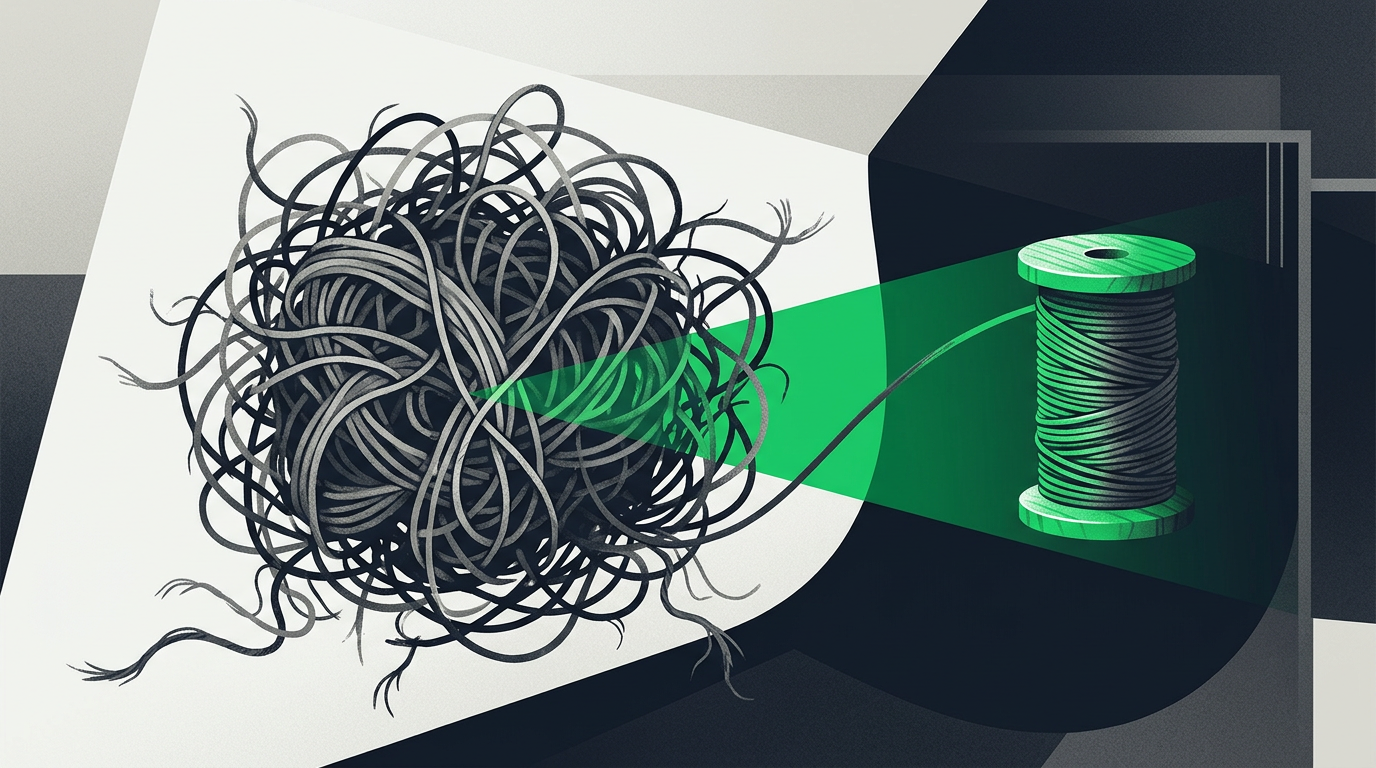

Your ops lead spends 12 hours a week on status updates. Here’s the fix.
Service businesses trapped by chaotic systems and single-person dependencies can transform their operations with custom automation. This approach builds tailored solutions to streamline processes, improve profitability, and empower owners to scale without constant firefighting, ultimately enabling true freedom and growth.
If your operations manager spends half their week compiling spreadsheets, chasing technicians for job status, or manually updating clients instead of solving strategic problems, your business is running on expensive duct tape. The chaos isn’t a staffing problem—it’s a systems problem.
Every hour your highest-paid operational mind spends copying data between platforms or answering “where are we on that job?” represents revenue you could be capturing instead. Custom automation doesn’t just save time; it transforms how your service business operates, freeing leadership to focus on growth rather than survival.
Why Your Service Business Needs Custom Automation, Not Off-the-Shelf Software
You’ve already tried the off-the-shelf CRM that promised to solve everything. You paid for the training, migrated your data, forced your team to adopt it—and six months later, critical information still lives in text messages and Post-it notes. The problem isn’t your team’s resistance; it’s that generic software was built for everyone, which means it fits no one.
Service businesses face unique operational realities that cookie-cutter platforms ignore. Your HVAC dispatch process looks nothing like a law firm’s client intake, yet both are sold the same “industry solution.” The result: you’re paying monthly fees for software that captures maybe 60% of your actual workflow, leaving the most critical 40% to manual heroics.
According to McKinsey research on SME automation, businesses that implement tailored automation solutions see productivity gains of 20-30%, while those relying solely on off-the-shelf tools often struggle to exceed single-digit improvements. The gap isn’t technology—it’s customization.
The High Cost of ‘Good Enough’ Systems
That “good enough” approach is costing you more than the monthly subscription fee. Every quoted job that doesn’t get followed up because it’s stuck in someone’s email represents lost revenue. Every new hire who takes four months to become productive because training materials don’t exist or don’t match how work actually happens represents lost capacity.
The hidden tax appears in your margins. Revenue grows but profit stays flat because you’re adding administrative overhead to compensate for broken processes. You hire a customer service person whose entire job is manual follow-up that automation could handle. You pay your highest-skilled technician to do paperwork in the truck because job details don’t flow back to the office automatically.
Generic platforms force you to change your proven processes to match their rigid workflows. Custom automation does the opposite—it molds technology around how your business actually operates, preserving the competitive advantages you’ve built while eliminating the manual friction.
Identifying Your Business’s Automation Bottlenecks
The biggest operational bottlenecks in service businesses follow predictable patterns. Look for any process where critical information exists in only one person’s head or phone. If your top estimator quits tomorrow, could someone else pick up their active quotes and close them? If not, that dependency is a bottleneck costing you deals today.
Track where your team manually copies information from one system to another. Every time someone types a customer’s name and address into multiple platforms (scheduling software, accounting, the CRM), that’s a bottleneck creating data inconsistencies and wasting skilled labor on data entry.
Watch for decision delays that require your personal input. If jobs can’t be scheduled without you approving crew assignments, if invoices can’t go out without you reviewing them, if customer complaints wait in a queue for your judgment—you’re the bottleneck, and your capacity limits company growth.
Be Known, LLC in Knoxville, TN specializes in helping service businesses identify and eliminate these bottlenecks through custom automation designed specifically for operational workflows. While our core expertise lies in paid acquisition for coaches and consultants, the principles of building systems that reduce single-person dependencies apply universally across service industries.
Reclaim Your Time: Automating Daily Operational Headaches
Your operations lead didn’t get promoted to spend Tuesday afternoons tracking down job status for Thursday’s schedule. Yet without automation, that’s exactly where their time goes—into manual coordination tasks that create zero customer value and generate zero revenue.
Custom automation transforms these daily headaches into background processes that run without human intervention. The quote that used to sit in someone’s inbox for three days now triggers automatic follow-up sequences. The customer who called once and never heard back now gets scheduled callbacks until they book or explicitly opt out.
Automating Client Lifecycle Management
The client lifecycle in service businesses spans initial inquiry through job completion, payment, and eventual repeat business. Each stage has predictable friction points where deals die from neglect, not rejection. A prospect calls for a quote, your estimator gets slammed with emergency jobs, and the quote sits incomplete for a week until the prospect books with your competitor.
Custom automation captures every inquiry the moment it arrives (phone call, web form, email, text message) and routes it into a unified workflow. The system schedules follow-up tasks automatically, sends confirmation messages to the client, and alerts the right team member based on job type, location, and current capacity.
According to research from Salesforce, 80% of sales require five follow-up attempts after initial contact, yet 44% of salespeople give up after just one follow-up. In service businesses where quotes represent significant revenue, every missed follow-up is money left on the table. Automation ensures no prospect falls through the cracks regardless of how busy your team gets.
Post-job automation is equally critical. The customer who had a great experience six months ago represents your lowest-cost opportunity for new revenue, yet most service businesses have no systematic way to re-engage satisfied clients. Automated check-ins, seasonal reminders, and maintenance schedule notifications keep you top-of-mind without requiring your team to manually manage hundreds of relationships.
Empowering Your Team with Standardized Workflows
When critical processes live in your head or your operations manager’s head, every new hire becomes a months-long training investment. They shadow, they ask questions, they make expensive mistakes, and they still don’t execute at the level your best people do. The problem isn’t talent—it’s the absence of documented, repeatable systems.
Custom automation codifies your best practices into workflows that guide team members through complex processes step-by-step. The new estimator doesn’t need to remember every question to ask because the system prompts them. The dispatcher doesn’t need to know which technicians are certified for which equipment because the system only shows qualified matches.
This standardization doesn’t just accelerate training—it improves quality and consistency. Every customer gets the same thorough intake process, the same professional follow-up, the same post-job satisfaction check. Your reputation stops depending on which team member happened to take the call.
For owners and operations managers, this shift is transformative. Instead of being the walking encyclopedia of “how we do things,” you become the architect who designs better systems. Your knowledge gets captured in automation rules and workflow logic, multiplying your impact across every transaction instead of limiting growth to your personal capacity.
Boost Your Bottom Line: Uncovering Hidden Revenue & Profit
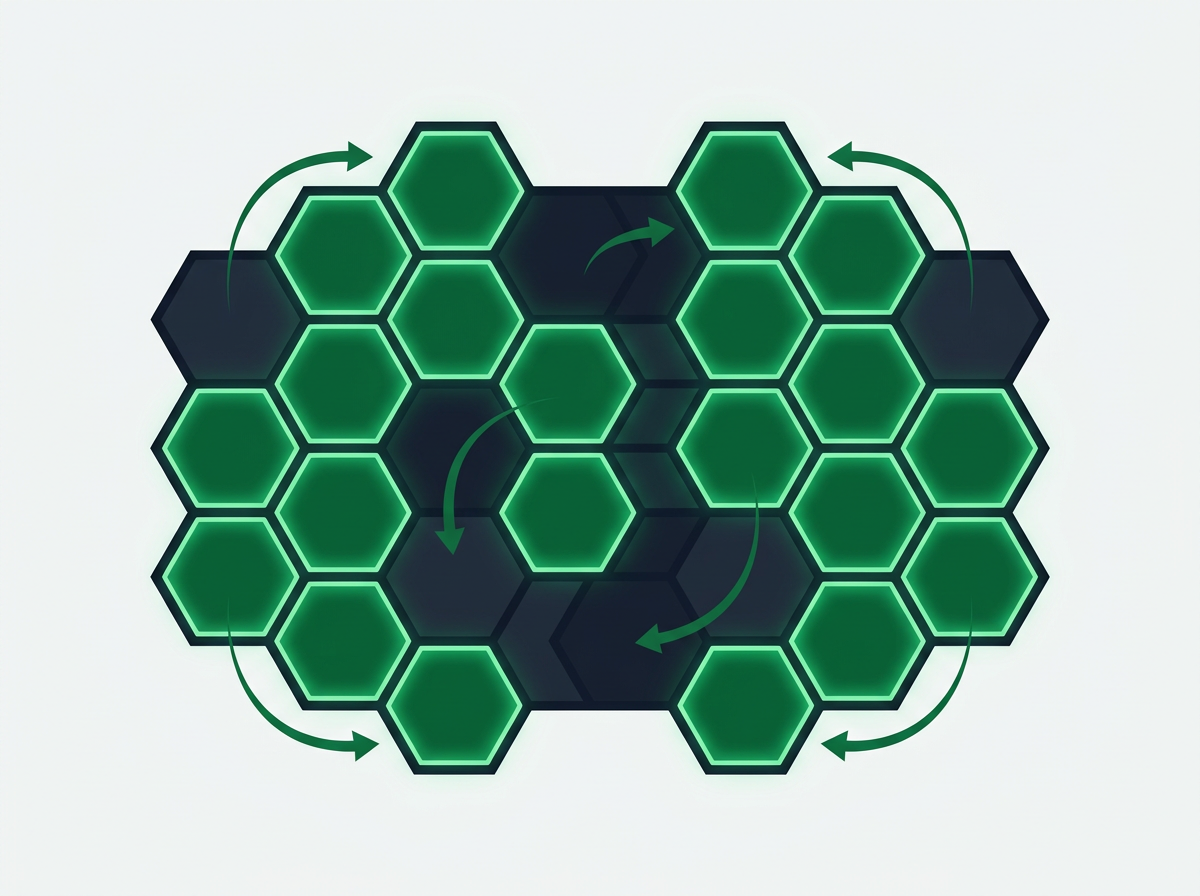
Revenue is leaking from your business in ways you can’t see. The quote you sent last Tuesday that never got a yes or no, did anyone follow up? The customer who had a $5,000 job done six months ago and needs seasonal service, did anyone call them? The recurring service client who quietly stopped scheduling, did anyone notice?
These aren’t dramatic losses; they’re silent profit erosion. No single missed follow-up kills the business, but the cumulative effect over months and years is the difference between stagnant margins and healthy growth. Custom automation plugs these leaks by making follow-up systematic rather than hoping someone remembers.
Data-Driven Decisions for Profit Optimization
You can’t fix what you can’t see. Most service business owners know their top-line revenue but struggle to answer basic operational questions: Which service lines are actually profitable after accounting for labor and materials? Which customers are expensive to serve relative to their lifetime value? Where does time get wasted between job completion and invoice payment?
Custom automation creates visibility by capturing operational data at every touchpoint. Time tracking integrates with job costing. Material usage flows automatically from field reports to accounting. Customer acquisition costs connect to lifetime value, showing which marketing channels deliver profitable growth versus vanity metrics.
This visibility enables intelligent decisions that directly impact your bottom line. You discover that your most requested service actually loses money once you account for drive time and specialized equipment. You identify that 20% of customers generate 80% of your profit, allowing you to focus retention efforts where they matter most. You spot that jobs scheduled on certain days consistently run over budget due to crew composition.
According to Bain & Company research, companies that excel at customer experience grow revenues 4-8% above their market. In service businesses, experience quality correlates directly with operational consistency—the domain where custom automation delivers measurable advantage.
Reducing Operational Costs Through Efficiency
Efficiency gains from automation compound quickly across a service business. The administrative person who spent 15 hours per week on manual scheduling can now handle capacity planning and customer experience improvements. The operations manager who spent mornings chasing job status can focus on supplier negotiations and process optimization.
The cost reduction extends beyond labor reallocation. Automated inventory tracking prevents over-ordering and emergency purchases at premium prices. Integrated scheduling reduces windshield time by optimizing routes and job sequencing. Real-time job costing alerts you to budget overruns while there’s still time to course-correct rather than discovering losses at month-end.
These efficiency improvements don’t just pad margins—they create capacity for growth without proportional cost increases. The business that needed to hire an additional coordinator at $50,000 annually to handle growth from $2M to $3M in revenue can instead invest that money in marketing or equipment, accelerating growth while maintaining profitability.
The transformation from chaotic, person-dependent operations to automated, scalable systems represents one of the highest-ROI investments a service business can make. Unlike marketing spend that generates temporary demand, operational automation builds permanent competitive advantage that compounds over years.
Build a Business That Runs Without You (Mostly)
The real measure of operational maturity isn’t how well your business runs when you’re there—it’s how well it runs when you’re not. Can you take a Friday off without your phone exploding? Can you go on vacation without checking in daily? For most service business owners trapped in operational chaos, the answer is an honest no.
This isn’t because you’re irreplaceable; it’s because critical knowledge and decision-making authority haven’t been transferred to systems. Your business runs on your judgment, your relationships, your institutional knowledge—all of which walks out the door when you do, even temporarily.
Custom automation transfers this dependency from people to processes. The system knows which vendors to use for which materials. The workflow defines approval thresholds so small decisions happen automatically while only exceptions require your judgment. The automated reporting gives you confidence that you’ll know if something goes wrong, even if you’re not watching in real-time.
Developing Standard Operating Procedures (SOPs)
Standard Operating Procedures sound like corporate bureaucracy, but in service businesses they’re liberation. An SOP isn’t a binder gathering dust on a shelf—it’s a living workflow embedded in the tools your team uses daily. When SOPs are automated, following the process becomes the path of least resistance rather than an extra burden.
The intake process that used to vary by who answered the phone now follows a consistent checklist every time. The quality control steps that depended on remembering to do them now happen automatically at job milestones. The customer satisfaction survey that you meant to send but often forgot now deploys within 24 hours of every completed job.
Building these SOPs starts with documenting how your best people handle common scenarios. What questions does your top estimator ask? What does your most efficient crew lead check before leaving a job site? What follow-up does your best customer service person do after a complaint? Custom automation captures this institutional knowledge in executable workflows that every team member can follow.
This documentation also protects your business from key-person risk. When your star technician or operations manager gives notice, you don’t lose their expertise—it’s already encoded in your systems. The replacement still needs training, but they’re learning proven processes rather than reinventing approaches through trial and error.
For service business owners planning an eventual exit, this operational independence directly impacts valuation. A business that runs on the owner’s personal relationships and daily decisions is worth a fraction of an equivalent business with documented, automated operations that transfer cleanly to new ownership.
The Strategic Freedom Custom Automation Enables
When you’re no longer the bottleneck for operational decisions, your role fundamentally changes. Instead of spending days resolving scheduling conflicts and handling escalated customer issues, you can focus on strategic opportunities that actually grow the business. You have time to develop new service offerings, negotiate better supplier terms, or explore acquisition opportunities.
This freedom is both personal and professional. Professionally, you become the business builder you started the company to be rather than its highest-paid administrator. Personally, you reclaim evenings and weekends, reduce the constant anxiety of knowing everything depends on you, and create the flexibility to be present for family and personal priorities.
The transition doesn’t happen overnight. Building custom automation is an investment of time and resources, typically rolling out in phases that tackle the highest-impact bottlenecks first. But the return begins immediately—the first automated follow-up sequence that closes a deal, the first week where your operations lead doesn’t work Sunday to prepare Monday’s schedule, the first time you check in from vacation and everything is running smoothly.
Service businesses that embrace this transformation don’t just survive—they scale profitably while competitors remain trapped in operational chaos. The market rewards operational excellence with premium pricing, better talent attraction, and sustainable competitive advantage that technology alone can’t replicate.
Take the First Step Toward Operational Freedom
Custom automation for service businesses isn’t about replacing your team with robots or eliminating the personal relationships that built your reputation. It’s about freeing your talented people from repetitive manual tasks so they can focus on judgment, creativity, and customer experience—the things humans do better than any system.
The service businesses thriving in competitive markets aren’t necessarily the ones with the best technicians or the lowest prices. They’re the ones with operational systems that consistently deliver excellent experiences while maintaining healthy margins. They’re the businesses where growth doesn’t automatically mean chaos, where new hires become productive in weeks instead of months, and where the owner can actually take time off without emergency calls.
If you’re tired of being trapped in daily firefighting, if you’re ready to build systems that run your business instead of running yourself ragged, custom automation offers a clear path forward. The investment pays for itself in recovered time, captured revenue, and reduced operational costs—often within the first year of implementation.
Ready to transform your service business operations and reclaim your time? Start building systems that scale and discover how custom automation can free you from operational chaos while boosting profitability.
Keep reading: see all of our client acquisition guides, or talk with us about your own setup.
FAQs
How is custom automation different from buying industry-specific software?
Custom automation is built around your unique processes and workflows, rather than forcing you to adapt to generic software limitations. Industry-specific platforms offer broad functionality but often miss critical nuances of how your particular business operates, leaving gaps that require manual work. Custom solutions integrate your existing tools and fill those gaps with tailored workflows that match your competitive advantages rather than commodifying your operations.
What’s the typical timeline to implement custom automation in a service business?
Implementation happens in phases, typically starting with the highest-impact bottlenecks and expanding over 3 to 6 months. Most businesses see measurable improvements within the first 30 to 45 days as initial workflows go live. The timeline depends on operational complexity, existing technology infrastructure, and how many processes need automation. Starting with one critical workflow (like quote follow-up or scheduling) builds momentum and proves ROI before tackling more complex integrations.
Will automation eliminate jobs on my team?
Custom automation typically reallocates roles rather than eliminating them. The person who spent 15 hours weekly on manual data entry shifts to customer experience or process improvement work that creates more value. In growing service businesses, automation creates capacity to scale revenue without proportional headcount increases, improving per-employee productivity and profitability. Most implementations preserve headcount while dramatically improving job satisfaction by removing tedious manual tasks that frustrated your team.
How much does custom automation cost compared to off-the-shelf CRM platforms?
Initial investment for custom automation is typically higher than monthly SaaS subscriptions, but total cost of ownership over 2-3 years is often comparable or lower when you factor in hidden costs—unused features you’re paying for, manual workarounds, administrative overhead, and lost revenue from process gaps. Custom solutions eliminate the “software graveyard” effect where you pay for multiple overlapping tools because no single platform does everything you need.
What if my processes aren’t documented or standardized yet?
Most service businesses operate on tribal knowledge rather than documented processes—that’s normal and actually an opportunity. The discovery phase of custom automation forces process documentation by observing how your best people handle common scenarios. This documentation becomes the foundation for both automated workflows and training materials. Starting with undocumented processes is common; the automation project creates the structure and documentation your business needs to scale regardless of technology implementation.
Can custom automation integrate with our existing software and tools?
Integration capability is a primary advantage of custom automation. Rather than forcing you to abandon tools that work well for specific functions, custom solutions create bridges between platforms—your accounting software, scheduling tools, communication systems, and field service apps. Modern integration platforms and APIs enable connections between virtually any cloud-based business software, creating unified workflows that span multiple specialized tools while eliminating manual data transfer between them.
Sources & references
- Bain & Company research — bain.com