

The Hidden Costs of Untracked Ad Campaigns

Many coaches and consultants unknowingly lose significant revenue due to ineffective tracking of their paid acquisition efforts, leading to wasted ad spend and missed opportunities. Implementing robust tracking systems is crucial for identifying these leaks, optimizing campaigns, and ensuring every marketing dollar contributes directly to profitable client acquisition across the United States.
Every month, coaching and consulting businesses across America pour thousands of dollars into paid advertising, hoping to attract high-value clients. Yet without proper tracking, most of these professionals have no clear picture of which campaigns drive real revenue and which simply drain their marketing budget. The difference between profitability and barely breaking even often comes down to one thing: knowing exactly where your money goes and what it returns.
Be Known, LLC, headquartered in Knoxville, TN, specializes in paid acquisition for coaches and consultants across the United States. We’ve seen firsthand how proper revenue tracking transforms struggling campaigns into profitable engines for growth. The coaches and consultants we work with often discover they’ve been leaving tens of thousands of dollars on the table simply because they couldn’t see where their funnel was bleeding prospects.
Blind Spots in Your Marketing Funnel
Your marketing funnel contains multiple decision points where potential clients either move forward or drop off entirely. Most coaches focus exclusively on top-of-funnel metrics like impressions and click-through rates, completely missing the critical conversion points further down the journey. Without tracking each stage, you’re flying blind.
The typical coaching sales funnel includes the initial ad impression, the click to your landing page, the opt-in for your lead magnet or consultation, the actual consultation booking, attendance at that consultation, and finally the client sign-up. Each of these transitions represents an opportunity for revenue leakage. When you can’t measure conversion rates at each stage, you can’t identify which stage needs optimization most urgently.
According to industry data, only 22% of businesses are satisfied with their conversion rates, yet most don’t have systems in place to track where prospects abandon their journey. This blind spot costs coaching businesses an average of 30-40% of their potential revenue from paid acquisition efforts. The tragedy is that this lost revenue is completely preventable with proper tracking infrastructure.
Understanding True ROI
Return on investment calculations for paid acquisition campaigns seem straightforward on the surface: divide revenue by ad spend. But for coaches and consultants, this simple math obscures critical insights. What’s the lifetime value of a client acquired through Facebook ads versus Google search? Which ad creative generates clients who stay longer and buy more services?
Without granular tracking, you might celebrate a campaign that generated ten leads at $50 each while overlooking that none of those leads converted to paying clients. Meanwhile, a campaign with fewer leads at $100 each might have converted three clients worth $5,000 each. The first campaign lost you $500; the second netted you $14,700. Surface metrics lie; revenue tracking tells the truth.
True ROI tracking for coaches and consultants must account for client lifetime value, not just initial contract value. A client who signs up for a $2,000 package but later invests $10,000 in additional services represents a very different acquisition cost tolerance than a one-time buyer. Sophisticated tracking systems capture these nuances and inform smarter budget allocation decisions.
Common Metrics Coaches Miss in Ad Reports
Most coaches check their ad dashboards and see reassuring numbers: thousands of impressions, hundreds of clicks, decent cost per click. They assume these metrics indicate campaign health. But these vanity metrics rarely correlate with actual revenue generation for service businesses.
The critical metrics coaches and consultants often miss include: cost per qualified lead (not just any lead), consultation show-up rate, consultation-to-client conversion rate, average contract value by traffic source, and client acquisition cost as a percentage of lifetime value. These deeper metrics reveal whether your paid acquisition strategy actually works or just looks busy.
For example, you might discover your Instagram ads generate leads at $30 each while Google ads cost $75 per lead. Without deeper tracking, Instagram appears to be the winner. But if Instagram leads convert at 5% while Google leads convert at 25%, your actual client acquisition costs are $600 for Instagram versus $300 for Google. The “expensive” channel is actually delivering twice the ROI.
Impact of Poor Tracking on Client Lifetime Value
Poor tracking doesn’t just obscure your current campaign performance; it actively sabotages your ability to maximize client lifetime value. When you can’t identify which acquisition channels bring in your best long-term clients, you can’t strategically invest in acquiring more of them.
Consider two acquisition channels: one brings clients who typically purchase a single $3,000 package, while another attracts clients who start with a $2,000 package but go on to spend $15,000 over two years. Without lifetime value tracking by source, you might favor the first channel because of its higher initial contract value. This decision would cost you tens of thousands in lost revenue over time.
Comprehensive revenue tracking reveals these patterns and allows you to optimize for total client value, not just initial sale size. This shift in perspective transforms your paid acquisition strategy from a constant struggle to maintain lead flow into a systematic process for building predictable, sustainable revenue growth.
Identifying Revenue Leaks in Your Sales Funnel
Revenue leaks occur at specific, identifiable points in your sales process. The first step in recovery is pinpointing exactly where potential clients exit your funnel without converting. Most coaching businesses lose prospects at three critical stages: between ad click and landing page action, between lead capture and consultation booking, and between consultation attendance and client sign-up.
Each leak point has different causes and requires different solutions. A drop-off between ad click and opt-in might indicate poor message match between your ad copy and landing page. Low consultation booking rates often signal weak lead nurturing or unclear value proposition. Poor consultation-to-client conversion suggests issues with your sales process, pricing, or positioning.
Pinpointing Abandonment Points
The majority of coaches can tell you how many leads they generated last month, but very few can tell you exactly where those leads went and why they didn’t convert. This gap in knowledge represents the single biggest opportunity for revenue recovery in most coaching businesses.
Start by mapping your entire client acquisition journey from initial ad exposure through client onboarding. Document every step a prospect must take and identify every point where they could exit the funnel. For most coaches, this includes: seeing your ad, clicking through, landing on your page, reading your offer, submitting contact information, receiving your follow-up, booking a consultation, attending that call, and agreeing to work together.
Now assign conversion rate targets to each transition. Industry benchmarks suggest high-ticket coaching and consulting services should see 20-30% conversion from qualified consultation to client, 50-60% show-up rates for booked consultations, and 15-25% booking rates from qualified leads. If your numbers fall significantly below these ranges, you’ve found your leak points.
Analyzing Conversion Rates at Each Stage
Once you’ve identified your funnel stages, calculating conversion rates becomes straightforward arithmetic. But interpretation requires context and industry knowledge. A 2% landing page conversion rate might be excellent for a cold traffic campaign to a high-ticket offer, or terrible for a warm retargeting campaign to an entry-level product.
For coaches and consultants running paid acquisition campaigns, focus on these critical conversion benchmarks: ad click-through rate should exceed 1.5% for warm audiences and 0.5% for cold audiences, landing page opt-in rates should reach 20-30% for compelling offers to targeted traffic, consultation booking rates from qualified leads should hit 15-25%, show-up rates should exceed 50%, and consultation-to-client conversion should reach 20-30% for properly qualified prospects.
When any stage falls below benchmark, that’s where you’ll find your biggest revenue recovery opportunity. Improving a stage from 10% to 20% conversion effectively doubles the output of every dollar spent on acquisition upstream. These improvements compound: fix three stages in sequence and you can 2-4x your overall campaign ROI without increasing ad spend.
Auditing Your Current Tracking Setup
Most coaching businesses operate with partial tracking at best. They might have Google Analytics installed but not configured for goal tracking. They run Facebook ads but never installed the pixel properly. They use a CRM but never integrated it with their ad platforms. Each gap represents blind spots where revenue leaks go undetected.
A comprehensive tracking audit examines five key areas: ad platform conversion tracking, landing page and website analytics, lead capture and CRM systems, consultation booking and attendance tracking, and client acquisition cost calculation. For each area, assess whether you’re tracking the data, whether it’s accurate, whether systems integrate with each other, and whether you regularly review and act on the insights.
Common gaps we see when auditing coaching businesses include: Facebook pixel installed but not tracking lead or purchase events, Google Ads conversion tracking missing entirely, CRM entries created manually without source attribution, no system for tracking consultation show-rates or conversion rates, and no calculation of true client acquisition cost including all marketing expenses and time invested.
The Role of CRM in Revenue Leak Detection
Your customer relationship management system should be the central hub for understanding your entire client acquisition process. Yet most coaches use their CRM as little more than a contact database, missing its potential as a revenue intelligence tool.
A properly configured CRM captures where every lead originated, what campaigns or content they engaged with, when they took key actions, what obstacles prevented or delayed their purchase, and ultimately what their lifetime value became. This granular data allows you to trace revenue directly back to specific ads, audiences, and offers.
Integration between your ad platforms and CRM closes the tracking loop. When someone fills out a lead form on your Facebook ad, that information should flow automatically into your CRM with source attribution. When they book a consultation through your scheduling tool, that event should be recorded. When they become a client, that conversion should be tracked with dollar values attached. This complete picture reveals exactly which campaigns drive revenue and which just drive activity.
Implementing Robust Tracking for Paid Acquisition
Building a comprehensive tracking system might sound technically complex, but the core components are accessible to any coaching business. The key is moving from fragmented tracking across disconnected tools to an integrated system where data flows automatically and provides actionable insights.
Your tracking infrastructure needs three layers: platform-level tracking within each ad channel, website and landing page analytics, and CRM integration that connects the dots from initial ad exposure through client acquisition and beyond. Each layer serves a distinct purpose and provides different insights.
Setting Up Accurate Conversion Tracking
Conversion tracking pixels are small pieces of code that monitor visitor behavior and report conversions back to your ad platforms. Facebook’s pixel, Google’s tag, and LinkedIn’s insight tag all work similarly: they watch for specific actions on your website and attribute those actions to the ads that drove the traffic.
For coaches and consultants, the most important conversion events to track include: landing page views (confirms traffic reached its destination), lead form submissions or opt-ins, consultation booking completions, and client sign-ups or payment completions. Each event should be configured as a distinct conversion in your ad platform so you can optimize campaigns for the outcomes that matter most.
Many coaches make the mistake of only tracking the opt-in and considering that their “conversion.” But a lead who never books a consultation is worthless. Set up your tracking to monitor the entire journey, and structure your campaigns to optimize for the end goal—client acquisition—not just the intermediate step of lead generation.
Essential Tools for Comprehensive Revenue Tracking
Modern tracking doesn’t require a massive technology stack, but a few key tools working together create visibility that’s impossible with manual tracking. The essential components include: a tag management system like Google Tag Manager for flexible conversion tracking, a web analytics platform like Google Analytics 4 for visitor behavior insights, a CRM system with source attribution capabilities, and a dashboard tool that consolidates data from multiple sources.
For paid acquisition specifically, ensure your CRM can accept data from your ad platforms through native integrations or tools like Zapier. This connection allows you to track not just that you generated leads, but which specific ads and audiences those leads came from, and ultimately whether they converted to paying clients.
The investment in proper tools typically ranges from $100-500 per month for a coaching business, which pays for itself many times over when it prevents even a single month of wasted ad spend. The alternative—flying blind and hoping your marketing works—costs far more in lost revenue and missed opportunities.
Custom Dashboards for Real-Time Performance Insights
Raw data doesn’t drive decisions; organized, accessible insights do. Custom dashboards pull data from your various tracking systems and present the metrics that matter most in a single, scannable view. For coaches and consultants focused on paid acquisition, your dashboard should answer key questions at a glance.
Essential dashboard metrics include: total ad spend by platform and campaign, leads generated with cost per lead, consultations booked with booking rate, consultations attended with show-up rate, clients acquired with conversion rate, revenue generated with return on ad spend, and client acquisition cost as a percentage of lifetime value. These metrics tell you whether your paid acquisition engine is healthy or needs immediate attention.
Update your dashboard daily during active campaigns so you can spot problems quickly and capitalize on opportunities before they pass. A campaign that’s not performing can be paused before it wastes your entire monthly budget. A campaign that’s crushing it can be scaled while the audience is still fresh and responsive.
Optimizing Ad Spend with Data-Driven Decisions
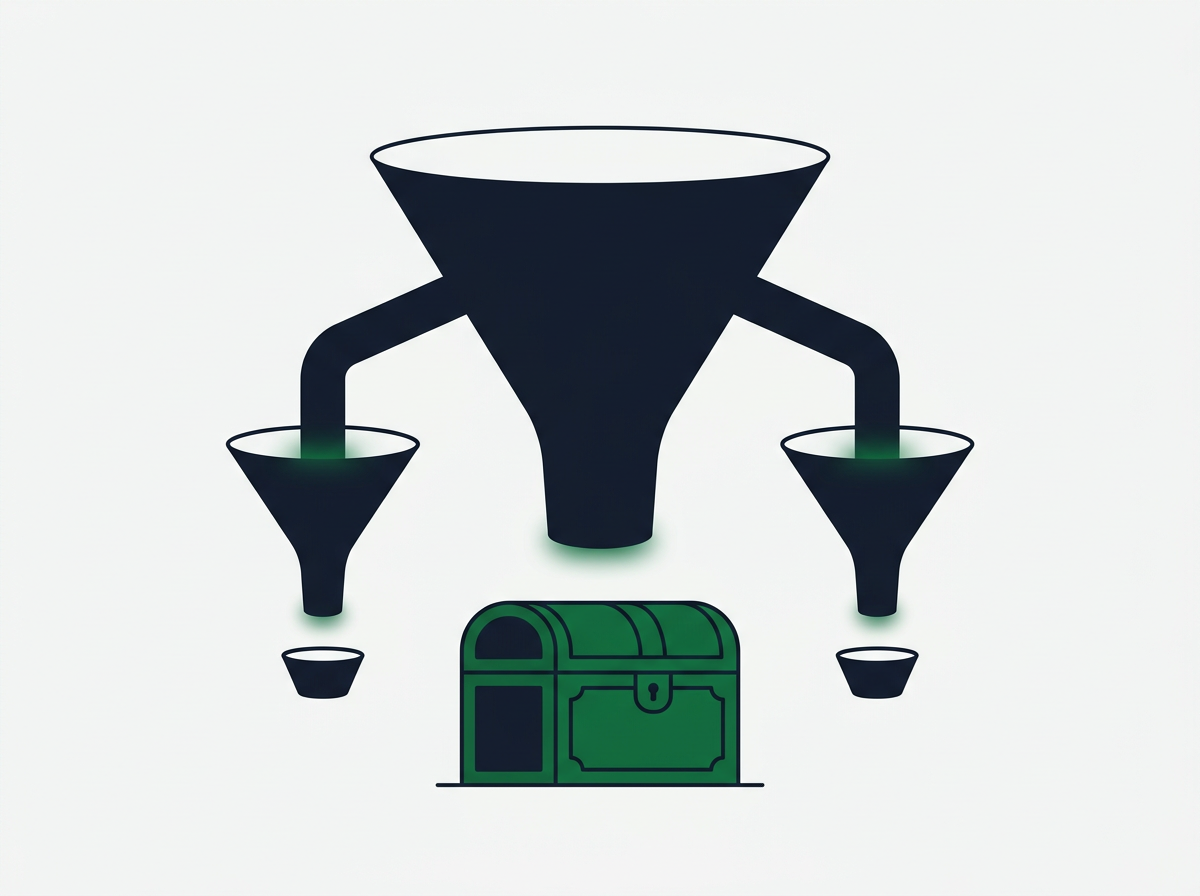
Once you have robust tracking in place, optimization becomes systematic rather than guesswork. You’ll have clear data showing which campaigns, audiences, ad creatives, and landing pages drive the best results. The next step is using that intelligence to optimize your paid acquisition strategy for maximum return.
Data-driven optimization follows a cycle: measure current performance against benchmarks, identify the biggest opportunities for improvement, test changes to capture that opportunity, measure the results, and scale what works while eliminating what doesn’t. This disciplined approach prevents the common mistake of constantly chasing new tactics without validating their effectiveness.
Reallocating Budget from Underperforming Campaigns
Most coaching businesses spread their ad budget relatively evenly across campaigns, platforms, and audiences. This diversification feels safe but actually guarantees mediocre results. Your tracking data will invariably show that some campaigns dramatically outperform others—sometimes by 5x or 10x in terms of return on ad spend.
The optimization opportunity is obvious: shift budget away from campaigns delivering poor ROI and into campaigns delivering exceptional results. In practice, this means constantly monitoring your client acquisition cost by campaign and ruthlessly cutting or pausing anything that exceeds your target threshold.
For example, if your average client is worth $5,000 and you’re willing to invest 20% of that in acquisition, your target CAC is $1,000. Any campaign consistently acquiring clients above that threshold should be paused or rebuilt. Any campaign acquiring clients well below that threshold should receive more budget until either performance degrades or you saturate the audience.
A/B Testing Ad Creatives and Landing Pages
Even high-performing campaigns can be improved through systematic testing. The traditional approach of running one ad and hoping it works leaves enormous revenue on the table. Strategic A/B testing identifies which elements drive better results and compounds those insights over time.
For ad creatives, test different hooks in your headline, various problem formulations in your body copy, different calls-to-action, and multiple image or video styles. Run tests simultaneously with identical audiences and budgets so you can isolate the impact of the creative element being tested. Let tests run until you have statistical significance—typically at least 100 conversions per variant for reliable conclusions.
Landing page testing focuses on elements that impact conversion: headline clarity and promise, benefit communication and social proof, form length and information requested, and call-to-action copy and design. Small improvements in landing page conversion rate produce outsized results because they multiply the value of every dollar spent on traffic acquisition.
Strategies for Reducing Cost Per Lead
Lowering your cost per lead without sacrificing lead quality directly improves your overall client acquisition economics. Several proven strategies help coaches and consultants achieve this goal through better targeting, improved ad creative, and smarter campaign structure.
Audience refinement tops the list. Broad audiences often generate cheap leads of poor quality. Narrow your targeting to prospects who closely match your ideal client profile based on demographics, interests, behaviors, and intent signals. While reach decreases, relevance increases dramatically, improving both conversion rates and cost per lead.
Ad creative optimization also reduces CPL. Compelling hooks that immediately speak to your prospect’s specific pain point earn higher engagement, which ad platforms reward with lower costs. Test multiple angles to discover which messages resonate most strongly with your audience. A creative that generates twice the click-through rate will typically deliver leads at half the cost.
Scaling Profitable Campaigns Effectively
Finding a winning campaign is thrilling, but scaling it without destroying performance requires careful strategy. The most common mistake is increasing budget too aggressively, which can quickly saturate the audience and drive up costs while driving down quality.
Scale gradually—ideally no more than 20-30% budget increases every few days. This allows the ad platform’s algorithm to adjust and find new qualified prospects within your target audience. Monitor your key metrics closely during scaling: if cost per lead increases significantly or consultation booking rates decline, you’ve likely hit audience saturation and need to pull back or expand to new audiences.
Horizontal scaling—duplicating successful campaigns with new but similar audiences—often works better than vertical scaling for coaching and consulting businesses. Once you’ve maximized one target audience, create new campaigns for adjacent audiences with proven creative and offer combinations. This approach maintains performance while expanding reach sustainably.
The Be Known Advantage: Expert Support for Coaches & Consultants
While implementing tracking and optimization systems is possible for any coaching business, partnering with specialists who develop a profitable client acquisition plan accelerates results and prevents costly mistakes. Be Known, LLC, headquartered in Knoxville, TN, focuses exclusively on paid acquisition for coaches and consultants across the United States.
Our specialized approach recognizes that coaching and consulting businesses face unique challenges in paid acquisition. High-ticket services require longer sales cycles, more sophisticated nurture sequences, and different conversion optimization strategies than e-commerce or low-ticket digital products. Generic marketing agencies rarely understand these nuances, leading to campaigns that generate leads but fail to produce clients.
Our Specialized Approach to High-Ticket Services
High-ticket coaching and consulting require a fundamentally different paid acquisition strategy than most marketing agencies implement. The short sales cycle tactics that work for $47 courses fail spectacularly when applied to $5,000-$50,000 coaching engagements. We’ve built our methodology specifically around the longer consideration periods and trust-building requirements of premium service businesses.
Our approach emphasizes multi-touch attribution, sophisticated retargeting sequences, content that demonstrates expertise and builds authority, and consultation-focused conversion paths rather than direct purchase funnels. We also recognize that for high-ticket services, lead volume matters far less than lead quality. Generating 100 qualified prospects who match your ideal client profile beats 1,000 random leads every time.
This specialization delivers measurably better results for coaches and consultants. Where generalist agencies might celebrate generating hundreds of leads, we focus on the metric that actually matters: client acquisition cost relative to lifetime value. Our clients consistently see CAC ratios between 10-30% of client lifetime value, creating sustainable, profitable growth engines.
Custom Tracking Solutions for Your Unique Business Model
Every coaching and consulting business has unique attributes that require customized tracking approaches. Group programs versus one-on-one coaching, front-end offers versus application-only models, single services versus comprehensive packages—each model requires different conversion tracking and optimization strategies.
We build tracking systems that reflect your actual business model and revenue structure. If you offer a low-ticket group program as a front-end and a high-ticket mastermind as a back-end, we track both initial and subsequent conversions so you understand the true value of each lead source. If you sell packages in multiple price tiers, we ensure your conversion tracking captures which tier each client selects so you can optimize for revenue, not just conversion volume.
This level of customization makes the difference between surface-level insights and deep intelligence that drives real business growth. Generic tracking setups miss the nuances that matter most for optimizing coaching and consulting acquisition, leaving money on the table even when the data appears adequate.
Beyond Clicks: Tracking True Client Acquisition Costs
Most marketing reports focus heavily on metrics that feel important but don’t directly impact profitability: impressions, reach, engagement, click-through rates. While these metrics have their place, coaches and consultants need to focus relentlessly on the economics of client acquisition.
True client acquisition cost includes not just ad spend, but also the time you invest in consultations, the cost of any lead magnets or free resources, the platform fees for your CRM and scheduling tools, and the agency fees if you’re working with marketing partners. When all these costs are properly accounted for and divided by the number of clients acquired, you get your real CAC—the number that determines whether your business can scale profitably.
We help our clients stop wasting ad spend and scale your coaching business by maintaining laser focus on this core metric. Everything we optimize—ad creative, targeting, landing pages, consultation processes—is measured against its impact on client acquisition cost relative to client lifetime value. This discipline ensures that growth is profitable, not just impressive-looking on vanity metrics.
Turning Data into Dollars: Maximizing Profitability
Data collection and tracking are means to an end, not the end itself. The ultimate goal is translating insights into actions that increase revenue and profitability. This requires moving beyond passive reporting to active optimization and strategic planning based on your tracking data.
The most successful coaching and consulting businesses use their paid acquisition data to make increasingly sophisticated decisions about budget allocation, offer development, pricing strategy, and even service delivery model. When you know precisely which marketing activities generate which financial outcomes, you can optimize your entire business for maximum profitability.
Forecasting Future Revenue
Once you have several months of reliable tracking data, you gain the ability to forecast future revenue with reasonable accuracy. This transforms budgeting from hopeful guesswork into strategic planning. You can model the financial impact of various budget scenarios and make informed decisions about growth investments.
Revenue forecasting for coaches and consultants should incorporate several key variables: average cost per lead by channel, lead-to-consultation conversion rate, consultation show-up rate, consultation-to-client conversion rate, average initial contract value, and average client lifetime value including repeat purchases. With these inputs, you can project the revenue impact of any proposed marketing budget.
For example, if your historical data shows you generate leads at $75 each with a 20% consultation booking rate, 60% show-up rate, 25% close rate, and $8,000 average client lifetime value, you can calculate that every $1,000 in ad spend should generate roughly 13 leads, 2.6 booked consultations, 1.56 attended consultations, and 0.39 clients worth approximately $3,120 in revenue. This 3.12x return on ad spend becomes your baseline for planning.
Increasing Client Retention and Upsells
While this article focuses primarily on paid acquisition tracking, the most valuable insight often comes from analyzing client behavior after acquisition. When you track which acquisition sources produce clients with the highest lifetime value, you can dramatically improve your marketing ROI by focusing on those channels.
Your tracking system should capture not just initial contract value but subsequent purchases, contract renewals, program upgrades, and referrals generated. This data reveals which marketing messages and channels attract your best long-term clients versus those who buy once and disappear.
Often, coaches discover that their cheapest lead source actually produces their most valuable clients, or conversely, that an expensive channel that seems to work well actually attracts bargain hunters who never invest further. These insights allow you to orient your entire paid acquisition strategy toward maximum lifetime value, not just minimizing initial acquisition cost.
The Long-Term Benefits of Consistent Revenue Tracking
Revenue tracking compounds in value over time. Each month of data makes your insights more reliable, your forecasts more accurate, and your optimization decisions more confident. After 6-12 months of disciplined tracking, you’ll have a deep understanding of your acquisition economics that creates a lasting competitive advantage.
Long-term tracking reveals seasonal patterns in your business, allowing you to plan budget allocation throughout the year. It identifies audience saturation points so you know when to refresh creative or expand to new targets. It documents the lifetime value of cohorts acquired in different time periods, validating whether changes to your service delivery or client experience are improving retention.
Perhaps most importantly, consistent tracking enables you to partner with paid acquisition experts more effectively. When you have clean historical data, specialists can diagnose problems faster, identify opportunities more accurately, and implement improvements with greater confidence. The coaching businesses that invest in proper tracking infrastructure position themselves for scalable, sustainable growth.
Building a Predictable Revenue Engine
The ultimate outcome of robust revenue tracking is predictability. Instead of wondering where next month’s clients will come from, you’ll know exactly how much budget is required to generate your target revenue. This predictability transforms your coaching business from a stressful rollercoaster into a systematic growth machine.
Predictable revenue enables better decision-making across your entire business. You can confidently hire team members knowing you’ll have the client volume to support them. You can invest in business development and infrastructure improvements with certainty about future cash flow. You can plan personal finances and life decisions without the anxiety of unpredictable income.
Building this revenue engine requires discipline and patience. You must commit to tracking consistently, reviewing data regularly, optimizing systematically, and scaling strategically. But for coaches and consultants willing to invest in this foundation, the payoff is extraordinary: a business that grows steadily, generates profit reliably, and provides the freedom and impact you started your coaching practice to achieve.
Take Control of Your Revenue: Next Steps
The gap between where your coaching business is today and where it could be often comes down to visibility. When you can’t see where prospects drop off, which campaigns work, or what your true acquisition costs are, you’re forced to make decisions based on guesses. Proper tracking eliminates the guesswork and reveals the specific actions that will grow your business profitably.
Start by auditing your current tracking setup against the frameworks outlined in this article. Identify the gaps—missing conversion pixels, disconnected systems, untracked conversion points—and prioritize closing them. Even implementing basic end-to-end tracking will reveal insights that can immediately improve your return on ad spend.
If building and optimizing these systems feels overwhelming, you don’t have to tackle it alone. Be Known, LLC works with coaches and consultants across the United States to implement comprehensive tracking, identify revenue leaks, and build profitable paid acquisition systems. Whether you’re just getting started with paid advertising or you’re scaling an established practice, we can help you get started with effective marketing for coaches that delivers measurable results.
The coaches who thrive in today’s competitive market aren’t necessarily the best marketers or the biggest advertisers. They’re the ones who understand their numbers, track their revenue systematically, and optimize relentlessly based on data. With the right tracking foundation and strategic support, your coaching business can join them in building predictable, profitable growth that creates both financial success and meaningful impact for your clients.
FAQs
What is “lost revenue” in the context of paid acquisition for coaches?
Lost revenue refers to the potential income coaches miss out on due to inefficient ad spending, poor funnel optimization, or inadequate tracking. It means paying for clicks or leads that never convert into paying clients, essentially throwing away marketing budget that could be generating profit for your coaching business.
How can I identify if my coaching business is losing revenue from ads?
Look for low conversion rates from ad clicks to consultations, high cost per acquisition (CPA) without corresponding client value, or a lack of clear data connecting ad spend to actual client sign-ups. If you can’t definitively link your paid acquisition dollars to revenue, you’re likely losing some.
What are the first steps to start tracking lost revenue more effectively?
Begin by ensuring all your ad platforms (e.g., Facebook Ads, Google Ads) have proper conversion tracking pixels installed. Then, integrate these with your CRM to follow leads from initial contact to client conversion. This provides a clearer picture of your paid acquisition funnel for coaches and consultants.
How does better tracking impact my paid acquisition strategy?
Improved tracking provides granular data on what’s working and what’s not. This allows you to optimize ad creatives, target audiences, and landing pages for higher conversion rates, reducing wasted spend and significantly boosting your return on ad spend (ROAS) for coaches and consultants.
Can Be Known, LLC help me implement these tracking systems?
Absolutely. Be Known, LLC specializes in paid acquisition for coaches and consultants across the United States. We help set up robust tracking, analyze your data, and optimize campaigns to ensure you’re not accidentally throwing away revenue, allowing you to scale profitably from our Knoxville, TN HQ.
Is tracking revenue only for large coaching businesses?
No, tracking revenue is crucial for coaches and consultants of all sizes. Even small businesses can significantly improve profitability by identifying and plugging revenue leaks. Early implementation of effective tracking sets a strong foundation for scalable and sustainable growth through paid acquisition.