

The One-Process Playbook: Streamlining Paid Acquisition for Coaches & Consultants
For coaches and consultants, optimizing paid acquisition isn’t about overhauling everything at once. This playbook outlines a strategic, one-process-at-a-time approach to identify, diagnose, and fix inefficiencies in your ad campaigns, ensuring sustainable growth and improved ROI for your business. By isolating individual workflows and systematically refining them, you avoid costly overwhelm and build momentum through measurable wins.
From our headquarters in Knoxville, TN, Be Known, LLC serves coaches and consultants across the United States with specialized expertise in paid acquisition for coaches and consultants. We’ve seen firsthand how the temptation to fix everything simultaneously leads to scattered resources, unclear attribution, and ultimately, wasted ad spend. The alternative—methodically improving one process at a time—delivers clarity, confidence, and compounding results that transform your client acquisition engine.
This comprehensive guide walks you through the exact framework for identifying bottlenecks, diagnosing root causes, implementing targeted fixes, and scaling successful optimizations across your paid acquisition campaigns. Whether you’re running Meta ads, Google Search campaigns, or LinkedIn prospecting, the principles remain constant: focus, measure, iterate, scale.
Why Focus on One Process at a Time for Paid Acquisition?
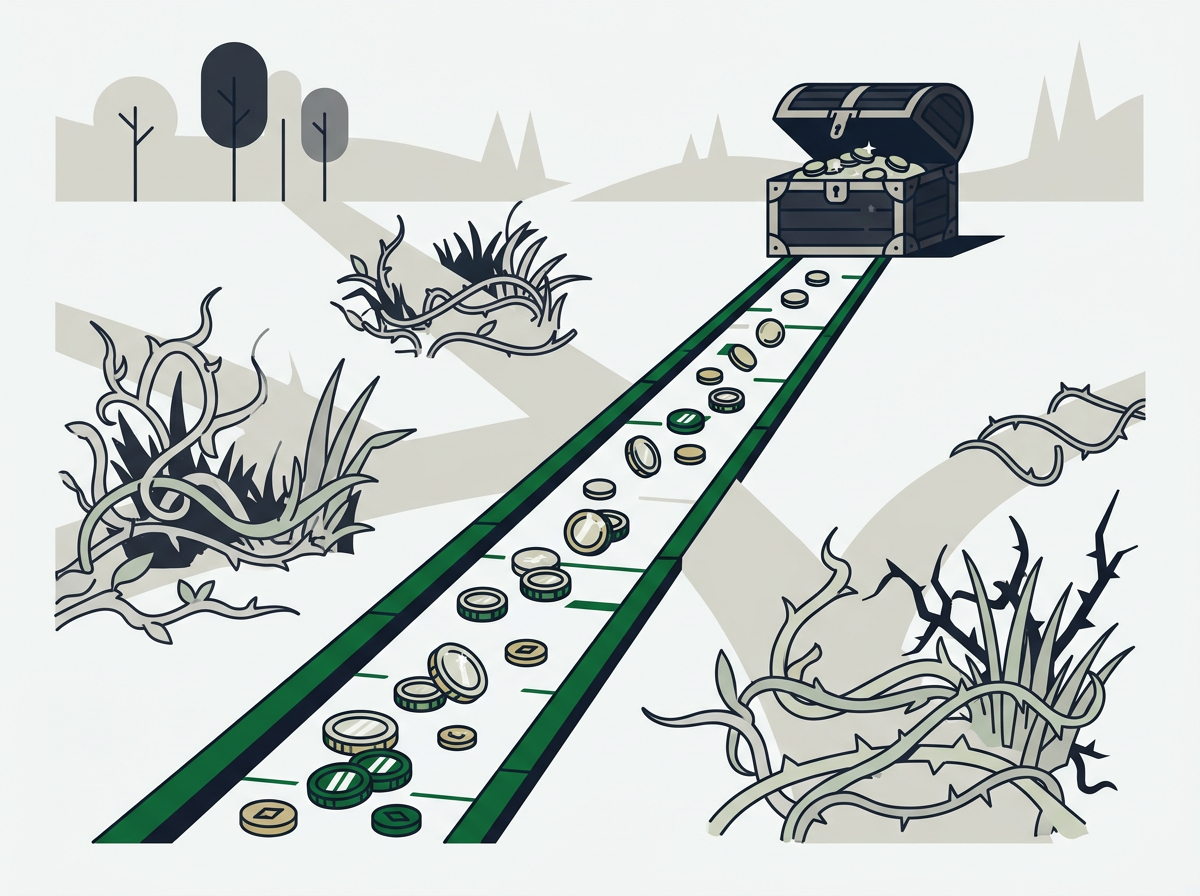
The coaching and consulting landscape has become increasingly competitive, with average Google Ads cost-per-click rising 15% year-over-year across professional services. In this environment, efficiency isn’t optional—it’s survival. Yet many practitioners spread their optimization efforts so thin that no single intervention receives the attention needed to drive meaningful improvement.
When you attempt to redesign your ad creative, rebuild your landing page, overhaul your targeting parameters, and restructure your follow-up sequence simultaneously, you create a measurement nightmare. Which change drove the lift in conversion rate? Which adjustment tanked your cost per acquisition? Without isolation, attribution becomes guesswork, and guesswork leads to repeated mistakes.
The Cost of Overwhelm in Ad Spend
Overwhelm manifests in three expensive ways for coaching and consulting businesses. First, it dilutes your team’s focus, spreading expertise across too many initiatives and preventing deep problem-solving. Your team becomes reactive, jumping from crisis to crisis, rather than proactive in systematically eliminating friction points.
Second, simultaneous changes obscure cause-and-effect relationships. When your conversion rate improves after changing five variables, you don’t know which four changes were neutral or even harmful. This statistical noise prevents you from doubling down on what works and abandoning what doesn’t, turning optimization into an endless cycle of trial-and-error without accumulated learning.
Third, resource exhaustion sets in quickly. Most coaching and consulting businesses don’t have dedicated paid acquisition teams; they have practitioners juggling client delivery, business development, and campaign management. Asking these already-stretched professionals to overhaul multiple processes simultaneously guarantees incomplete implementation and half-measures that deliver disappointing results.
Building Momentum Through Small Wins
The one-process approach builds psychological and operational momentum that compounds over time. When you fix a specific bottleneck (say, improving your landing page headline from a 12% to 18% conversion rate), you generate confidence, institutional knowledge, and budget flexibility that funds the next optimization.
These sequential wins also build organizational capability. Your team develops a repeatable methodology for process improvement: identify, diagnose, design, test, measure, scale. This methodology becomes your competitive advantage, allowing you to continuously adapt to market shifts, platform algorithm changes, and evolving buyer preferences.
Moreover, focused improvements deliver faster feedback loops. Rather than waiting months to assess whether your comprehensive overhaul succeeded, you can evaluate a single-process fix within weeks. This rapid learning cycle allows you to fail fast, iterate intelligently, and accumulate validated improvements that transform your acquisition economics.
Identifying Your Core Bottlenecks in Paid Acquisition
Effective process improvement begins with accurate diagnosis. Too many coaches and consultants start optimization based on hunches, industry trends, or what competitors appear to be doing. This approach wastes resources on solutions that don’t address your specific friction points.
True bottleneck identification requires honest engagement with your data, mapping your actual client journey, and soliciting ground-truth feedback from the people closest to your leads. This triangulated approach surfaces the constraints that genuinely limit your growth, not the ones you assume are problems.
Data-Driven Problem Discovery
Start by auditing your campaign analytics across the entire funnel. Export click-through rates, cost-per-click, landing page conversion rates, cost-per-lead, lead-to-consultation conversion rates, and consultation-to-client close rates for the past 60-90 days. Arrange these metrics in a simple funnel table to visualize drop-off points.
According to Salesforce research, the average lead-to-customer conversion rate across professional services is just 2.9%. If your overall conversion rate falls significantly below this benchmark, identify which stage shows the most dramatic falloff. A healthy funnel shows gradual attrition; a broken one shows cliff-edge drop-offs that signal process failure.
Look for anomalies and outliers in your data. Perhaps your LinkedIn ads generate three times the cost-per-click of your Facebook campaigns but convert to consultations at twice the rate. Or maybe your landing page converts beautifully on desktop but catastrophically on mobile. These patterns reveal where your processes are breaking down and where optimization will deliver disproportionate returns.
Visualizing the Client Journey
Data provides quantitative evidence, but journey mapping provides qualitative context. Create a step-by-step flowchart of every interaction a prospect has with your acquisition system, from initial ad impression through booking confirmation. Include decision points, required actions, technology touchpoints, and timing assumptions.
This exercise frequently reveals hidden friction. Perhaps your ad promises a “free strategy session,” but your landing page headlines it as a “discovery call,” creating cognitive dissonance. Or your confirmation email arrives from a generic email address that triggers spam filters, preventing calendar adds. These process inconsistencies erode trust and create leakage that data alone might not illuminate.
Involve team members who don’t work directly on paid acquisition in this mapping exercise. Fresh eyes spot assumptions that insiders have internalized. Your operations manager might notice that your “instant booking” process actually requires three business days of back-and-forth scheduling, while your copy promises immediate access—a misalignment that undermines conversion.
Additionally, consider gathering feedback from sales and client-facing team members who interact with leads daily. They hear objections, confusion points, and expectations mismatches that never show up in analytics dashboards. A salesperson might report that leads consistently ask, “Is this really free?” despite clear messaging, indicating a trust barrier your process must address.
Diagnose & Design: Crafting Targeted Solutions
Once you’ve identified your highest-impact bottleneck, resist the urge to jump immediately into solution mode. Premature problem-solving addresses symptoms rather than root causes, leading to superficial fixes that fail to deliver lasting improvement. Invest time in thorough diagnosis before designing interventions.
The most powerful diagnostic tool is deceptively simple: ask “why” repeatedly until you exhaust surface explanations and reach foundational issues. If your landing page converts poorly, why? “Because visitors don’t click the CTA button.” Why don’t they click? “Because the value proposition is unclear.” Why is it unclear? “Because the headline focuses on features rather than outcomes.” Now you’ve reached a root cause worth addressing.
Root Cause Analysis Techniques
The “Five Whys” technique works well for linear problems but struggles with complex, multi-variable issues common in paid acquisition. For these situations, employ fishbone diagrams (also called Ishikawa diagrams) that categorize potential causes across dimensions: messaging, design, technical performance, targeting, offer strength, and timing.
For example, if your cost-per-lead has doubled in the past month, map potential causes across these categories. Under “messaging,” list creative fatigue, competitive positioning shifts, or misaligned pain points. Under “targeting,” note audience expansion, changed exclusions, or platform algorithm updates. This structured brainstorming prevents tunnel vision and surfaces less-obvious contributing factors.
Test your hypothesized root cause by examining counterfactuals. If you believe your landing page headline is the problem, do variants with different headlines show similar poor performance, or does one clearly outperform? If all variants struggle equally, the headline isn’t your root cause—something more fundamental (perhaps trust signals or offer clarity) is undermining conversion regardless of headline treatment.
Solution Brainstorming & Prioritization
With a validated root cause identified, generate multiple solution options before committing to one approach. Brainstorm freely without immediate evaluation: if trust signals are lacking, you might add client testimonials, display certification badges, include video proof, offer a money-back guarantee, or provide transparent pricing. List every conceivable intervention.
Next, evaluate each option against three criteria: implementation difficulty, expected impact, and measurement clarity. A solution that requires six weeks of development, delivers uncertain results, and offers ambiguous success metrics ranks low. An intervention requiring two days of work, backed by industry benchmarks showing typical impact, and measured through clear A/B testing ranks high.
Before implementing any solution, define your success metrics explicitly. If you’re testing a new landing page headline, what conversion rate lift would justify keeping the change? What statistical confidence level do you need before declaring a winner? Pre-committing to these thresholds prevents post-hoc rationalization and ensures disciplined decision-making.
Document your hypothesis clearly: “We believe that adding three client testimonials with photos and results to our landing page will increase conversion rate from 12% to 16% within a 95% confidence interval after 500 form submissions because social proof reduces perceived risk for high-ticket coaching services.” This specificity creates accountability and learning regardless of outcome.
Implementing and Testing Your Process Fixes
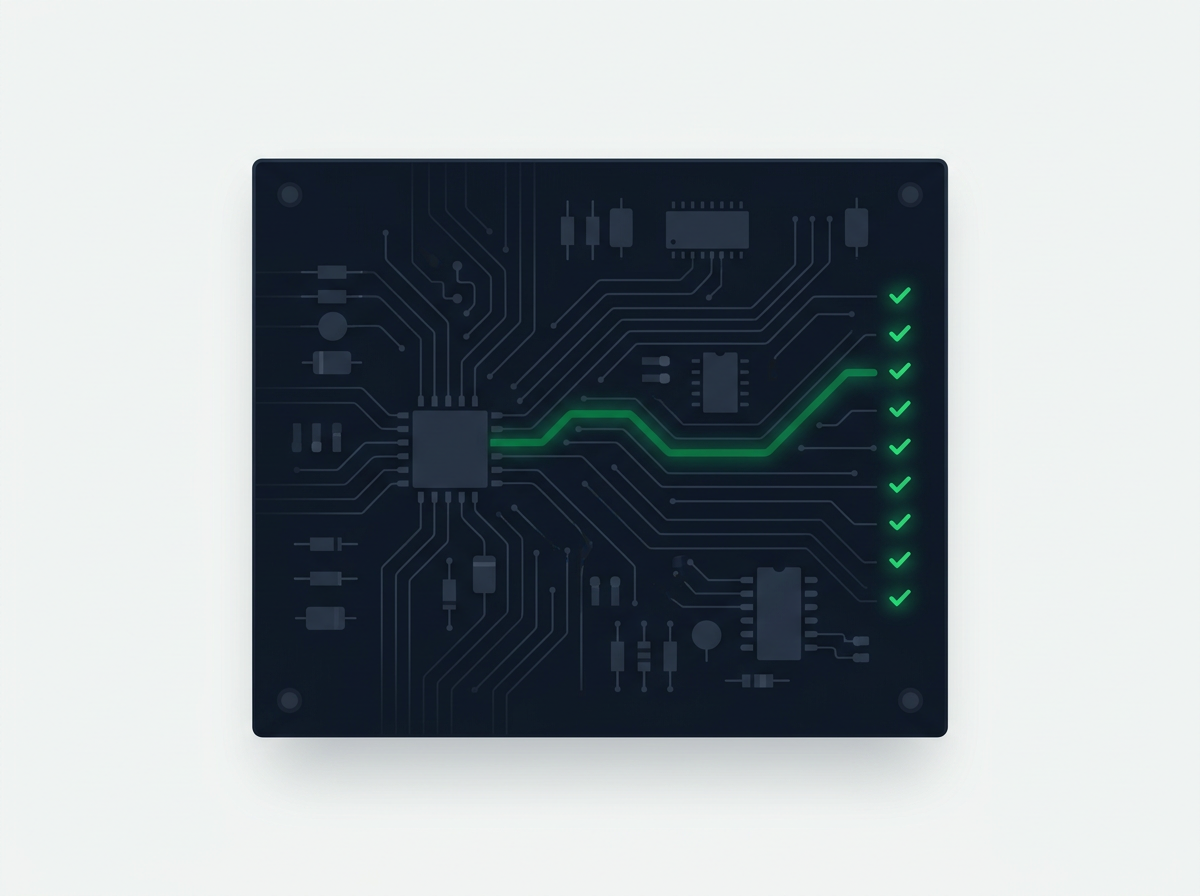
Implementation discipline separates successful optimization from perpetual tinkering. Many coaches and consultants launch tests without proper controls, change variables mid-experiment, or declare winners based on insufficient data. These practices waste ad spend and generate false conclusions that compound over time.
Controlled experimentation isn’t complex, but it does require patience and rigor. At minimum, you need a clear control condition (your existing process), a clear treatment condition (your proposed fix), random or equivalent traffic allocation, and sufficient sample size to detect meaningful differences. Shortcuts in any of these areas invalidate your results.
Controlled Experimentation in Ads
Platform-native A/B testing tools (Facebook’s Split Testing, Google’s Campaign Experiments) provide the easiest path to valid experiments. These tools automatically handle traffic allocation, statistical significance calculation, and campaign budget optimization across test cells. Use them when testing ad creative, audiences, placements, or bid strategies.
For landing page tests, dedicated tools like Google Optimize, Unbounce, or VWO offer visual editors and built-in statistical engines. When testing without these tools, manually split traffic by directing alternating clicks or using UTM parameters, but be aware that manual splits introduce bias unless you’re extremely careful about traffic source consistency.
Run tests for a full business cycle, typically 7-14 days for coaches and consultants, to account for day-of-week and time-of-day variations. According to VWO’s testing guidelines, premature test conclusion is the most common experimentation error, leading to false positives in 30-40% of cases. Wait for statistical significance or a predetermined test duration, whichever comes first.
Essential KPIs for Process Improvement
Different processes require different success metrics. For ad creative optimization, monitor click-through rate, cost-per-click, and engagement rate. For landing page improvements, track conversion rate, time on page, and scroll depth. For lead nurturing process fixes, measure response rate, consultation booking rate, and time-to-conversion.
Always track efficiency metrics alongside volume metrics. A change that increases lead volume by 20% but increases cost-per-lead by 40% isn’t an improvement—it’s a budget drain. Calculate fully-loaded customer acquisition cost (including ad spend, tool costs, and labor) to ensure your optimization truly improves unit economics.
Implement real-time monitoring dashboards during test periods. Use Google Data Studio, Tableau, or platform-native reporting to track test performance daily without obsessive manual checking. Set alert thresholds for catastrophic underperformance (e.g., cost-per-lead exceeding $500) that warrant early test termination to protect budget.
Maintain detailed experiment logs documenting test hypotheses, implementation dates, traffic allocation, external factors (seasonal trends, competitive moves, platform changes), results, and decisions. This institutional memory prevents repeated testing of failed ideas and creates a knowledge base that new team members can leverage to optimize your paid acquisition strategy more quickly.
Measure, Iterate, and Scale for Continuous Growth
Test completion is not the end of process improvement—it’s the beginning of institutional learning. How you interpret results, document findings, and operationalize successful changes determines whether your optimization efforts compound into competitive advantage or evaporate into forgotten experiments.
Rigorous post-implementation analysis answers three questions: Did the change work as hypothesized? Why did it work (or not work)? What broader implications does this result have for other processes? These questions transform isolated experiments into strategic insights that inform future initiatives.
Post-Implementation Analysis
When a test succeeds, resist the temptation to simply declare victory and move on. Dig deeper: Did the winning variation perform equally well across all traffic sources, or did results vary by channel? Did mobile and desktop users respond differently? Did time-of-day or day-of-week patterns emerge? These secondary insights often reveal optimization opportunities beyond your original hypothesis.
If a test fails to deliver expected results, conduct a failure analysis with the same rigor you’d apply to success. Was your hypothesis fundamentally wrong, or was implementation flawed? Did you test the right thing with the wrong execution? Was sample size insufficient? External factors (algorithm changes, market shifts) might have masked a true effect.
Document both positive and negative results in accessible formats. A simple spreadsheet tracking test name, hypothesis, implementation period, result, and next action creates organizational memory. Share findings in team meetings with visual evidence (screenshot comparisons, metric charts) to build collective understanding of what drives performance in your specific market.
Scaling Successful Optimizations
Once you’ve validated an improvement in one process, consider where else the underlying principle applies. If adding testimonials improved your webinar landing page, would they also enhance your lead magnet page? If simplifying your headline boosted conversions, should you apply the same clarity principle to ad copy?
Scale carefully and sequentially. Don’t implement the winning change across all properties simultaneously—you’ll lose the opportunity to measure incremental impact and risk introducing unnoticed problems at scale. Instead, roll out changes in phases, measuring impact at each stage and adjusting based on performance.
Create standard operating procedures (SOPs) for validated improvements. If your testing proves that a specific landing page structure outperforms alternatives, document that structure in a template that future campaigns use by default. This standardization prevents backsliding and ensures new team members implement best practices from day one.
Revisit successful optimizations quarterly to ensure they remain effective. Market conditions change, audiences evolve, and competitors adapt. A testimonial that drove powerful results six months ago might need refreshing with more recent client wins. Continuous validation prevents optimization decay and maintains performance gains over time.
Common Paid Acquisition Processes for Coaches & Consultants to Optimize
While every coaching and consulting practice has unique acquisition systems, certain processes appear consistently across businesses and offer high-impact optimization opportunities. These common workflows represent the highest-probability starting points for practitioners new to systematic process improvement.
Understanding which processes typically bottleneck growth helps you prioritize diagnostic efforts and compare your performance against industry patterns. If your ad creative production takes four weeks from concept to launch, and industry norms suggest two days, you’ve identified a constraint worth addressing.
Optimizing Ad-to-Conversion Pathways
Ad Creative & Copy Production: Many coaches and consultants treat ad creation as an artisanal craft, starting from scratch with each campaign. This approach creates inconsistency, slows launch velocity, and prevents systematic improvement. Develop a creative production system with templates, proven headline formulas, and image/video libraries that accelerate creation while maintaining quality.
Track creative performance metrics by element: headlines, body copy, images, calls-to-action. According to WordStream’s Facebook ad benchmarks, coaches and consultants average a 1.15% click-through rate—if yours falls below this, your creative process needs systematic improvement, not just harder work.
Landing Page Conversion Flow: The journey from ad click to form submission involves dozens of micro-decisions: Does the headline match ad messaging? Is the value proposition clear within three seconds? Does the form request appropriate information for the relationship stage? Are trust signals prominent? Each element either reduces or increases friction.
Map your landing page as a sequence of cognitive tasks the visitor must complete: understand the offer, evaluate credibility, assess fit, decide to act, complete the form. Identify which task shows the highest abandonment (scroll depth and heatmap tools reveal this) and optimize that specific friction point before moving to others.
Refining Lead Qualification Processes
Lead Nurturing & Follow-Up: The window between form submission and first contact dramatically impacts conversion. Research shows that businesses that contact leads within five minutes are 100 times more likely to connect than those waiting 30 minutes. If your follow-up process involves manual review, batched outreach, or delays exceeding an hour, you’re hemorrhaging opportunities.
Implement automated immediate response systems that acknowledge submission, set expectations, and provide interim value (a relevant article, brief video, assessment tool) while human follow-up is pending. This “bridge content” maintains engagement during the critical first hour and positions your eventual outreach as continuation rather than cold contact.
Audience Targeting Refinement: As your campaigns mature, accumulated data enables increasingly sophisticated segmentation. Rather than broad “business coaches” targeting, you can exclude past website visitors, exclude existing clients, create lookalike audiences from consultation bookers (not just leads), and layer behavioral signals that indicate purchase intent.
Audit your current exclusion lists quarterly. Many practices inadvertently advertise to existing clients, past unqualified leads, or employees because exclusion lists haven’t been updated. Implement automated systems that sync your CRM contacts to platform exclusion audiences weekly, preventing wasted impressions and awkward “why am I seeing your ads?” conversations.
Consider sequence-based targeting that adapts messaging to prior engagement. Someone who watched 75% of your video ad but didn’t click deserves different creative in their second exposure than someone seeing your brand for the first time. Platform sequential messaging features enable this sophistication without manual campaign multiplication.
Partnering for Accelerated Process Improvement
While the one-process playbook is intellectually straightforward, execution requires expertise, dedicated time, and specialized tools that many coaching and consulting practices lack. Attempting to simultaneously run your business and systematically optimize paid acquisition often results in both suffering—client delivery slips while campaigns drift.
This resource constraint explains why many successful practitioners choose to partner with paid acquisition experts who bring dedicated focus, accumulated pattern recognition across dozens of similar businesses, and platform-specific technical knowledge that would take years to develop internally.
An experienced agency identifies bottlenecks more quickly because they’ve seen the same patterns across hundreds of coaching and consulting campaigns. They implement fixes more efficiently because they’ve already tested similar solutions and know which approaches work. They monitor results more consistently because campaign optimization is their core focus, not a distraction from client delivery.
Be Known, LLC specializes in precisely this scenario—working with coaches and consultants who recognize paid acquisition’s strategic importance but lack the bandwidth or expertise to optimize systematically. Our process-focused methodology aligns perfectly with practitioners who value disciplined, measurable improvement over random tactics and vanity metrics.
From our Knoxville, TN headquarters, we serve clients remotely across the United States, bringing the same systematic one-process-at-a-time approach outlined in this playbook. Our engagements begin with diagnostic assessment, identifying your specific highest-impact bottleneck, then designing and implementing targeted solutions while building your team’s capability to sustain improvements long-term.
Taking the Next Step in Paid Acquisition Excellence
The one-process playbook transforms paid acquisition from an overwhelming complexity into a manageable sequence of focused improvements. By isolating individual workflows, diagnosing root causes, testing solutions rigorously, and scaling what works, you build a compounding optimization engine that continuously improves your client acquisition economics.
This approach works because it respects real-world constraints: limited time, finite budgets, small teams. You don’t need to overhaul everything simultaneously to achieve substantial improvement. You need disciplined focus on the constraints that actually limit your growth, methodical problem-solving, and patient accumulation of validated wins.
Most coaches and consultants have far more opportunity in their current paid acquisition systems than they realize. The issue isn’t lack of potential—it’s lack of systematic methodology to unlock that potential without creating chaos. The playbook provides that methodology, transforming ad spend from a necessary expense into a strategic investment that generates predictable, scalable client acquisition.
Whether you implement this approach independently or seek expert guidance, the fundamental principle remains constant: sustainable paid acquisition excellence emerges from focused, sequential process improvement, not dramatic overhauls or silver-bullet tactics. Start with your biggest bottleneck, fix it completely, measure the impact, then move to the next constraint.
Ready to identify your highest-impact paid acquisition bottleneck and implement a systematic fix that delivers measurable results? Be Known, LLC helps coaches and consultants across the United States unlock consistent client growth through disciplined, one-process-at-a-time optimization. Schedule a diagnostic consultation to discover where your campaigns are leaving money on the table and how to recapture it systematically.
From Our Own Work
When we took over Laura Cowan’s paid ads, funnels, and CRM, the goal was to get her out of the middle of her own business. We built one system at a time instead of fixing everything at once, and she got 15-18 hours a week back.
– Daniel Pope, Founder of Be Known
Keep reading: see all of our client acquisition guides, or talk with us about your own setup.
FAQs
What’s the biggest mistake coaches and consultants make in paid acquisition process improvement“>paid acquisition process improvement“>paid acquisition process improvement“>paid acquisition process improvement“>paid acquisition process improvement“>paid acquisition process improvement“>paid acquisition process improvement“>paid acquisition process improvement“>paid acquisition process improvement“>paid acquisition process improvement“>paid acquisition process improvement“>paid acquisition process improvement“>paid acquisition process improvement“>paid acquisition process improvement“>paid acquisition process improvement?
The most common mistake is trying to fix everything at once, leading to overwhelm and unclear results. Focusing on one specific process, like ad creative testing or landing page optimization, allows for targeted improvements and clearer measurement of impact. This strategic focus ensures sustainable growth and better ROI for your ad spend.
How quickly can I expect to see results from fixing one paid acquisition process?
Results can vary, but a focused, data-driven approach often yields noticeable improvements within 2-4 weeks. For instance, optimizing a low-performing ad creative could quickly boost click-through rates. Consistent monitoring and iterative adjustments are key to accelerating positive outcomes and maintaining momentum in your paid campaigns.
Can I apply this one-process-at-a-time playbook without an external agency?
Yes, you absolutely can, but an agency like Be Known, LLC, specializing in paid acquisition for coaches and consultants, can significantly accelerate the process. We bring expert insights, specialized tools, and dedicated resources to identify, diagnose, and implement fixes more efficiently, allowing you to focus on your core business while we optimize your ad spend.
What defines a ‘process’ in the context of paid acquisition for a coaching business?
A ‘process’ refers to a distinct, repeatable sequence of actions within your ad campaigns. Examples include the workflow for creating and launching a new ad, the sequence a user follows from clicking an ad to booking a call, or your system for analyzing campaign performance and making adjustments. Each of these can be optimized individually.
How does Be Known, LLC specifically help coaches and consultants with this playbook?
Be Known, LLC partners with coaches and consultants nationwide from our Knoxville, TN headquarters, serving clients remotely to implement this playbook. We provide strategic guidance, conduct in-depth data analysis to identify bottlenecks, design and implement targeted solutions, and continuously monitor performance. Our goal is to optimize your paid acquisition, ensuring consistent client growth and a strong return on ad spend.
If you’re ready to stop guessing and start systematically improving your paid acquisition performance, Be Known, LLC offers the expertise, methodology, and dedicated focus that transforms ad campaigns from expense centers into profit engines. Visit our strategic guidance for paid acquisition page to schedule your diagnostic consultation and discover which single process fix will deliver your highest return in the next 30 days.