Automating Client Onboarding“>Automating Client Onboarding“>Automating Client Onboarding“>Automating Client Onboarding“>Automating Client Onboarding“>Automating Client Onboarding“>Automating Client Onboarding“>Automating client onboarding is crucial for coaches and consultants looking to scale efficiently, especially after successful paid acquisition efforts. By streamlining initial processes, you enhance client experience, reduce administrative burden, and free up valuable time to focus on service delivery and growth. Be Known, LLC helps professionals nationwide optimize these systems for seamless scalability.


Why Automate Onboarding for Coaches & Consultants?

For coaches and consultants who invest in paid acquisition for coaches and consultants, manual client onboarding creates a critical bottleneck that directly undermines growth. Be Known, LLC, headquartered in Knoxville, TN, serves coaches and consultants across the United States with fully remote support to transform this operational challenge into a competitive advantage. When you’re spending 15–20 hours per week on administrative tasks related to new client setup, you’re not just losing time—you’re actively limiting your revenue ceiling.
The economics are straightforward: every hour spent manually sending contracts, chasing signatures, and scheduling initial calls is an hour not spent delivering billable services or refining your marketing strategy. When your paid acquisition campaigns successfully generate qualified leads, a clunky onboarding process can cause drop-off rates as high as 30% before clients even receive their first service touchpoint.
Boost Efficiency and Save Time Previously Spent on Manual Tasks
Automation replaces repetitive administrative work with technology-driven workflows that execute flawlessly every time. Instead of copying and pasting welcome emails, manually generating contracts, and following up on payment delays, automated systems handle these tasks in seconds. This efficiency gain compounds rapidly as you scale.
Think about a consultant who manually onboards five new clients each month, spending roughly three hours per client on administrative setup. That’s 15 hours monthly, nearly two full working days, spent on tasks that add zero revenue. Automation cuts this to maybe 30 minutes of oversight, giving you back 14.5 hours for actual billable work.
Enhance Client Experience from Day One
First impressions establish the foundation for long-term client relationships. When a prospect converts from your paid acquisition funnel, they expect immediate, professional engagement. Manual processes introduce delays, inconsistencies, and errors that erode confidence before the engagement truly begins.
Automated onboarding delivers a consistent, polished experience for every client. Welcome emails arrive within minutes of signup. Contracts are pre-populated with accurate information. Payment processing happens seamlessly. This professionalism signals competence and establishes trust, dramatically reducing buyer’s remorse and early-stage churn.
The Direct Link to Paid Acquisition ROI: How Seamless Onboarding Maximizes Your Ad Spend
Your customer acquisition cost (CAC) only delivers value when leads successfully convert to paying, engaged clients. Manual onboarding introduces friction at the most critical moment—immediately after the prospect has decided to work with you. Studies show that B2B buyers who experience friction during contract signing are 40% more likely to delay their purchase or reconsider their decision.
When you maximize your paid acquisition ROI through automation, you’re protecting the investment you’ve already made in attracting qualified leads. If your cost per lead is $200 and manual onboarding causes a 20% drop-off rate, you’re effectively wasting $40 per acquisition. At scale, this represents thousands in lost revenue and wasted ad spend.
Scaling Your Impact: Serving More Clients Without Increasing Overhead
Growth constrained by manual processes hits a hard ceiling. There are only so many hours in a day, and administrative tasks scale linearly with client volume. If onboarding one client requires three hours of work, onboarding ten clients demands thirty hours—an impossible weekly commitment alongside service delivery.
Automated systems break this linear relationship. The same workflow that onboards one client can simultaneously handle ten, twenty, or fifty clients with minimal additional effort. This scalability is essential for coaches and consultants who want to grow beyond solo practitioner status without hiring expensive administrative staff.
Key Stages of Automated Client Onboarding
Effective onboarding automation requires understanding the distinct stages of client integration and designing technology solutions for each phase. Breaking down the process reveals specific opportunities for efficiency gains and experience enhancement. Each stage builds on the previous one, creating a seamless journey from initial inquiry to active engagement.
The goal isn’t simply to eliminate human touch—it’s to strategically deploy automation for repetitive tasks while reserving your personal attention for high-value interactions. This balance ensures scalability without sacrificing the personalized service that differentiates premium coaching and consulting.
Initial Contact & Lead Qualification: Automating Intake Forms and Scheduling
The onboarding journey starts the second a prospect shows interest, usually through a lead form from your paid acquisition campaigns. Automated intake forms collect critical information (business challenges, goals, budget range, timeline) without you having to chase anyone down. This data flows straight into your CRM and builds a complete client profile automatically.
Scheduling automation eliminates the tedious back-and-forth of finding mutually available meeting times. When a qualified lead wants to book a discovery call, they access your real-time availability and self-schedule. Automated confirmations and reminders reduce no-shows by up to 30%, ensuring your calendar remains productive.
Contracting & Payment Processing: Secure, Digital Solutions for Agreements and First Payments
Contract execution is traditionally one of the most time-consuming onboarding bottlenecks. Manual processes involve drafting custom agreements, emailing PDF files, waiting for printed signatures, and chasing down unresponsive clients. Digital contract automation transforms this multi-day process into a streamlined, same-day workflow.
E-signature platforms integrate with your CRM to automatically generate contracts pre-populated with client-specific details. Clients receive signing invitations via email, complete the process on any device, and trigger automatic notifications when complete. Payment processing integrates directly with contract signing, capturing first payments or setting up recurring billing without additional manual intervention.
Welcome & Orientation: Automated Welcome Emails, Resource Delivery, and Initial Meeting Scheduling
The post-signature phase is critical for maintaining momentum and preventing buyer’s remorse. Automated welcome sequences deliver immediate value through orientation materials, access credentials, preparatory worksheets, and next-step instructions. This proactive communication keeps clients engaged while you focus on service preparation.
Resource delivery automation makes sure every client gets the same complete onboarding materials (video tutorials, process guides, contact directories) without you tracking anything manually. Automated scheduling links let clients book their kick-off session right after signing, which shrinks the gap between commitment and actually getting started.
Tools & Platforms for Each Stage: CRM, E-signature, Scheduling Software
The technology ecosystem for onboarding automation includes several interconnected platform categories. Customer Relationship Management (CRM) systems serve as the central hub, storing client data and orchestrating workflows across other tools. E-signature platforms handle legally binding contract execution. Scheduling software manages calendar availability and booking.
Integration between these platforms is essential. When your CRM connects with your e-signature tool and scheduling software, data flows seamlessly without manual transfers. A client who books a call automatically receives the appropriate contract; signing that contract triggers welcome sequences and resource delivery. This interconnection creates a truly automated experience.
Essential Tools & Technologies for Automation
Selecting the right technology stack for onboarding automation requires understanding both platform capabilities and integration requirements. The most powerful automation emerges not from individual tools but from how those tools work together. Coaches and consultants should prioritize platforms that offer robust API connectivity and native integrations with complementary services.
Investment in quality tools pays dividends through reduced manual work, fewer errors, and superior client experience. While free or low-cost options exist, professional-grade platforms typically offer the reliability, support, and advanced features necessary for scaling operations efficiently.
CRM Systems for Managing Client Data and Workflows
Modern CRM platforms like HubSpot and ActiveCampaign go far beyond simple contact management. They serve as automation engines that trigger actions based on client behavior, manage multi-step workflows, and provide comprehensive visibility into each client’s journey. For coaches and consultants, CRM selection should prioritize marketing automation capabilities alongside sales and service features.
HubSpot offers robust free-tier functionality suitable for growing practices, with scalable paid tiers that add advanced automation, custom reporting, and team collaboration features. ActiveCampaign excels in email marketing automation and sophisticated segmentation, making it ideal for consultants who rely heavily on nurture sequences. Both platforms integrate extensively with third-party tools.
E-signature & Document Management for Contracts and Agreements
DocuSign and PandaDoc represent industry-leading solutions for digital contract management, each with distinct advantages. DocuSign offers universal brand recognition and legal acceptance, making clients comfortable with the signing process. Its extensive integration library connects with virtually every major CRM and business platform.
PandaDoc differentiates through document analytics and proposal-to-contract capabilities. You can track exactly when clients open agreements, how long they spend reviewing each section, and where they hesitate. This visibility informs follow-up conversations and helps identify contract friction points that might slow conversions.
Scheduling & Calendar Integration for Booking Initial Calls
Calendly and Acuity Scheduling eliminate scheduling friction by presenting your real-time availability and allowing clients to self-book appointments. Both platforms sync with Google Calendar, Outlook, and other major calendar services to prevent double-booking. Automated reminders sent via email and SMS dramatically reduce no-shows.
Acuity handles more advanced scheduling scenarios like package booking, class scheduling, and multiple staff calendars, so it works well for consultants who run workshops or group programs in addition to one-on-one sessions. Calendly focuses on simplicity and ease of use, perfect for straightforward scheduling with minimal setup.
Integrating Your Tech Stack: Creating a Seamless Flow for Your Paid Acquisition Leads
Integration transforms individual tools into a cohesive automation system. When a lead from your paid acquisition campaigns enters your CRM, integrated workflows automatically trigger welcome emails, send scheduling links, and prepare contract templates. The client experiences a seamless journey while you maintain zero manual involvement.
Native integrations offer the most reliable connectivity, but third-party integration platforms like Zapier expand possibilities exponentially. A Zapier workflow might connect a website form submission to your CRM, send a Slack notification to your team, add the contact to specific email sequences, and create a task for manual follow-up if needed—all within seconds of form submission.
Designing an Optimized Onboarding Workflow
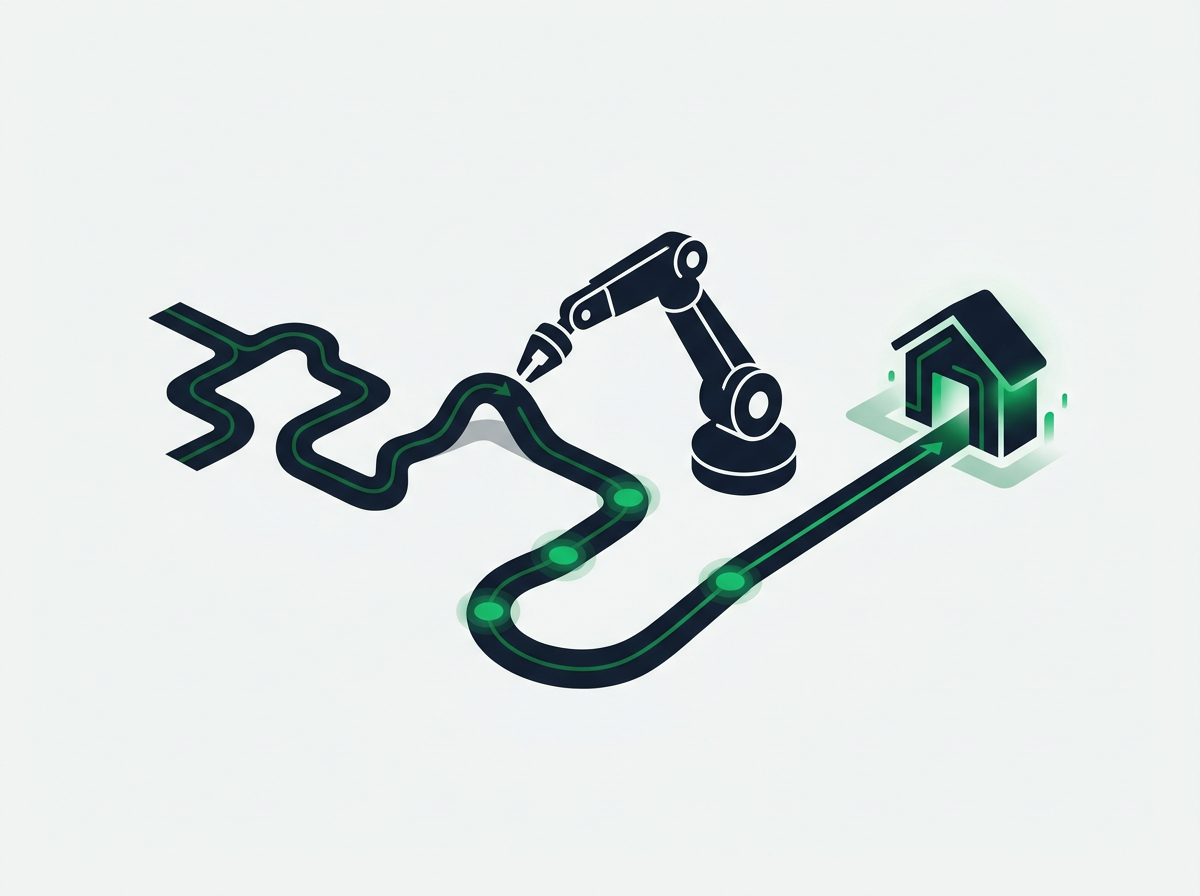
Effective onboarding automation begins with thorough process mapping and optimization before implementing any technology. Many coaches and consultants rush to adopt tools without first documenting their ideal client journey, resulting in automated chaos rather than automated efficiency. Strategic workflow design ensures technology enhances rather than complicates your operations.
The best automated workflows don’t announce themselves. Clients just notice that your service feels professional and timely without realizing there’s technology running in the background. Getting to that point takes careful work on timing, messaging, and personalization inside your automated sequences.
Map Out Your Current Manual Process to Identify Bottlenecks and Opportunities
Start by documenting every step of your existing onboarding process from initial inquiry through first service delivery. What information do you collect? What documents do clients receive? What decisions require your personal judgment versus simple execution? This mapping reveals redundancies, delays, and manual tasks ripe for automation.
Common bottlenecks include waiting for client responses to email requests, manually following up on incomplete actions, transferring data between systems, and scheduling coordination. Each bottleneck represents both a frustration point for clients and a time drain for you. Prioritize automating the highest-frequency, lowest-complexity tasks first for immediate impact.
Define Clear Triggers and Actions for Each Automated Step
Automation workflows operate on if-this-then-that logic: when a specific trigger occurs, the system executes predefined actions. Effective trigger definition requires anticipating all possible client behaviors and creating appropriate responses. A client who signs a contract triggers different actions than one who views but doesn’t sign.
Actions might include sending emails, creating tasks for manual follow-up, updating contact records, adding tags for segmentation, or triggering subsequent automation sequences. The more granular your trigger-action mapping, the more sophisticated and responsive your automated onboarding becomes. Test extensively to ensure workflows behave as intended across all scenarios.
Create Templated Communications and Resources That Can Be Automatically Delivered
Automation relies on pre-created content that maintains quality while enabling scalability. Develop email templates for every stage of onboarding—welcome messages, contract reminders, orientation instructions, resource delivery, and kick-off preparation. Include personalization tokens that automatically insert client-specific details like name, company, and package selection.
Resource libraries should encompass all materials clients need for successful onboarding: video tutorials, process documentation, brand guidelines, access instructions, and preparatory worksheets. Organize these assets for automated delivery based on client segment, service type, or package level. This ensures relevant, timely resource provision without manual selection for each client.
Personalization Within Automation: Maintaining the Human Touch in High-Touch Services
Automation doesn’t mean impersonal. Strategic personalization within automated workflows creates the experience of individual attention at scale. Beyond basic name and company tokens, sophisticated personalization includes conditional content that varies based on client characteristics, interests, or package selection.
Reserve genuinely personal communication for moments that matter most. While automated emails handle routine information delivery, personally recorded video messages can welcome new clients, address specific goals they mentioned in intake forms, or share excitement about working together. This hybrid approach delivers efficiency without sacrificing the relationship-building essential to coaching and consulting success.
Benefits Beyond Efficiency: Client Experience & Retention
While time savings drive initial interest in onboarding automation, the more profound benefits emerge in client satisfaction and long-term retention. Professional services thrive on trust and relationship quality—factors directly influenced by onboarding experience. A smooth, confidence-building start significantly increases the likelihood that clients remain engaged, refer others, and return for additional services.
Research consistently demonstrates that client churn is highest in the first 90 days of engagement. Strong onboarding directly addresses this vulnerability by establishing clear expectations, demonstrating competence, and delivering immediate value. The return on investment in onboarding automation extends far beyond operational efficiency.
A Professional, Streamlined Onboarding Process Builds Immediate Trust and Confidence
Clients evaluate your professionalism through every interaction, and onboarding provides the first sustained exposure to your operational standards. Automated systems that respond instantly, communicate clearly, and eliminate confusion signal competence and attention to detail. This professional polish builds confidence in your ability to deliver results.
Conversely, manual onboarding riddled with delays, errors, and unclear communication raises doubts before the engagement truly begins. When clients must chase you for contracts, wait days for responses, or receive contradictory information, they question whether you’ll deliver the strategic value they’re paying for. First impressions in professional services are difficult to overcome.
Reduces Client Frustration and Confusion, Leading to Higher Satisfaction and Better Retention Rates
Confusion is the enemy of client satisfaction. When new clients don’t know what happens next, what’s expected of them, or how to access resources, frustration builds rapidly. Automated onboarding sequences eliminate this uncertainty by proactively providing information at exactly the moment clients need it.
Clear, timely communication through automated workflows reduces support inquiries by up to 50%, as clients receive answers to common questions before they even think to ask. This self-service capability not only saves your time but also empowers clients with immediate access to information, enhancing their overall experience and sense of control.
Allows Coaches and Consultants to Deliver Value Faster, Solidifying Their Expertise
The faster you move from contract signing to actual value delivery, the more quickly clients experience return on their investment. Automated onboarding accelerates this timeline by eliminating administrative delays. Instead of spending two weeks exchanging emails and documents, clients can complete onboarding in two days and begin receiving your expertise immediately.
This rapid value delivery reinforces the decision to hire you and builds momentum for the engagement. Early wins create positive associations that carry through the entire relationship. When you streamline your business operations through automation, you demonstrate the same efficiency and strategic thinking you promise to bring to client challenges.
Feedback Loops: Continuously Improving Your Automated Process Based on Client Insights
Automation isn’t something you set up once and forget. The best onboarding systems improve constantly based on client feedback and what people actually do. Automated surveys at important points (right after contract signing, following the kick-off call, at the 30-day mark) show you what’s working and where clients still get stuck.
Analytics from your automation platforms reveal engagement patterns: which emails get opened, where clients drop off in workflows, what resources get accessed versus ignored. This data informs refinement efforts, allowing you to iteratively improve the onboarding experience. Small adjustments compound over time into significantly superior client journeys.
Measuring Success & Continuous Improvement
Effective onboarding automation requires ongoing measurement and optimization. What gets measured gets managed, and professional services firms that systematically track onboarding metrics consistently outperform those relying on intuition alone. Establishing baseline metrics before automation allows you to quantify improvement and justify continued investment in systems and tools.
The metrics that matter most vary by business model, but several key performance indicators apply universally to coaching and consulting practices. These measurements provide both operational insights and client experience indicators, offering a comprehensive view of onboarding effectiveness.
Track Key Metrics Like Onboarding Completion Rates, Time-to-First-Session, and Client Satisfaction Scores
Onboarding completion rate measures the percentage of clients who fully complete all setup requirements from signing through first session. Pre-automation rates often hover around 70–80%, with 20–30% of clients experiencing delays or complications. Effective automation typically increases completion rates above 90%, representing significant reduction in friction and drop-off.
Time-to-first-session tracks the elapsed time between contract signing and initial service delivery. Manual processes often result in 7–14 day delays, while automated workflows can compress this timeline to 2–3 days. Faster engagement protects momentum and enthusiasm while demonstrating responsiveness and efficiency.
Client satisfaction scores gathered immediately after onboarding provide early warning signs of experience problems. Simple Net Promoter Score (NPS) questions or 5-point satisfaction ratings reveal whether your onboarding process is delighting or frustrating new clients. Tracking these scores over time shows the impact of optimization efforts.
Gather Client Feedback to Identify Areas for Refinement and Optimization
Numbers show you what’s going on, but client feedback tells you why. When you ask open-ended survey questions about their onboarding experience, what confused them, what they loved, what felt off, you get real insights that data points can’t capture. Those answers give you something you can actually act on.
Set up short debrief calls with a handful of new clients to dig into their experience. You’ll hear about friction points you never noticed: an email that didn’t make sense, a step they didn’t know to take, jargon that threw them off. These are usually easy fixes that make a real difference. Your clients see things you can’t because you’ve been looking at the same process for too long.
Regularly Review and Update Your Tools and Processes to Adapt to Business Growth and Client Needs
Your business evolves, and your onboarding automation must evolve with it. New service offerings require new onboarding sequences. Changes in pricing or packaging necessitate contract template updates. Platform upgrades and new integration possibilities create opportunities for enhanced automation.
Establish quarterly reviews of your onboarding technology stack and workflows. Evaluate whether tools still meet your needs or if alternatives offer better functionality. Review workflow effectiveness and identify optimization opportunities. This regular maintenance prevents automation from becoming outdated or misaligned with current business realities.
A/B Testing Onboarding Sequences: Optimizing for Conversion and Client Engagement
Regular testing keeps your onboarding sharp. Try A/B testing parts of your automated sequences: subject lines, send times, whether you attach a PDF or link to a video, how you phrase your calls to action. Find out what actually gets clients to engage. Small wins in open rates or click-throughs add up fast when you’re onboarding dozens or hundreds of people.
Test one variable at a time to isolate the impact of specific changes. For example, test two versions of your welcome email with different subject lines while keeping all other elements constant. Once you identify the winner, test message length or call-to-action placement. This methodical approach builds increasingly optimized workflows over time.
Be Known, LLC’s Approach to Scaling with Automation
At Be Known, LLC, we recognize that onboarding automation is inseparable from successful growth for coaches and consultants. Our Knoxville, TN headquarters serves as the operational hub for a fully remote team dedicated to helping professional services firms across the United States build scalable client acquisition and onboarding systems. We understand that paid acquisition only delivers ROI when leads convert smoothly into engaged, satisfied clients.
Our approach integrates marketing strategy with operational execution. Many agencies focus exclusively on lead generation without addressing what happens after the lead is captured. This creates a leaky bucket scenario where expensive leads are lost to onboarding friction. We design comprehensive systems that protect your acquisition investment through seamless client integration.
We Help Coaches and Consultants Nationwide Integrate Automation to Maximize Paid Acquisition ROI
When you partner with an agency that understands paid ads and operational scalability, you gain strategic advantage over competitors treating these as separate concerns. Our team evaluates your entire client journey from ad exposure through onboarding completion, identifying friction points that undermine conversion and satisfaction.
We implement automation that aligns with your specific service model, client expectations, and growth objectives. A high-ticket consultant serving Fortune 500 clients requires different onboarding than a coach working with solo entrepreneurs. Our solutions reflect these distinctions, ensuring automation enhances rather than standardizes your unique value proposition.
Our Strategies Ensure Your Client Journey Is Seamless from Ad Click to Successful Engagement
The client journey encompasses every touchpoint from initial ad impression through active engagement. Disconnection between marketing messaging and onboarding experience creates confusion and erodes trust. We ensure message consistency, expectation alignment, and smooth transitions across all stages.
This holistic perspective prevents common problems like ads promising immediate access while manual onboarding requires a two-week setup process. We align your acquisition messaging with onboarding capabilities, ensuring you can deliver on the expectations your marketing creates. This congruence builds trust and reduces early-stage churn.
Focus on Systems That Support Scalable Growth, Allowing You to Serve More Clients Effectively
Scalability requires systems designed to handle 10x your current client volume without 10x your workload. We architect automation with growth in mind, selecting platforms and designing workflows that remain effective whether you’re onboarding five clients monthly or fifty. This forward-looking approach prevents the need to rebuild systems as you scale.
Our team provides ongoing optimization support as your business evolves. We’re not a one-time implementation service but a growth partner invested in your long-term success. As you identify new opportunities or challenges, we adapt your automation to address them, ensuring your systems remain a competitive advantage rather than a maintenance burden.
Custom Automation Solutions for Your Unique Professional Practice
No two coaching or consulting practices are identical, and templated solutions rarely deliver optimal results. We develop custom automation strategies that reflect your service model, target client characteristics, and competitive positioning. This customization ensures automation supports your distinct value proposition rather than commoditizing your services.
Our process begins with deep discovery into your current operations, client journey, and growth objectives. We map existing processes, identify automation opportunities, and design workflows that feel natural to your clients while delivering maximum efficiency to your practice. Implementation includes training, testing, and refinement to ensure seamless adoption.
FAQs
What is automated client onboarding?
Automated client onboarding streamlines the process of integrating new clients into your professional services. It uses technology to handle tasks like contract signing, payment processing, and welcome communications, freeing up coaches and consultants to focus on service delivery. This efficiency is vital for scaling after successful paid acquisition, ensuring a smooth transition for every new client.
How does automation benefit coaches and consultants specifically?
For coaches and consultants, automation dramatically reduces administrative burden, allowing more time for client work and business development. It ensures a consistent, professional client experience from the outset, crucial for retaining clients acquired through paid campaigns and building a strong reputation. This also enables scalability, letting you serve more clients without proportional increases in manual effort.
What tools are essential for automating onboarding?
Key tools include CRM systems for client management, e-signature platforms for contracts, and scheduling software for appointments. Integrating these tools creates a seamless workflow that supports your paid acquisition efforts by efficiently processing new leads. Be Known, LLC assists coaches and consultants nationwide in selecting and implementing the best solutions to maximize their operational efficiency.
Can automated onboarding still feel personal?
Absolutely. Automation handles repetitive tasks, allowing you to personalize touchpoints that truly matter. By templating communications and setting up conditional logic, you can deliver tailored experiences while maintaining efficiency. This balance is key for high-touch professional services, ensuring clients feel valued even within an automated system, which is vital for relationship building post-acquisition.
How does automated onboarding impact client retention?
A smooth, professional onboarding process sets a positive tone, builds trust, and reduces early client frustrations. This strong start significantly contributes to higher client satisfaction and retention rates, ensuring that the investment in paid acquisition yields long-term client relationships and recurring revenue. It demonstrates professionalism and efficiency from day one, fostering client loyalty.
How can Be Known, LLC help with client onboarding automation?
Be Known, LLC empowers coaches and consultants across the United States to optimize their client onboarding for maximum efficiency and client satisfaction. From our Knoxville, TN headquarters, our fully remote team designs and implements tailored automation strategies that complement your paid acquisition efforts, ensuring seamless scalability and enhanced client journeys from initial contact to successful engagement.
Ready to transform your client onboarding from a growth bottleneck into a competitive advantage? Be Known, LLC specializes in helping coaches and consultants across the United States build automated systems that protect your paid acquisition investment while delivering exceptional client experiences. Our Knoxville, TN-based team brings deep expertise in both marketing strategy and operational automation, ensuring your business scales efficiently without sacrificing the personal touch that differentiates premium professional services. Contact us today to discover how we can design custom onboarding automation that aligns with your unique practice and growth objectives.