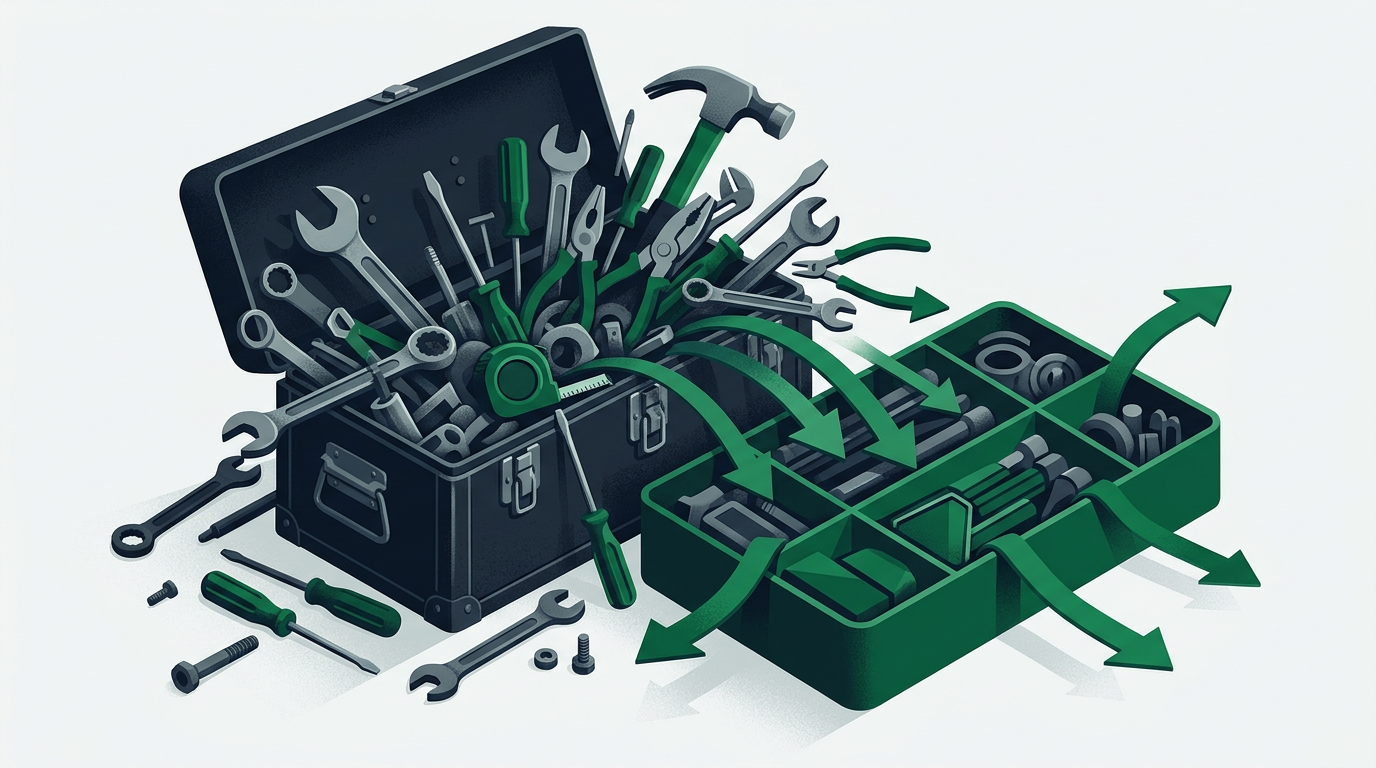

Stop Turning Away Revenue Because Your Team Is Already Maxed Out
Service businesses lose revenue not from lack of demand, but from invisible capacity constraints. When your technicians are double-booked, your project manager is drowning, and your sales team stops answering the phone because fulfillment can’t keep up, capacity management becomes the difference between profitable growth and operational collapse.
This is the hidden ceiling many growing service businesses hit. You’ve built strong demand through reputation and effort, but your systems can’t absorb it. New jobs get quoted but never followed up. Recurring clients quietly churn because appointments slip. Your best revenue month somehow leaves you broke because margins evaporated in the chaos.
Capacity management solves the problem that revenue alone cannot fix. It answers the questions keeping you up at night: can we actually take this job without breaking the team? Where is time leaking? Why does everyone depend on me to make every decision?
What is Capacity Management and Why Your Service Business Needs It
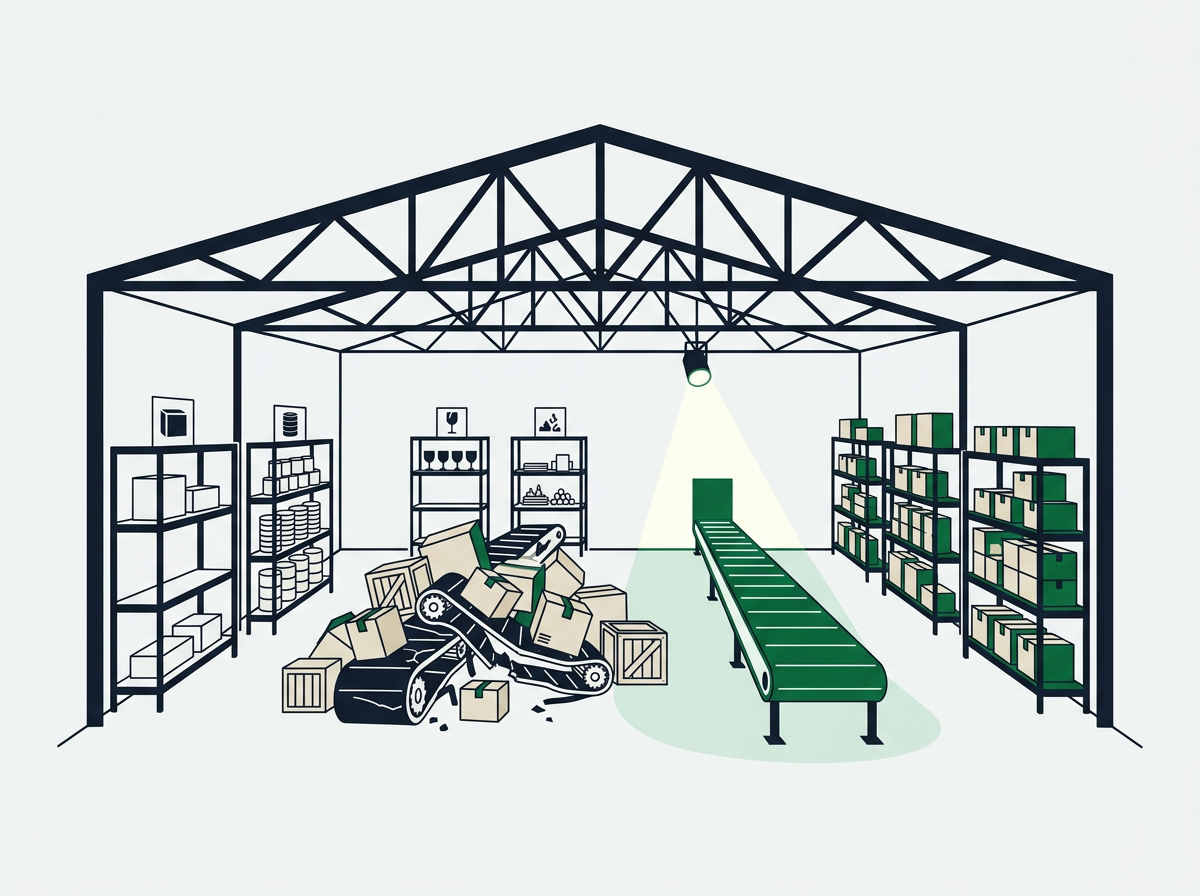
Capacity management is the systematic practice of understanding and allocating your team’s available resources (people, equipment, time, and attention) against actual demand. It goes far beyond scheduling. A schedule tells you when someone works. Capacity management tells you what they can realistically accomplish, and it exposes where the bottlenecks are hiding.
For service businesses built on skilled trade or sales expertise rather than formal operations training, capacity typically lives in someone’s head. The owner knows who’s available. The lead technician remembers which jobs are behind. The office manager has a whiteboard with colored markers representing job status.
Why Traditional Methods Fail at Scale
These informal systems work beautifully until they don’t. When you’re managing four people and twenty jobs, personal knowledge suffices. At fifteen people and a hundred active clients, the system collapses under its own weight.
Whiteboards don’t update when someone calls in sick. Personal phones don’t integrate with your scheduling software. Memory-based capacity planning fails the moment you take a Friday off, because no one else can see the full picture. Building systems that run the business instead of relying on heroic individuals becomes non-negotiable for sustainable growth.
According to research from the Project Management Institute, organizations waste an average of 11.4% of their investment due to poor project performance and resource misalignment. For a service business, that’s real money disappearing into operational friction.
The Hidden Costs of Poor Capacity Planning
The visible cost is obvious: you turn down a big job because you “don’t have capacity.” The invisible costs destroy more value over time.
- Revenue leakage: Quoted jobs that never get scheduled, customers who called once and disappeared, follow-ups that fall into the void because everyone assumed someone else would handle it.
- Team burnout: Your top performers work 60-hour weeks while newer hires sit underutilized because you don’t trust the handoff process.
- Client churn: Recurring revenue clients quietly leave when appointments get rescheduled repeatedly or communication goes dark during busy periods.
- Margin erosion: Rush jobs, overtime pay, and expedited materials become standard operating procedure rather than rare exceptions.
- Reputation risk: Missed appointments and poor follow-up generate the negative reviews that take years to overcome.
Poor capacity management also prevents you from duplicating yourself. New hires take months to train because there’s no documented process, just “watch me and figure it out.” When a key person quits, their knowledge walks out the door, and the business teeters on collapse until you heroically step back in.
How to Calculate Your True Service Capacity
Most service business owners dramatically overestimate available capacity. They count total hours (40 hours per week times number of employees) and assume those hours translate directly to billable work. This fantasy math creates cascading problems.
True capacity accounting starts with brutal honesty about how time actually gets spent. A field technician working 40 hours delivers perhaps 28–32 billable hours after you subtract drive time, equipment prep, administrative tasks, breaks, and the inevitable “can you look at this real quick” interruptions.
The Real Capacity Formula
Start by tracking one week of actual activity for each role. Not what should happen. What actually happens. Where does time really go? Break it into categories:
- Billable client work (the only activity that generates revenue)
- Non-billable but necessary work (quotes, follow-up, training, equipment maintenance)
- Administrative overhead (timesheets, meetings, internal communication)
- Wasted time (waiting for parts, unclear instructions, rework from poor handoffs)
Your true capacity is billable hours available, not total hours employed. For most service businesses, this is well below the theoretical maximum. A technician working a full week delivers noticeably fewer billable hours than that. An account manager handling a full week manages fewer hours of actual client deliverables.
Research from Mavenlink found that professional services teams spend 54% of their time on non-billable work. If you’re not accounting for this reality, you’re promising delivery timelines your team cannot possibly meet.
Account for Variation and Contingency
Average capacity means half the time you’ll have less than that number. Build in buffers for the realities of service delivery: sick days, equipment failures, jobs that run long, clients who change scope mid-project.
A conservative capacity model assumes less than your full calculated available hours, leaving a buffer. If your team theoretically delivers 120 billable hours per week, plan around 96. This cushion prevents the constant firefighting that exhausts everyone and destroys margin.
Identifying Your Biggest Capacity Bottlenecks
Capacity constraints rarely distribute evenly. One person, role, or process step chokes the entire operation. Finding that bottleneck unlocks growth without adding headcount.
The constraint usually hides in one of three places: a critical person everyone depends on, a process step that can’t scale, or a resource shortage (equipment, space, licensing) that limits throughput.
The Critical Person Problem
If one person leaving would collapse your operation, that person is your bottleneck. This typically manifests as the owner who approves every decision, the senior technician who handles all complex jobs, or the account manager who’s the only one clients trust.
Test this by asking: what happens if this person takes two weeks off? If the answer involves panic, frantic phone calls, or “we just wouldn’t allow it,” you’ve found your constraint. Systematizing critical knowledge so it lives in processes rather than people’s heads becomes the most valuable work you can do.
Process Step Constraints
Sometimes the person isn’t the problem, the process is. Common examples include:
- Quoting takes three days because it requires site visits, manual measurement, and custom pricing every time
- Scheduling happens in a shared spreadsheet where conflicts aren’t visible until someone shows up at the wrong job
- Quality control requires the owner’s personal inspection before anything ships or closes
- Client onboarding involves fifteen manual steps across four different tools with no checklist
These bottlenecks feel like “just how we do it” until you map the actual workflow. Often a process designed for five clients per month still runs unchanged at fifty clients per month, creating artificial scarcity.
Resource and Equipment Limits
Physical constraints matter too. If you can only run three jobs simultaneously because you own three vehicles, adding a fourth technician doesn’t increase capacity. If client meetings require the one conference room, scheduling caps at eight meetings per day regardless of salespeople available.
Identify these limits explicitly. What physical resource determines your maximum throughput? Vehicles, tools, software licenses, workstations, treatment rooms. Sometimes the highest-ROI investment is an equipment purchase that expands capacity, not another salary.
Building Systems That Scale With Demand
Scaling capacity without scaling chaos requires systems that work without constant supervision. The goal isn’t to automate everything. It’s to make the right decision obvious even when you’re not in the room.
Service businesses typically operate with three types of systems: informal (how we’ve always done it), personal (lives in someone’s head or phone), and documented (written down but not followed). Moving to operational systems (documented, trained, and actually used) creates the foundation for capacity expansion.
Documentation That Actually Gets Used
Most process documentation fails because it’s written for perfection rather than reality. A 47-step procedure manual gathers dust while everyone asks the experienced person “how do I…?”
Effective documentation answers three questions for each process:
- What triggers this? When does this process start? (Client signs contract, technician completes job, invoice goes 30 days overdue)
- What’s the minimum viable execution? What are the non-negotiable steps that must happen, in order, for acceptable quality?
- Who owns what? Which role is responsible for each step, and how do they know it’s their turn?
Keep it simple. A checklist beats a manual. A flowchart beats a paragraph. A 30-second video beats a written explanation. Document for the person learning the role, not the expert who already knows it.
Visibility Systems That Prevent Bottlenecks
Capacity problems metastasize in darkness. When nobody can see the full pipeline, jobs pile up invisibly until they create a crisis. Visibility systems surface problems while they’re still small.
This doesn’t require enterprise software. It requires answering these questions in real-time:
- What jobs are in progress right now?
- Which team members have available capacity this week?
- What’s the current backlog and expected completion date?
- Where are jobs getting stuck or delayed?
- Which clients are approaching contract renewal or at risk of churn?
A shared dashboard, daily standup, or even a well-organized Kanban board provides this visibility. The format matters less than the discipline of updating it and actually looking at it before making capacity commitments.
Handoff Protocols That Reduce Dependencies
Work stalls at handoff points. Sales closes a deal but doesn’t communicate critical details to delivery. A technician finishes a job but forgets to notify billing. The project manager knows a client is unhappy but doesn’t tell the account team.
Each handoff needs a defined protocol: what information transfers, in what format, and how the receiving person confirms they have what they need. This eliminates the “I thought you were handling that” failures that burn capacity on rework and damage control.
Technology That Supports Capacity Management Without Adding Complexity
Service businesses often carry the scars of failed technology implementations. You bought the software that was supposed to solve everything. It didn’t. Now it’s another monthly expense generating reports nobody reads.
Technology amplifies systems, it doesn’t replace them. If your current process is chaotic, software makes it chaotic faster. The goal is to support your capacity management approach with tools that reduce friction rather than add administrative burden.
What You Actually Need vs. What Vendors Sell
Software vendors sell comprehensive platforms with hundreds of features. You need three core capabilities:
- Centralized scheduling: One source of truth for who’s doing what, when, with conflicts visible before they cause problems
- Pipeline visibility: Clear view of work in progress, upcoming commitments, and available capacity across the team
- Automated handoffs: When one step completes, the next person gets notified automatically with the information they need
Everything else is a nice-to-have. Reporting, analytics, integrations, mobile apps. They add value only after the core capacity management system works reliably.
Integration vs. Duplication
The nightmare scenario: entering the same information into four different systems. The customer’s contact details go in your CRM. The job details go in your scheduling tool. The invoice goes in your accounting software. The project notes live in someone’s email.
Each duplicate entry is a capacity tax, time that could be billable spent on administrative overhead. More dangerously, duplicated data diverges. The phone number in the CRM is wrong. The job notes in email never make it to the field technician. The invoice doesn’t match what was actually delivered.
Before adding new software, map where data lives today and where it needs to flow. Sometimes the answer is better discipline with existing tools rather than buying another platform.
The Build-vs-Buy Decision for Service Businesses
Industry-specific software promises perfect fit for your niche. Generic platforms offer flexibility. Spreadsheets offer complete control. Each has tradeoffs.
For most service businesses, the right answer is: use the simplest tool that solves your specific bottleneck. If scheduling is the constraint, solve scheduling first. If job costing is bleeding margin, fix job costing next. Comprehensive platform migration can wait until you’ve outgrown simpler solutions.
According to BetterCloud, companies with 51–1,000 employees use an average of 102 SaaS applications. Software sprawl creates its own capacity drain. Consolidation often unlocks more value than addition.
Training Your Team to Think in Terms of Capacity
Systems and software fail if the team doesn’t understand why capacity management matters. When people view scheduling discipline or time tracking as bureaucratic overhead rather than business survival, compliance becomes a battle.
The mental shift required: move from “get this job done no matter what” to “get this job done profitably while protecting capacity for the next one.” It’s the difference between sprinting and pacing for a marathon.
Making Capacity Visible Across Roles
Most team members see only their own workload. The technician knows they’re slammed but assumes everyone else has breathing room. The salesperson knows they closed a big deal but doesn’t realize fulfillment is already overcommitted.
Share capacity metrics in language each role understands. Don’t show technicians abstract utilization percentages, show them “we have 12 jobs scheduled and capacity for 10, which means someone’s working weekend overtime or a client gets rescheduled.” Make the consequence visible.
When sales can see real-time fulfillment capacity, they make better promises to clients. When delivery can see the sales pipeline, they plan resource allocation proactively. Transparency converts capacity management from a top-down mandate into collaborative problem-solving.
Rewarding Accurate Forecasting
Teams quickly learn what gets measured and rewarded. If you celebrate the salesperson who closes the most deals regardless of whether delivery can handle them, you’re incentivizing chaos. If you promote the technician who says “yes” to every request regardless of quality impact, you’re rewarding unsustainable heroics.
Instead, recognize and reward accurate capacity forecasting. Celebrate the project manager who flags a bottleneck before it becomes a crisis. Acknowledge the team member who says “we can’t take this job this week, but we can deliver it properly next week” rather than overpromising.
Creating Feedback Loops That Surface Problems Early
Capacity issues announce themselves through weak signals long before they become disasters. A job that keeps running over estimated hours. A client who asks “is everything okay?” after communication lapses. A team member who starts coming in early and leaving late.
Build feedback mechanisms that surface these signals while there’s still time to adjust. Weekly capacity reviews, quick daily standups, or even a simple “where are we stuck?” check-in creates the habit of looking for problems before they metastasize.
When to Say No to New Revenue (and How to Say It Well)
The hardest capacity management decision is turning down revenue. After years of fighting for every client, saying “no” feels like betrayal of the growth you’ve worked so hard to achieve.
But taking a job you can’t deliver profitably is worse than declining it. It burns team morale, damages client relationships, destroys margin, and consumes capacity that could have gone to work you can execute well. Learning when and how to decline work is a crucial capacity skill.
The Real Cost of the Wrong “Yes”
Not all revenue is good revenue. A large project that requires your personal intervention every day for months has a dramatically higher capacity cost than a project of the same size that runs on established systems with minimal oversight.
Calculate the true capacity cost of each opportunity:
- How many hours will this require from each role?
- Does it fit our established processes or require custom work?
- What’s the risk of scope creep or timeline extension?
- Will it block capacity for higher-margin work?
- Does it build capability we want or distract from our core strength?
Sometimes the highest-ROI decision is declining a six-figure opportunity because accepting it would cripple your ability to serve ten smaller clients profitably. Strategic capacity allocation means choosing which revenue to pursue, not just maximizing top-line dollars.
How to Decline Without Burning Bridges
Saying “no” doesn’t have to mean “never.” Strong alternatives include:
- Timeline extension: “We’d love to work with you, but our next available start date is six weeks out. Would that timing work?”
- Scope reduction: “We can’t deliver the full project right now, but we could handle phase one and revisit the rest in Q3.”
- Referral: “This isn’t our strength, but here’s someone who specializes in exactly what you need.”
- Retainer conversion: “One-off projects are tough for us to schedule, but if you’re open to an ongoing relationship, we could prioritize your work.”
Clients respect honesty about capacity more than overpromising and underdelivering. A professional decline with a clear alternative often builds more trust than a desperate “yes” that leads to missed deadlines and frustration.
Capacity Planning for Seasonal and Unpredictable Demand
Many service businesses face dramatic demand swings. HVAC spikes in summer and winter. Tax preparation peaks in spring. Property management surges when leases turn over. Building capacity for peak demand means paying for idle resources during slow periods.
The traditional solutions, seasonal hiring, overtime, and turning away off-peak work to preserve capacity for peak, all have significant downsides. Smarter capacity planning creates flexibility without the cost of permanent overcapacity.
Flexible Capacity Models
Rather than maintaining full-time capacity for peak demand, consider hybrid models:
- Trained bench: Maintain relationships with skilled contractors who work for you during peak periods but aren’t on permanent payroll
- Cross-training: Admin staff who can handle basic field work during surges, field staff who can manage scheduling during slow periods
- Strategic partnerships: Refer overflow work to trusted partners during your peak in exchange for receiving their overflow during your slow season
- Retainer smoothing: Convert seasonal one-time projects into year-round retainer relationships that distribute work more evenly
The goal is matching capacity to actual demand patterns rather than building for worst-case scenarios or hoping demand magically smooths itself out.
Building Capacity Buffers
Unpredictable demand requires buffer capacity, intentional slack that absorbs variation without creating chaos. This feels wasteful when you’re fighting to maximize utilization, but it’s what separates sustainable operations from constant crisis management.
Buffer strategies include maintaining some scheduling slack (don’t book every hour), protecting senior team members’ time for problem-solving rather than billable work, and keeping cash reserves that allow you to add temporary capacity when opportunities spike.
Measuring Capacity Management Success
You can’t improve what you don’t measure. Capacity management success shows up in both leading indicators (things you can influence directly) and lagging indicators (outcomes that prove the system works).
Leading Indicators to Track Weekly
These metrics tell you whether your capacity management system is functioning before problems compound:
- Utilization rate by role: What percentage of available hours are billable? Too low means revenue opportunity. Too high means burnout risk and no capacity for growth.
- Schedule adherence: How often do jobs start and end on schedule? Consistent slippage indicates capacity overcommitment or poor estimation.
- Quote-to-close time: How long between estimating a job and scheduling it? Extended delays suggest capacity constraints or process bottlenecks.
- Backlog depth: How many weeks of committed work are queued? Too little creates revenue anxiety. Too much creates client frustration.
- Emergency overtime hours: Occasional overtime is normal. Consistent weekend work means your capacity model doesn’t match reality.
Lagging Indicators to Track Monthly
These outcomes validate whether capacity improvements translate to business results:
- Revenue per employee: As capacity management improves, each team member should generate more revenue without working more hours.
- Client retention rate: Capacity chaos shows up as missed appointments and poor communication, both of which drive churn.
- Gross margin by service line: Better capacity allocation means fewer rush jobs, less rework, and higher profitability per delivery.
- Employee turnover: Burnout from chronic overwork drives your best people to leave. Sustainable capacity shows up in retention.
- Owner time off: If you can take a week off without the business breaking, your capacity systems work.
Common Capacity Management Mistakes (and How to Avoid Them)
Even with good intentions, service businesses fall into predictable capacity traps. Recognizing these patterns helps you avoid months of painful learning.
Mistaking Activity for Capacity
Everyone being busy doesn’t mean capacity is well-utilized. A team working 60-hour weeks on low-margin work while high-value opportunities go unquoted represents terrible capacity management even though utilization appears maxed out.
Focus on profitable capacity utilization. An hour spent on high-margin work creates more value than an hour of low-margin work, even though both consume the same capacity.
Planning Capacity Around Best-Case Scenarios
When every job runs perfectly, you have exactly enough capacity. In reality, jobs run over, equipment breaks, people get sick, and clients change their minds. Planning for average scenarios rather than best-case creates the buffer that prevents constant firefighting.
A useful rule: if your capacity plan requires perfect execution, it’s not a plan, it’s a hope.
Treating All Hours as Equal
An hour of your personal time is worth more than an hour of a junior technician’s time, not because you’re more valuable as a human, but because your hourly opportunity cost is higher. When capacity is tight, protect high-value hours ruthlessly.
If you’re spending time on tasks a lower-cost team member could handle while turning down work that requires your specific expertise, your capacity allocation is backwards. Delegate, systematize, or eliminate low-value work before adding expensive capacity.
Ignoring the Capacity Cost of Complexity
Offering seventeen different service packages, customizing every delivery, and saying yes to special requests creates massive hidden capacity costs. Every variation requires mental switching, custom planning, and increased error risk.
Standardization unlocks capacity. Five technicians delivering three standardized service packages can handle far more volume than the same five delivering fully custom solutions. Sometimes the highest-impact capacity improvement is reducing options, not increasing efficiency.
How Paid Acquisition Changes Your Capacity Equation
For service businesses built primarily on referrals and word-of-mouth, demand arrives unpredictably. You can’t control the timing or volume, so capacity planning means staying flexible and occasionally turning work away during surges.
Strategic paid acquisition, the core competency of Be Known, a Knoxville, TN-based firm that builds automation, systems & client acquisition for professional service firms, introduces a new variable: controllable demand volume. When you can turn ad spend up or down to influence lead flow, capacity management becomes proactive rather than reactive.
Matching Paid Demand to Fulfillment Capacity
The mistake most service businesses make when adding paid acquisition: running campaigns without regard to current capacity. Leads spike, overwhelm the sales and delivery teams, and conversion rates plummet as response times lag and service quality suffers.
Smart capacity-aware acquisition means:
- Measuring current fulfillment capacity and setting lead volume targets accordingly
- Throttling ad spend when delivery is at capacity rather than generating leads you can’t serve
- Building in ramp-up periods when adding new capacity so systems can stabilize before volume increases
- Creating offers that match your capacity strengths rather than forcing capacity to match arbitrary offers
This requires close coordination between acquisition and operations, something that breaks down when they’re separate departments with conflicting incentives. Marketing gets rewarded for lead volume. Operations gets blamed for missed deadlines. The business pays the capacity tax.
Using Acquisition Data to Plan Capacity Investments
Referral-based businesses invest in capacity reactively: demand appears, you scramble to serve it, and eventually you hire when the pain becomes unbearable. This lag creates constant understaffing punctuated by occasional overstaffing when demand softens.
Predictable acquisition pipelines allow proactive capacity planning. When you know roughly how much ad spend it takes to generate qualified leads and closed clients, you can plan hiring, equipment purchases, and system improvements ahead of demand rather than in response to crisis.
This transforms capacity from a constraint you manage around into a strategic variable you actively grow. Building acquisition systems that feed predictable demand into well-planned capacity creates the foundation for intentional, profitable scaling.
Building Your 90-Day Capacity Improvement Plan
Reading about capacity management creates awareness. Implementing it creates results. Most service business owners know their current approach isn’t working but feel paralyzed by where to start and how to find time for operational improvements while keeping the business running.
The answer isn’t a comprehensive six-month transformation. It’s a focused 90-day sprint targeting your single biggest capacity bottleneck. Fix one constraint, measure the impact, then move to the next.
Month One: Measure and Map Current State
You can’t improve what you don’t understand. Spend the first month getting brutally honest about current capacity reality:
- Track actual time utilization for each role for two weeks, not what should happen, what does happen
- Map your current process for core workflows: how does a client move from quote to delivery to invoicing?
- Interview your team: where do they get stuck waiting for information, approvals, or resources?
- Analyze recent projects: which ran profitably on schedule, and which lost money or dragged?
- Identify your current bottleneck: the one constraint that, if removed, would unlock the most capacity
This measurement phase feels like it slows you down. It does. That’s the point. You’re investing time now to stop wasting time forever.
Month Two: Implement One High-Impact System
Choose the single process improvement that addresses your primary bottleneck. Examples:
- If quoting is the constraint, build a standardized pricing calculator that eliminates custom estimation for most jobs
- If scheduling creates constant conflicts, implement a centralized calendar system with clear ownership and update discipline
- If client onboarding consumes excessive senior capacity, create a documented checklist and train junior staff to handle it
- If you’re the approval bottleneck, define clear decision-making authority and escalation criteria so routine choices happen without you
Document the new process, train the team, implement it, and defend it against the inevitable “but this job is different” exceptions. Consistency creates capacity. Exceptions consume it.
Month Three: Measure Impact and Scale
Did the change work? Compare metrics from month one to month three:
- Did utilization rates improve in the target area?
- Did revenue per employee increase?
- Did customer satisfaction scores improve?
- Did the team report less stress and chaos?
- Could you take more time away from daily operations?
If the improvement delivered results, reinforce it and identify the next bottleneck. If it didn’t, diagnose why: wrong problem, poor execution, or team resistance? Adjust and iterate.
Capacity improvements compound. Each bottleneck you remove reveals the next one, and each successful system change builds organizational confidence that operational improvement is possible.
The Relationship Between Capacity and Profitability
Revenue growth without capacity management produces a dangerous illusion. The business appears healthy, top line is up, client count is growing, while profit stagnates or declines. You’re working harder and making less.
This happens because poorly managed capacity destroys margin in invisible ways. Overtime costs accumulate. Rush jobs require premium pricing from vendors. Errors and rework consume hours that could have been billable. Client churn from poor service quality forces expensive replacement acquisition.
The Utilization-Profitability Curve
Team utilization and profitability don’t move in a straight line. Low utilization means you’re paying for capacity you’re not using, which is unprofitable. Very high utilization means no buffer for variation, leading to constant overtime, burnout, and service quality problems, which is also unprofitable.
The profitable zone typically sits well below full utilization: high enough to cover costs with margin left over, low enough to handle normal variation without crisis. According to professional services benchmarks from Sage, best-in-class firms target 75–80% billable utilization.
Capacity-Driven Pricing
When capacity is tight, prices should rise. When capacity is abundant, strategic discounting or expanded service offerings make sense. Most service businesses do the opposite: they discount when desperate for work (low capacity) and hold pricing when slammed (high capacity).
Capacity-aware pricing means adjusting rates or payment terms based on current demand. If you’re near full capacity, new clients pay premium pricing or accept longer timelines. If you have spare capacity, you can be more aggressive on price to fill the gap. This smooths demand and improves overall profitability.
Keep reading: see all of our business automation & systems guides, or talk with us about your own setup.
FAQs
What’s the difference between capacity management and scheduling?
Scheduling tells you when someone works. Capacity management tells you what they can realistically accomplish and whether you have the resources to take on additional work. Good capacity management informs scheduling decisions by accounting for actual available hours, skill levels, equipment needs, and buffer time for unexpected issues.
How do I know if capacity or demand is my real problem?
If you’re turning away work, getting customer complaints about delayed service, or your team is consistently working overtime, you have a capacity problem. If your pipeline is empty, lead flow is inconsistent, or closing rates are dropping, you have a demand problem. Many service businesses assume they need more leads when they actually need better capacity utilization.
What utilization rate should I target for my service team?
Target a healthy, sustainable billable utilization for most service roles. Low utilization means you’re paying for unused capacity. Very high utilization leaves no buffer for sick days, equipment issues, or scope changes, leading to burnout and quality problems. The exact optimal rate depends on your industry, service complexity, and demand variability.
How do I calculate the ROI of capacity improvements?
Measure revenue per employee before and after the improvement, time saved on repetitive tasks, reduction in overtime costs, improvement in client retention rates, and your own hours freed up. A successful capacity system can increase revenue per employee over time without requiring proportional headcount increases or longer working hours.
Should I add capacity before or after increasing marketing spend?
Add capacity first, or at minimum have a clear plan to scale it alongside demand. Generating leads you can’t serve profitably damages client relationships, burns your team, and wastes marketing dollars on customers who churn due to poor service delivery. Sustainable growth requires matching acquisition to fulfillment capacity, not hoping operations will somehow catch up.
What’s the first capacity metric I should start tracking?
Start with billable utilization by role: what percentage of each person’s available hours generates revenue? This single metric reveals whether you’re understaffed, overstaffed, or have hidden inefficiencies consuming productive time. Track it weekly and compare to your target range to identify trends before they become crises.
How do I get my team to actually follow capacity management processes?
Connect process compliance to outcomes they care about. Show technicians how accurate time tracking prevents weekend overtime. Show salespeople how respecting capacity limits improves close rates by ensuring delivery quality. Make the system easy to follow, eliminate unnecessary steps, and recognize people who use it well rather than just punishing those who don’t.
Capacity management separates service businesses that scale profitably from those that grow revenue while losing margin and sanity. When you understand true available capacity, identify and remove bottlenecks, and build systems that run without your constant intervention, you finally create the breathing room to work on the business instead of being trapped in it. If you’re ready to stop turning away revenue, reduce chaos, and build operational systems that actually work, start the conversation about what sustainable growth looks like for your specific business.
Sources & references
- 11.4% of their investment , pmi.org