Custom automation helps service business owners escape operational chaos by building reliable systems that run your business, not the other way around. This approach frees you from being the bottleneck, allowing for profitable growth and the ability to finally take time off without your phone exploding.
If you’re an owner or operations manager of a growing service business, you know the paradox: revenue is growing, but you’re working harder than ever. Your team depends on you for every operational decision. Quoted jobs disappear into thin air because no one followed up. Recurring revenue quietly churns because tracking renewals lives in someone’s head, not a system.
The pain isn’t a lack of demand. It’s the invisible leaks draining your profitability and trapping you in firefighting mode. While Be Known, LLC in Knoxville, TN specializes in paid acquisition for coaches and consultants, the operational principles we’ve observed apply directly to service firms drowning in manual processes and disconnected tools.
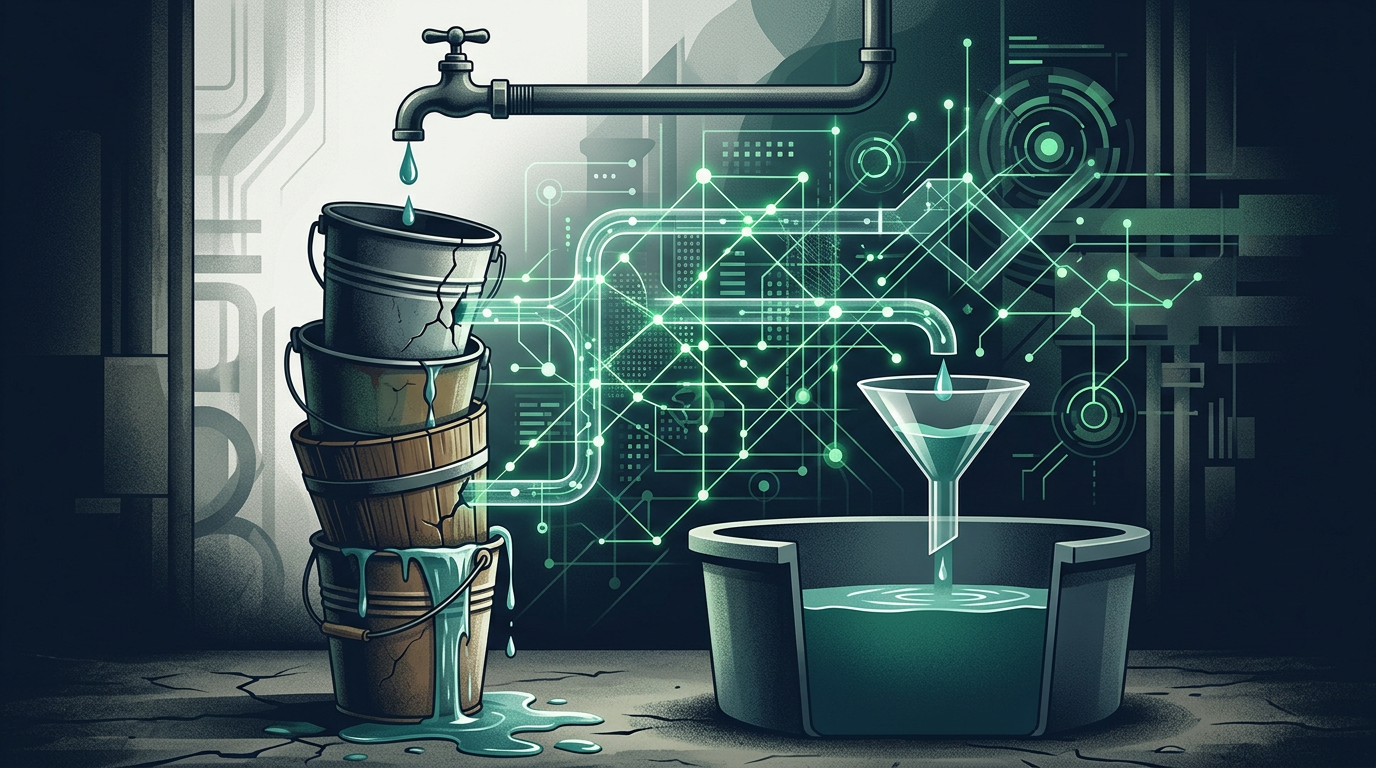

The Hidden Costs of Manual Operations in Service Businesses
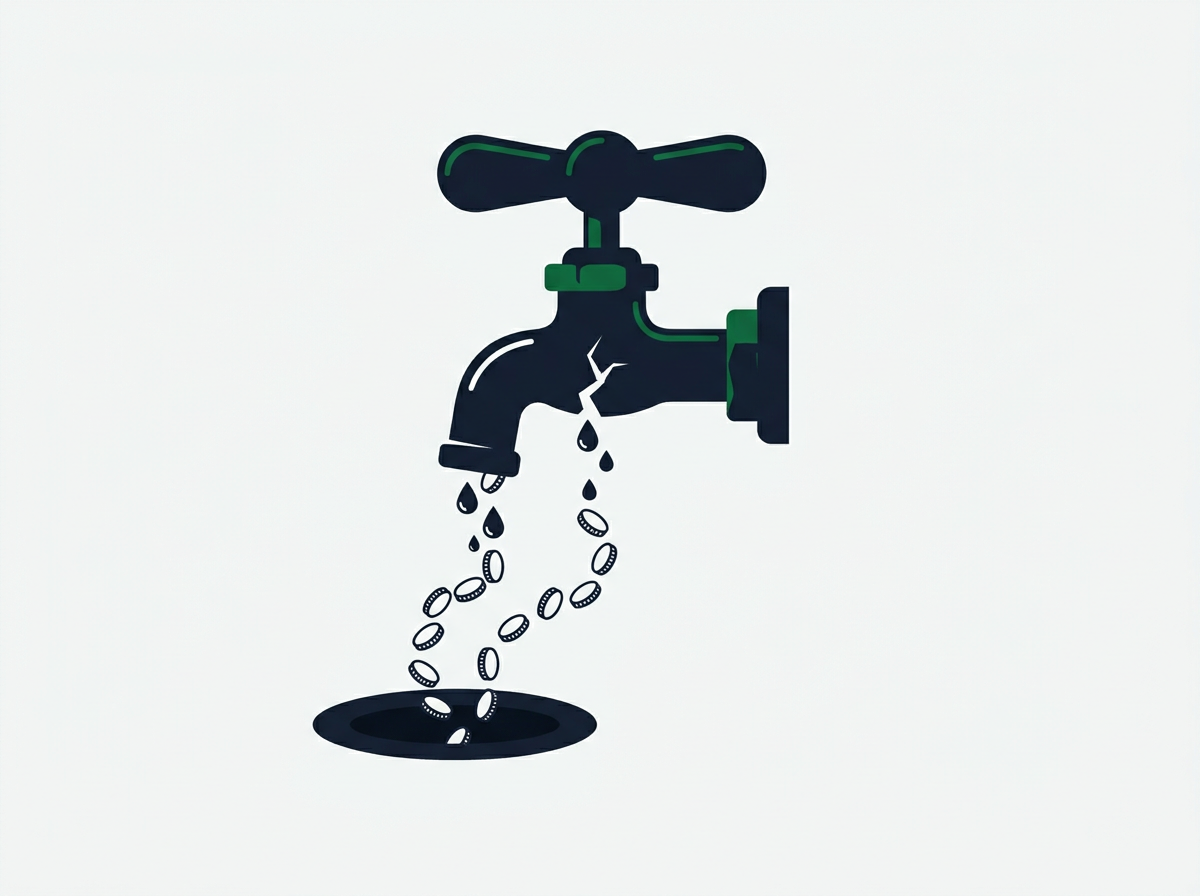
Most service business owners track revenue but miss the invisible margin erosion happening every day. A prospect calls, gets quoted, says they’ll “think about it”, and vanishes. No follow-up email. No calendar reminder. Just gone. Multiply that by dozens of conversations per month, and you’re leaving five or six figures on the table annually.
According to research by Bain & Company, increasing customer retention by just 5% can boost profits by 25% to 95%. Yet most service firms have no systematic way to prevent quiet churn on recurring contracts. The renewal conversation happens only when the customer calls to cancel, or doesn’t renew at all.
Identifying Your Business’s Biggest Time Sinks
Track where your week actually goes. Most owners discover they’re spending hours every week on tasks that shouldn’t require their attention: manually updating spreadsheets, chasing technicians for job status, answering the same customer questions repeatedly, or reconciling invoices that should have been sent automatically.
The real cost isn’t just your time. It’s the strategic work you’re not doing. You can’t build partnerships, improve service delivery, or coach your team when you’re stuck being the human glue holding disconnected systems together. Every hour you spend manually transferring data between your CRM and billing system is an hour you’re not spending on work only you can do.
How Disconnected Tools Create Operational Bottlenecks
You bought the CRM that was supposed to solve everything. You’re paying for scheduling software. Your bookkeeper uses one system, your team uses another, and customer communication happens across email, text, voicemail, and a whiteboard in the break room.
None of these tools talk to each other. A customer books an appointment in the scheduling system, but your CRM doesn’t know. The job gets completed, but billing doesn’t receive the close-out details for three days. Your operations manager maintains a personal spreadsheet tracking everything because no single system has the full picture.
When that operations manager quits (and they will, because they’re exhausted), the knowledge walks out the door. You’re left piecing together how things actually ran, discovering that entire processes existed nowhere except in one person’s head and phone.
What Custom Automation Actually Means for Your Service Firm
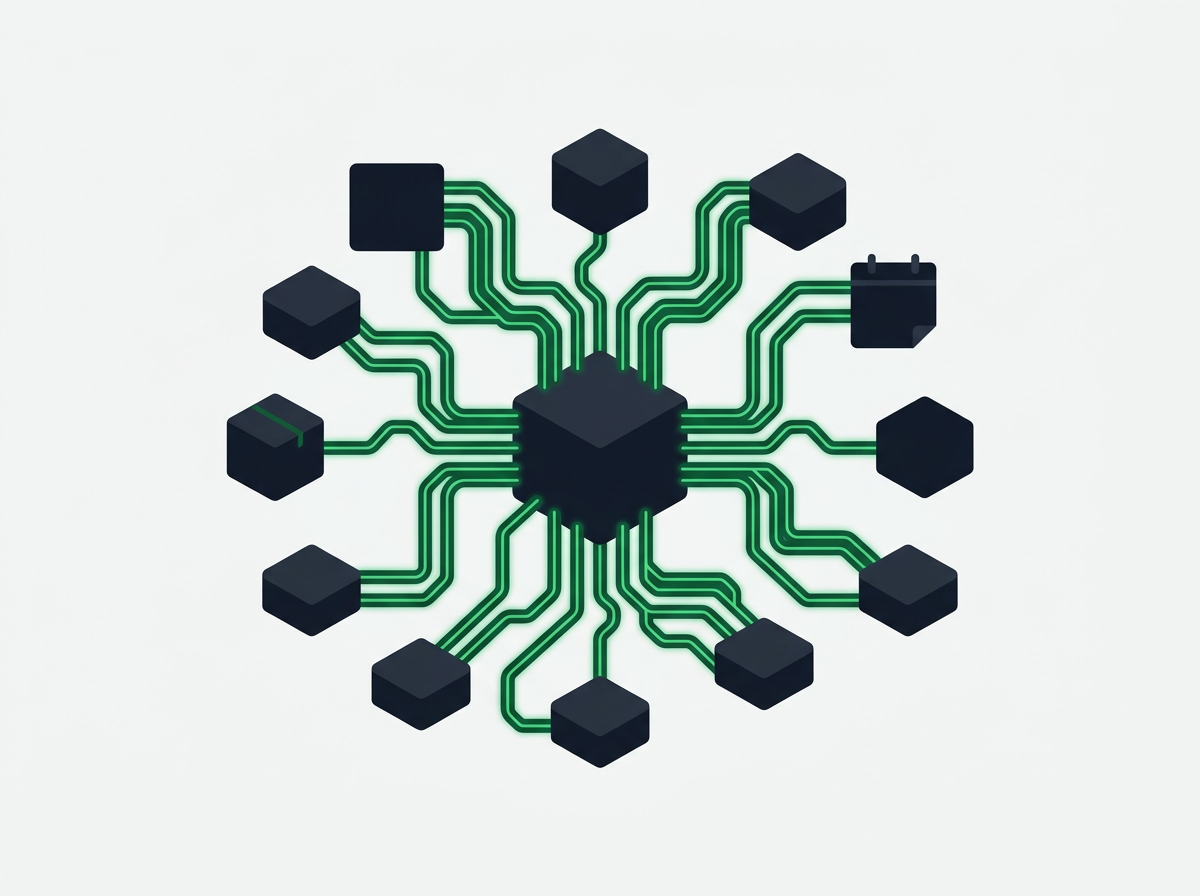
Custom automation isn’t another software subscription promising to fix everything. It’s building connections between the tools you already use so they work as one coherent system instead of isolated islands. This means your CRM, scheduling platform, billing system, and communication tools share data automatically, eliminating manual transfer and the errors that come with it.
For a property management company, custom automation might mean: tenant inquiry comes in via web form, automatically creates a CRM record, triggers a follow-up email sequence, schedules a showing based on property manager availability, and sends calendar invites to all parties. No one touched it. No one forgot. It just happened.
Connecting Your Existing Tools to Work Together
Most service businesses already own much of what they need. The problem is integration. Your scheduling tool can send data to your CRM if someone builds the bridge. Your billing system can pull job completion data automatically if the connection exists. Your follow-up sequences can trigger based on real customer behavior instead of manual tagging.
According to a McKinsey study on automation potential, 60% of occupations have at least 30% of activities that could be automated with current technology. For service businesses, that percentage skews higher because so much work involves moving information between systems.
The goal isn’t replacing people. It’s freeing your team from soul-crushing repetitive work so they can focus on the skilled tasks you actually hired them to do. Your HVAC techs should fix systems, not manually enter job notes into three different platforms. Your office staff should solve complex customer issues, not copy-paste data between spreadsheets.
Automating Follow-Up Sequences Without Losing the Personal Touch
The fear many service business owners express: “Automation makes us feel robotic. Our customers value the personal relationship.” This is a false choice. Custom automation handles the mechanical parts: sending the follow-up at the right time, logging the interaction, updating the status. Your team can then focus entirely on the relationship when they do engage.
A financial services firm might automate: seven days after initial consultation, send case study relevant to the prospect’s situation; fourteen days out, share a client success story; twenty-one days, offer a limited review slot. Each message is personalized with the prospect’s name, specific situation discussed, and relevant details. The automation ensures it happens; the content ensures it feels human.
When a prospect responds, the conversation gets routed to the right person automatically, with full context attached. No one asks the customer to repeat themselves. No details fall through the cracks. The experience feels more attentive, not less, because the system remembers everything.
Building Systems That Don’t Require Your Constant Oversight
The ultimate test: can you take a Friday off without checking your phone every thirty minutes? For most service business owners, the answer is no. Not because the team is incompetent, but because critical processes exist only in your head. Decision trees for handling edge cases. Who to call when a specific problem arises. How to prioritize when three urgent issues hit simultaneously.
Custom automation documents these decision trees in working systems. When X happens, the system does Y. When a high-value customer has an issue, it routes to the senior technician and sends you a notification, but doesn’t require you to manually triage. When a job runs over budget, it flags for review without you having to remember to check.
This is the difference between systems that theoretically should work and systems that actually do. One lives in a process manual no one reads. The other executes automatically, learns from exceptions, and gets refined over time. Building operational systems that reduce owner dependency transforms how your business scales.
The Real ROI: Time, Sanity, and Profitable Growth
Calculate what you’re losing to manual chaos right now. Every quoted job that doesn’t get followed up represents potential revenue that simply disappears. Multiply by the dozens you lose quarterly. Add the customer who churned because their renewal fell through the cracks. Factor in the reputation damage from the appointment you forgot because it was only written on a sticky note.
Research from Salesforce found that many sales require multiple follow-up calls after the initial contact, yet many salespeople give up after one follow-up. For service businesses without automated follow-up systems, those statistics translate directly to revenue walking away because no one remembered to call back.
The financial return is obvious. The sanity return is harder to quantify but equally valuable. Imagine opening your dashboard and seeing: all follow-ups sent, all appointments confirmed, all invoices delivered, all high-priority issues flagged. Nothing fell through the cracks. Nothing required your personal intervention to prevent disaster.
Example Scenario: How a Pest Control Company Could Recover Lost Quotes
Imagine a regional pest control operation with strong inbound quote requests. Their close rate is poor. The owner assumes it is pricing or competition. A process audit reveals the real problem: a large share of quotes never receive a second touchpoint. The prospect gets the estimate, says “let me think about it,” and disappears into the void.
The company implements a custom automation sequence: the estimate is delivered via email with an embedded calendar link for questions, followed by a three-day follow-up with a relevant case study for the property type, a seven-day follow-up with a limited-time service add-on, and a fourteen-day last-chance message. No additional sales staff needed. Same leads, different system.
In a scenario like this, the close rate climbs noticeably within a few months. Even a modest lift on the same monthly quote volume means additional customers every month, and over a year that adds up to meaningful revenue recovered by eliminating the follow-up leak. The system costs a fraction of hiring another salesperson and works around the clock without vacation, sick days, or turnover risk.
From Revenue Growth to Profit Growth
Most service business owners experience a painful reality: revenue climbs year over year, but profit stays flat or declines. More jobs mean more complexity, more staff, more tools, more chaos. The operation becomes less efficient as it scales because systems don’t exist, only heroic individual effort.
Custom automation breaks this pattern. As volume increases, the system handles the additional load without proportional cost increase. Your tenth follow-up sequence costs the same as your hundredth. Your invoice automation works as efficiently for fifty jobs as five hundred. Margin expands instead of compressing because operational cost per transaction decreases.
This is how you escape the trap of growing broke. Revenue increases, operational efficiency increases simultaneously, and you finally see profit growth that reflects the demand you’re capturing. You’re no longer paying increasing overhead to manage increasing chaos.
Common Obstacles and How to Overcome Them
The most common objection: “We tried something like this before and it didn’t work.” That’s usually true. Most service businesses have a graveyard of software subscriptions that promised transformation and delivered login credentials no one uses. The difference between off-the-shelf solutions and custom automation is fit.
Generic tools force you to adapt your workflow to their structure. Custom automation adapts to how you actually work. You’re not re-training your team on a new platform every eighteen months. You’re connecting the tools they already use and building processes that match your real operation, not some software company’s guess about how service businesses should run.
The “Too Busy to Fix This” Paradox
The second objection: “I don’t have time to implement this right now. We’re slammed.” This is the operational catch-22 that traps service business owners for years. You’re too busy fighting fires to install a sprinkler system, so the fires keep coming, so you stay too busy. The cycle never breaks without intervention.
The reality: building custom automation doesn’t require you to shut down operations for three months. It’s incremental. Start with the biggest leak, usually follow-up on quotes or renewals, and automate that one workflow. Measure the impact. Then move to the next bottleneck. Each fix buys you back hours per week, creating capacity to address the next issue.
Most service business owners find that the first automation, typically follow-up sequences, pays for the entire initiative within sixty to ninety days through recovered revenue alone. Every automation after that is pure margin expansion and time recovery. Taking the first step toward operational clarity is harder than the implementation itself.
Fear of Losing Control
The third obstacle is psychological: “If systems run the business, where does that leave me?” This fear is understandable but backwards. Right now, you don’t control the business, you’re controlled by it. You can’t take a day off. You can’t delegate without constant oversight. You’re the single point of failure for dozens of processes.
Custom automation doesn’t eliminate your role; it elevates it. Instead of being the person who remembers to send every follow-up, you become the person who designs systems that capture opportunities automatically. Instead of manually triaging every issue, you set the rules that route issues appropriately. You move from operator to architect.
This is the shift from working in the business to working on it, a cliché, but true. The business runs whether you’re present or not because systems execute, not because you’re personally performing every function. That’s not loss of control. That’s finally having actual control.
How to Start: The Automation Audit
Beginning with custom automation starts with visibility. Most service business owners can’t articulate where time and revenue actually leak because they’ve never mapped the current process. Conducting an automation audit means documenting what happens (and what should happen but doesn’t) from first prospect touchpoint through service delivery and billing.
Map one complete customer journey on paper. Not how it should work, how it actually works today. Where do prospects enter the system? Who handles initial contact? What happens if they don’t book immediately? How do quotes get delivered? Who follows up, when, and how do they know to do it? Where does the information live?
You’ll find the leaks immediately. Steps that should happen but don’t. Handoffs that depend on someone remembering to tell someone else. Information that gets entered in three different places manually. These are your automation opportunities, ranked by revenue impact and implementation complexity.
Prioritizing Based on Revenue Impact
Not all automation opportunities are created equal. Automating appointment confirmations might save a little time each week. Automating follow-up on quoted jobs might recover significant revenue. Start with the latter. Prioritize based on financial impact first, time savings second, frustration reduction third.
Most service businesses find their top three automation opportunities are: quote follow-up, renewal tracking, and new hire onboarding. These three areas leak the most revenue, create the most single-person dependency, and cause the most operational chaos when they fail. Solving these three can meaningfully reduce follow-up leaks.
Choosing the Right Tools and Integrations
The good news: you probably don’t need to replace your current tools. Most modern CRMs, scheduling platforms, and billing systems offer APIs or native integrations. The gap is someone building the connections and workflows that make them function as one system instead of separate tools.
Platforms like Zapier, Make, or custom API integrations can connect almost any combination of business tools. The key is mapping the workflow first. Understand what data needs to flow where and when, then select the integration approach that fits your technical environment and budget. Getting expert guidance on automation architecture prevents expensive false starts and ensures your investment actually solves the problem.
Maintaining and Improving Your Automation Over Time
Custom automation isn’t set-it-and-forget-it. Your business evolves. Customer expectations change. New tools emerge. The automation that works perfectly today will need refinement in six months. The difference from manual processes: adjusting an automated workflow takes hours, not weeks, and the fix applies to every future transaction instantly.
Build a quarterly review into your calendar. Examine your automated workflows. Which ones are performing well? Which ones have edge cases causing issues? What new bottlenecks have emerged now that old ones are solved? This continuous improvement approach keeps automation relevant and prevents the drift back to manual chaos.
Most service businesses find that the initial automation implementation solves most of their operational pain. The rest gets addressed through iterative refinement. The system learns as your business learns, getting smarter and more efficient over time instead of becoming outdated and abandoned.
The Compounding Benefits of Operational Clarity
The immediate wins are obvious: recovered revenue, reduced chaos, fewer working weekends. The compounding benefits take longer to recognize but matter more. When systems run the business, scaling becomes a systems problem, not a heroism problem. You can profitably grow because each new customer doesn’t require proportionally more operational chaos.
Your team becomes more effective because they’re working with reliable tools instead of constantly improvising around broken processes. New hires ramp faster because training materials describe what actually happens, not what should theoretically happen. Your reputation improves because customers experience consistent, professional service instead of whatever level of chaos existed that particular week.
Perhaps most importantly: you can make strategic decisions from data instead of gut feeling and hope. Your dashboard shows where revenue comes from, where it leaks, which services are profitable, which customers are high-maintenance, and which operational bottlenecks need attention next. You’re running a business, not just surviving one.
Why Service Firms Wait Too Long
Most service business owners wait until a crisis forces change. A key person quits and takes critical operational knowledge with them. A major deal is lost because follow-up fell through the cracks. A high-revenue month still leaves the bank account empty and no one can explain where the money went. A competitor with better systems starts winning business on operational execution, not just price.
These triggering events open a thirty to sixty day decision window where change becomes possible. The pain is acute enough to overcome inertia. The cost of inaction is suddenly visible. The owner is finally ready to invest time and money into fixing what’s been broken for years.
The tragedy: waiting for crisis means years of accumulated losses, revenue leaked, profit margins eroded, operational sanity destroyed, growth opportunities missed. The service businesses that thrive are the ones that fix the leaks before the boat sinks, not after water is pouring in. If you’re reading this because something recently broke, you’re in the decision window. Use it.
Taking the First Step
The path from operational chaos to systems-driven clarity starts with acknowledgment: what you’re doing now isn’t sustainable. Growing revenue while staying trapped in manual processes and single-person dependencies doesn’t lead anywhere good. The business owns you instead of you owning the business. That has to change.
The second step is mapping reality. Document one complete customer journey from first contact through completed job and payment. Identify where the leaks are. Quantify what they’re costing. Prioritize based on revenue impact. You can do this yourself in a week, or work with someone who has mapped dozens of service businesses and can spot the patterns immediately.
The third step is implementing the first automation, typically quote follow-up or renewal tracking, and measuring the impact. Most service business owners are shocked at how much revenue was quietly walking away. That first win creates momentum and budget for the next fix. The compounding effect takes over. Six months later, you’re running a different business.
If you’re ready to stop leaking revenue and start building systems that actually run your business, schedule a conversation to explore what custom automation could look like for your specific operation. The thirty to sixty day decision window doesn’t stay open forever. The operational pain you’re feeling right now is the signal that change is possible. The question is whether you’ll use this window or wait for the next crisis.
Keep reading: see all of our business automation & systems guides, or talk with us about your own setup.
FAQs
How long does it take to implement custom automation in a service business?
The first workflow, usually quote follow-up, can be built and deployed in two to four weeks. Most service businesses see measurable impact within sixty days. Full operational transformation typically unfolds over six to twelve months as you systematically address each major bottleneck. The timeline depends on complexity and how many disconnected systems need integration.
Do I need to replace my existing CRM or scheduling software?
Usually not. Most modern business tools offer APIs or integration capabilities. Custom automation connects your existing systems so they work together, eliminating the need for manual data transfer. Replacement only makes sense if your current tools genuinely can’t support the workflows you need, which is rare. Integration almost always beats replacement.
What if my team resists using automated systems?
Resistance typically comes from automation that makes work harder, not easier. If you’re automating truly repetitive, soul-crushing tasks, data entry, manual follow-ups, copy-paste between systems, your team will celebrate. The key is involving them in identifying pain points and designing solutions that actually fit how they work. Automation should feel like getting an assistant, not surveillance.
How much does custom automation cost compared to hiring another person?
A full-time operations coordinator is a significant ongoing cost, with benefits, training, and turnover risk. Custom automation typically costs a fraction of that to implement and minimal ongoing fees for software subscriptions and maintenance. More importantly, automation scales infinitely, your hundredth automated follow-up costs the same as your first. A person’s capacity is fixed.
Can automation work for businesses with complex, non-standard processes?
Yes, that’s exactly what custom automation is designed for. Off-the-shelf solutions fail for businesses with unique workflows because they force you into a template. Custom automation maps your specific processes, handles your edge cases, and adapts to your reality instead of forcing you to adapt to software limitations. Complexity is a reason for custom automation, not against it.
What happens if the automation breaks or needs adjustments?
Well-designed automation includes monitoring and alerts so you know immediately if something fails. Most issues are caught and resolved before they affect customers. Adjustments are straightforward, modify the workflow rules, test, and deploy. This takes hours, not weeks, and applies to all future transactions instantly. You should have a support relationship with whoever built the system or maintain internal documentation.
How do I measure ROI on automation investments?
Track three metrics: revenue recovered from previously lost opportunities, hours saved from eliminated manual tasks, and margin improvement from operational efficiency gains. Most service businesses see positive ROI within ninety days from quote follow-up automation alone. Calculate what you were losing before, missed quotes, churned renewals, wasted labor hours, and compare to post-automation results. The numbers are usually dramatic.
Sources & references